
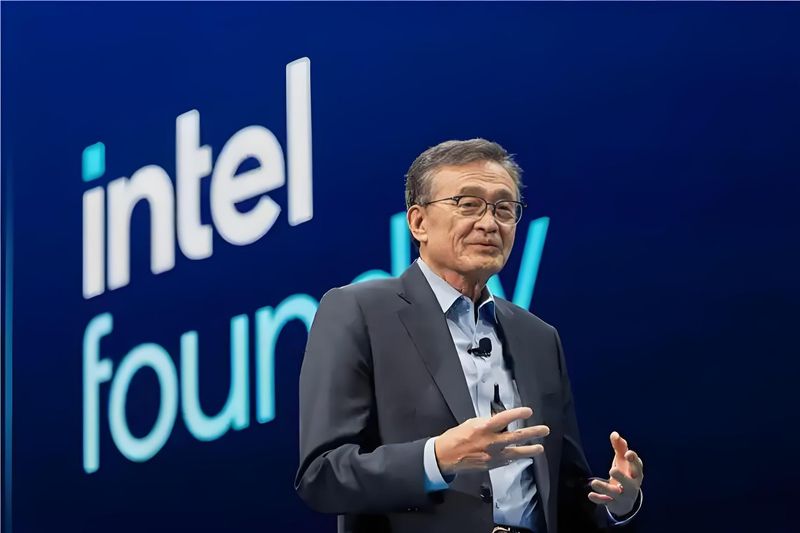
Andrew Chen Plans High-Level Talks with the White House
According to informed sources, Intel CEO Andrew Chen will visit the White House on Monday for a face-to-face high-level meeting with President Trump. The meeting is expected to cover a broad range of topics, including semiconductor industry strategy, global supply chain security, and the future development direction of American manufacturing.
Andrew Chen intends to share his professional experience and business strategy insights to enhance the White House's understanding of Intel's operations and its global presence. He will emphasize the importance of Intel's domestic manufacturing capability, which concerns not only corporate competitiveness but also national security and critical technology self-sufficiency.
The Intersection of Manufacturing Security and National Strategy
In the context of a globally strained semiconductor supply chain, the U.S. government has prioritized chip manufacturing as a national security issue. Intel, as a leading global semiconductor manufacturer, is viewed as a strategic asset due to its production capacity in the United States. Andrew Chen hopes to use this visit to convey the company's commitment to increasing domestic manufacturing and to seek government cooperation in terms of policy, investment, and research and development.
Analysts believe that the meeting might discuss tax incentives for U.S. chip manufacturing, research funding, and policy adjustments to address international competition, which will have a profound impact on Intel and the entire industry.
Global Competitive Landscape Facing the Semiconductor Industry
Currently, the global semiconductor industry is at a crucial stage of technological iteration and market competition. Asia holds significant advantages in wafer manufacturing and packaging and testing, while the United States leads in chip design and advanced process development. Andrew Chen's visit is not only to promote cooperation between Intel and the U.S. government but also to ensure that the U.S. is not surpassed by competitors in the next generation of chip technology.
Industry insiders point out that recent U.S. government policies, such as the CHIPS and Science Act, aim to encourage domestic production and technological innovation, and Intel, as a domestic giant, should play a key role in these initiatives.
Potential Cooperation Directions
Based on the information currently available, discussions between Andrew Chen and the White House may focus on the following directions:
- Enhancing Domestic Manufacturing Capability: Promote the establishment or expansion of wafer plants within the U.S. to reduce reliance on overseas production.
- R&D Cooperation and Talent Development: Increase R&D investment in advanced processes, AI chips, and quantum computing, and collaborate with the government to train high-end engineering and technical personnel.
- Supply Chain Security: Build a more resilient supply chain system to reduce the impact of geopolitical risks on production and delivery.
- Trade and Export Policy: Coordinate on issues of key technology export restrictions and access to international markets to maintain flexibility and advantage in international competition.
Strategic Significance and External Expectations
This visit holds significant strategic importance for both the White House and Intel. For the Trump administration, it offers not only an opportunity for direct communication with the leadership of a global tech giant but also a chance to strengthen American manufacturing and high-tech competitiveness. For Intel, the meeting represents a crucial step in gaining policy support, shaping corporate image, and clarifying future development paths.
Market observers predict that if consensus is reached during the meeting and favorable policy measures for semiconductor manufacturing and R&D are implemented, it could boost investor confidence and potentially drive up the tech sector in the U.S. stock market.

