

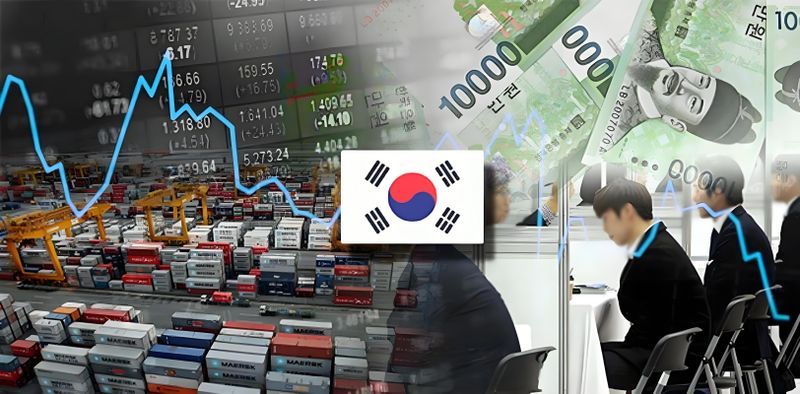
Corporate Profitability Spurs Significant Increase in Tax Revenue
Data from South Korea's Ministry of Finance shows a significant increase in government tax revenue in the first ten months of the year compared to the same period last year. This was primarily driven by the recovery of corporate profits and related tax types. As the manufacturing, technology, and export sectors have gradually improved over the past year, overall corporate profits rebounded, leading to a marked increase in corporate tax revenue.
The tax authorities stated that the growth in corporate tax revenue far exceeded expectations, reflecting a continuous improvement in the profitability of economic entities. It also indicates that South Korea's economy is showing resilience amidst global uncertainties. The government believes this trend will help alleviate fiscal pressure and provide more room for future policy expenditures.
Income Tax Growth Driven by Job Expansion and Salary Improvement
With the labor market demonstrating resilience, income tax revenue also achieved substantial growth. As the number of employees increased and companies enhanced performance bonuses, the overall income level of workers significantly improved compared to the same period last year, directly driving up the scale of income tax.
Analysts point out that the South Korean job market's recovery is relatively fast, especially with strong demand for service and technology positions, which has adjusted compensation structures upwards. Additionally, the rising labor force participation rate has supported the expansion of the tax base.
Meanwhile, the increased activity of residents in overseas capital markets has further contributed to income from capital gains. South Korean investors have actively allocated assets in overseas stocks and funds in recent years, earning higher returns as markets rise. This has also become another important source of tax revenue growth.
Tax Categories Show Varied Performance with Noticeable Fluctuations in Capital Market-Related Taxes
In addition to the significant growth in corporate and income taxes, the value-added tax has also maintained a steady upward trend. Although facing inflationary pressures, the consumer market gradually recovered this year, with overall purchasing power not showing significant declines, allowing related tax revenues to sustain a healthy growth rate.
However, not all types of taxes have grown. Due to a reduction in the securities transaction tax rate, related tax revenue has decreased, which is one of the South Korean government's policy measures to stimulate active trading in the capital market. The Ministry of Finance emphasized that although short-term income reduces, the increased vitality of the capital market will positively impact the overall economy.
Overall Fiscal Condition Improves, Providing Support for Policy Space
Overall, South Korea's cumulative tax revenue in the first ten months increased by more than 12%, providing the government with more generous fiscal space for economic policies and social spending. The Ministry of Finance stated that as the economy continues to improve, the growth in tax revenue will become more sustainable, helping to address uncertainties that may arise from the global economic environment.
Some economists believe that future attention should remain on export sector fluctuations, global interest rate environments, and energy price trends, as these factors may impact corporate profits and fiscal revenue. However, at this current stage, the widespread and stable growth in tax revenue offers a positive signal for South Korea's economy.
Robust Tax Revenue Growth Reflects Stabilization and Improvement Across Multiple Economic Sectors
Tax revenue in South Korea saw an overall rebound this year, primarily driven by the recovery of corporate profits, job improvements, and an active capital market. Though some individual tax categories declined due to policy adjustments, the overall fiscal condition exhibited stability. As various economic sectors gradually stabilize, the South Korean government will continue to focus on adjusting the tax structure and economic support policies to lay the foundation for future growth.

