

Due to inflation and rising labor costs putting financial strain on businesses, an increasing number of Japanese small businesses are facing bankruptcy pressure from loans taken out during the COVID era.
Data from the Japan Federation of Guarantee Organizations (JFG) shows that in the first two quarters of this year, 9720 Japanese small and medium-sized enterprises sought loan guarantees from JFG, a 70% increase compared to the same period last year. In June alone, the number of small and medium-sized enterprises seeking loan guarantees surged by more than 80% compared to the same period last year.
The number of defaults taken over by guarantors is a leading indicator of business bankruptcies, and JFG data shows such events have risen for seven consecutive quarters. In the fiscal year ending March of this year, such events increased by 45% to 30,148 cases. By the end of December 2022, outstanding loans provided to small businesses by private and public sector lending institutions stood at 335 trillion yen (approximately 2.36 trillion USD), a spike of 45 trillion yen since the global pandemic outbreak in 2020.
Since the Japanese government lifted pandemic controls, the revenue of Japan's dining, tourism, and other service industries has recovered far beyond market expectations. However, due to factors such as supply shortages, rising costs of raw materials, and labor, the profit margins of these sectors have still not returned to pre-pandemic levels.
Meanwhile, factors such as the economic upturn stimulated by years of ultra-loose monetary policy by the Japanese government, rising labor costs, inflation rebounding, and rising potential debt costs, have led to a continuous expansion of the debt size of small and medium enterprises. This has placed serious financial pressure on many such businesses.
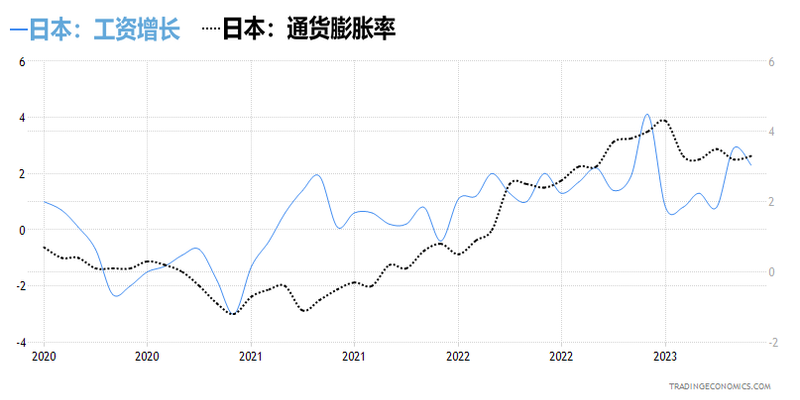
The manager of a highway maintenance company in Tokyo expressed, "Material costs are skyrocketing, but there's absolutely no way we can pass these additional costs on. At the same time, we also have to repay loans from the COVID-19 period. This situation is not unique among Japanese small and medium enterprises; many construction companies, due to high labor costs and a tight job market, have had to give up corresponding business opportunities, leading to an inability to repay loans from the COVID era."
In April this year, a survey by Tokyo Shoko Research of about 4,400 businesses showed that nearly 90% of businesses were affected by rising procurement costs, and 40% of businesses said they were unable to pass on costs formed by inflation and rising labor costs.
During the COVID-19 pandemic, the Japanese government provided "zero-zero loans" with guarantees to businesses nationwide, meaning loans that didn't require interest or principal repayment for a certain period. Data shows that loan amounts from JFG during the pandemic rose to 40 trillion yen per month, higher than the 34 trillion yen during the 2012 earthquake in Japan.
As the term of the zero-zero loans gradually ends, JFG data shows that about 50,000 small and medium enterprises have begun repaying as of July. However, the repayment peak for these loans has not yet arrived. JFG expects the peak to occur next spring, when the number of loans taken over by guarantors is anticipated to surge once again.
Osamu Naito, the research director at Teikoku Databank, stated that the increase in repayments taken over by guarantors indicates a rise in the number of companies on the brink of bankruptcy. Although small businesses with taken-over debts still have a chance for complete recovery, JFG data reveals that more of these businesses end up going bankrupt.
Teikoku data shows that in June, there were 782 business failures, nearly five times the number of businesses whose loans were taken over by guarantors.
Currently, credit guarantee institutions in Tokyo and Kyoto have taken action to provide expertise and management support for troubled local small and medium enterprises. If these institutions are unable to cover the losses from the loans, the mass bankruptcy of small and medium enterprises will ultimately be paid for by taxpayers.