

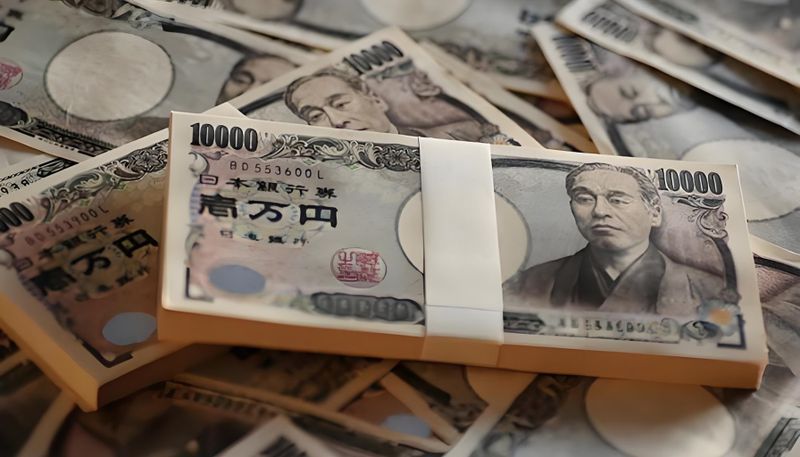
The Japanese Government Hints at Readiness to Stabilize Exchange Rates
As the yen continues to weaken and approaches critical levels, concern within the Japanese government is rapidly escalating. Koji Aida, a significant member of a government advisory committee, recently stated that Japan is fully equipped to "actively intervene" to alleviate the economic pressure from the yen's continuous depreciation.
In television and media interviews, he highlighted that Japan's foreign exchange reserves are ample, and should the necessity for intervention increase, authorities may influence market trends through directly buying yen and selling dollars. He emphasized that the negative impact of short-term exchange rate plunges cannot be ignored, especially as Japan relies on imports for energy and food, with the yen's weakness driving up price pressures.
These remarks have been interpreted by the market as a sign that Japan is strengthening its verbal intervention efforts. Recently, the dollar-yen exchange rate nearly reached a ten-month high, and vigilance in policy circles has therefore sharply increased.
Yen Weakness Raises Import Costs, Sparks Inflation Concerns
Although the yen's depreciation has some uplifting effects on export companies, Koji Aida warns that households may face greater pressure due to rising living costs. He pointed out that soaring import prices are becoming a major driver of Japan's inflation, which in turn affects consumer confidence.
Economists generally believe that Japan's inflation structure is different from that of Europe and the United States, with external input-driven inflation still playing a dominant role. This implies that further yen weakening is likely to increase cost burdens for households and businesses, complicating policy decisions.
Compared to the past, market sensitivity to the yen has significantly increased. Particularly following the appointment of the new Liberal Democratic Party leader, Chisato Takamichi, there is concern that the Japanese government will launch larger-scale fiscal expenditures, raising concerns about bond issuance and fiscal sustainability, which has become a key factor putting pressure on the yen recently.
Size of Forex Reserves as Japan's "Hidden Card"
In his discussions, Aida repeatedly emphasized that the scale of Japan's foreign exchange reserves is "sufficient to support policy actions." This is viewed as a significant capital for possible substantive interventions by Japan.
Over the past few decades, the Japanese government has utilized its reserves several times to stabilize the yen, including direct intervention against the dollar-yen exchange rate in 2022. Therefore, the market closely monitors whether authorities will restart similar actions.
Analysts point out that Japan's position in the global economic system gives its foreign exchange interventions a certain deterrent effect. However, the effectiveness of the intervention often depends on whether it aligns with policy trends; if the US-Japan interest rate differential remains high, the intervention's effect may only temporarily suppress exchange rate fluctuations.
Divisions in Policy Path Intensify, Market Enters Key Observation Period
Recently, the Bank of Japan is in the midst of discussions about monetary policy transition, and there is anticipation regarding whether it will provide clearer signals on the timing of interest rate hikes. However, balancing weak growth and inflation pressure has significantly increased the Bank of Japan's challenges.
Aida himself advocates for maintaining low interest rates and stimulating the economy through expanded fiscal spending. Although this view is not mainstream in policy circles, it reflects differing judgments within the government about the economic direction.
With the US dollar strengthening and market expectations of Japanese policy continuing to fluctuate, traders believe the coming weeks will be a crucial window for yen movements. If officials signal stronger actions, the currency market may experience a sharp turnaround.
Intervention Expectations Heat Up, Yen May Face Volatility
Overall, the Japanese government has clearly communicated its readiness to act when necessary, with foreign exchange reserves providing significant support for policymakers. The market generally believes that if the yen continues to approach psychological critical levels, the chances for both verbal and actual interventions will increase further.
Volatility in the currency market is likely to intensify in the short term, and investors need to closely monitor the next steps of the Japanese government and central bank.

