
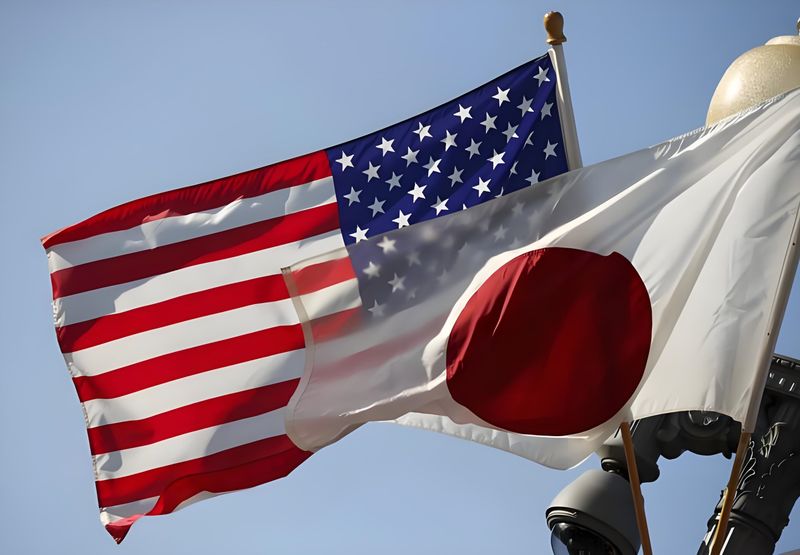
Signing of Executive Order Marks the Agreement's Implementation Phase
On September 4 local time, the White House announced that U.S. President Trump officially signed an executive order, putting the previously agreed U.S.-Japan trade agreement into effect. This order clarified the tariff adjustment mechanism, preventing previously highly taxed Japanese goods from facing "double taxation," while adjusting some products with tariffs below 15% to new tariff levels.
This measure not only implements the tariff consensus reached in July but also provides institutional guarantees for future economic cooperation between the two countries. A White House spokesperson stated that Japan has committed to accelerating its scale-up of U.S. rice imports by an expected 75%, which will be a core measure to promote balance in agricultural trade.
Core Content of the Agreement: Tariffs, Agriculture, and Investment
According to the previous agreement, the U.S. agreed to lower the originally planned 25% reciprocal tariffs to 15%, reducing the stress on Japanese export companies. In return, Japan has made significant concessions in agriculture, expanding imports of U.S. rice and agricultural products to meet U.S. demands for market access in the agricultural sector.
Additionally, Japan has pledged to invest 550 billion USD in the U.S. across sectors such as semiconductors, steel, shipbuilding, energy, and automobiles, further strengthening bilateral supply chain cooperation. This arrangement not only helps alleviate U.S. concerns over trade deficits but is also seen as a strategic maneuver by Japan in maintaining its relationship with the U.S.
Bilateral Cooperation Extends to Supply Chain Security
Japanese Prime Minister Shigeru Ishiba stated after the agreement disclosure that both countries have reached a consensus on supply chain cooperation, especially in semiconductors and advanced manufacturing. Japanese companies will increase their investments in the U.S. to boost the localization of critical product production, thereby mitigating the impacts of global supply chain uncertainties.
Analysts believe this cooperation framework aligns with the U.S.'s strategy of promoting industrial chain reshoring, and it provides support for Japan to secure its position amid changes in the global economic landscape. With rising geopolitical risks and trade protectionism, supply chain security has become a new focus of U.S.-Japan cooperation.
Market and Industry Reactions
The signing of the executive order enhances market expectations for the stability of U.S.-Japan relations. The agricultural sector's opening offers greater export opportunities for U.S. farmers, while Japanese companies look forward to gaining a more stable market access environment through investment.
However, some members of the Japanese industrial sector hold a cautious attitude towards tariff adjustments, especially automobile and steel companies worried about long-term cost pressures. Nevertheless, overall market sentiment leans positively, viewing the agreement as a means to ease tensions caused by past tariff disputes.
Implementation of the Agreement Tests Both Parties' Execution
While the executive order signifies the formal implementation of the agreement, its smooth progress in the future depends on bilateral coordination at the execution level. Japan needs to ensure on-time fulfillment of rice procurement and investment commitments, while the U.S. must avoid frequent tariff policy adjustments to uphold the cooperation foundation.
In the long term, this agreement is not only a bilateral trade arrangement but also a deepening of U.S.-Japan relations at economic and strategic levels. Experts suggest that if the cooperation mechanism operates smoothly, both sides are likely to expand cooperation in areas such as new energy, artificial intelligence, and high-tech manufacturing.
Overall, the implementation of the U.S.-Japan trade agreement will inject new momentum into bilateral relations and will have a profound impact on the economic structure of the Asia-Pacific region and globally.

