

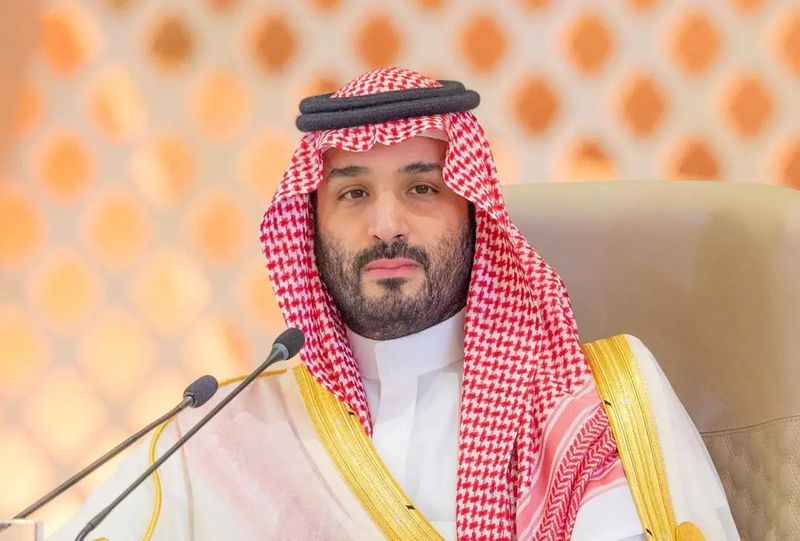
First Visit to the U.S. in Seven Years Sends Significant Signals
Saudi Crown Prince and Prime Minister Mohammed bin Salman has returned to the United States after seven years, meeting with President Trump at the White House and setting a new tone for bilateral relations with high-profile commitments. During this symbolic visit of repair, Mohammed confirmed Saudi plans to increase investment in the U.S. to $1 trillion, far exceeding the previous goal of $600 billion, a sum equivalent to Saudi Arabia's entire annual GDP. This move immediately drew global political and economic attention.
During the meeting, Trump referred to the Crown Prince as a "very good friend," considering this investment a crucial milestone for U.S. economic strategic cooperation. Despite external doubts about the feasibility of fulfilling this massive commitment, both parties view this meeting as an opportunity to start a new chapter.
Unprecedented Scale of Investment Commitment with Extensive Coverage
According to details released by the White House, the investment plan spans key areas such as defense, technology, manufacturing, and energy infrastructure. It includes nearly $142 billion in U.S. defense equipment procurement, with more than a dozen American companies providing advanced jets, communication devices, and maritime security systems.
In the civilian sector, Saudi companies plan to purchase $14.2 billion worth of U.S.-made equipment, with Boeing supplying $4.8 billion worth of 737-8 aircraft to Saudi. Simultaneously, tech giants like Google, Oracle, Salesforce, AMD, and Uber will collaborate with Saudi companies, investing up to $80 billion in artificial intelligence, cloud computing, and digital infrastructure development.
Saudi data company DataVolt plans to build large-scale AI data centers in the U.S., expecting to invest around $20 billion. The White House emphasized that these collaborations belong to "long-term strategic projects" aimed at creating stronger economic ties.
Geopolitical Agenda Progressed in Tandem
Besides economic topics, the meeting also addressed sensitive Middle Eastern diplomatic issues. Trump stressed that the U.S. and Saudi are advancing negotiations on Saudi's participation in the "Abraham Accords," attempting to normalize Saudi-Israeli relations. Mohammed responded that he is willing to engage further, provided there is a clear "two-state solution" pathway, hoping for regional peaceful coexistence.
Regarding Gaza's future reconstruction and humanitarian issues, Mohammed stated that Saudi is evaluating potential financial support but emphasized "conditions are not yet ripe." His stance indicates Saudi remains focused on domestic economic modernization and fiscal restructuring as a priority.
Investment Motives and Economic Pressures Coexist
External analysis points out that Saudi's move is both a strategic arrangement of foreign relations and a reflection of its internal economic pressures. With oil prices hovering below $65, Saudi's fiscal deficit risk increases, while various large-scale projects in its "Vision 2030" still require substantial funds.
Attracting U.S. direct investment and strengthening cooperation with the U.S. is seen as a crucial way for Saudi to overcome economic bottlenecks. Mohammed emphasized during the meeting that this investment is not a "political gift," but based on real needs such as AI computing power and advanced manufacturing.
Bilateral Relations Entering a New Strategic Cycle
Despite ongoing reservations about the feasibility of the $1 trillion commitment, this visit indeed provides new momentum for Saudi-U.S. relations. Think tank analysts note that Trump focuses on capital-driven diplomacy, while Saudi needs to leverage the U.S. technology and financial systems to enhance competitiveness, thereby increasing the complementary demand between the two parties.

