
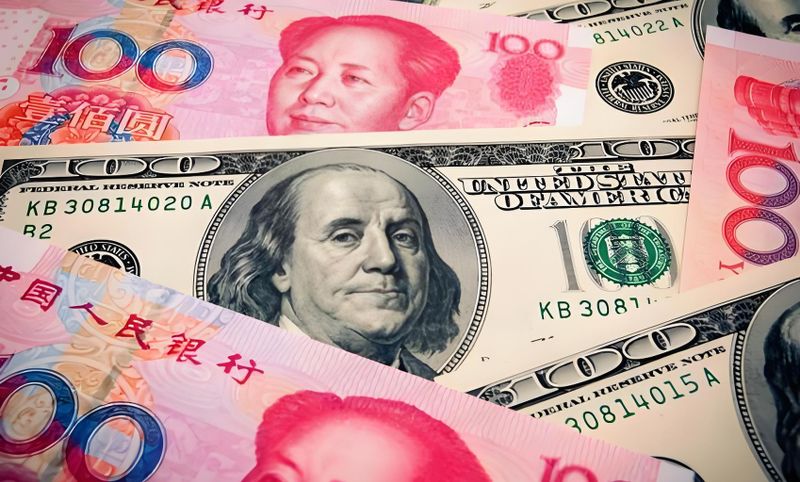
The Renminbi Exchange Rate Hits a New High, Trend Stabilizes Positively
On July 24, 2025, the People's Bank of China announced the central parity rate of the renminbi against the US dollar at 7.1385, an increase of 29 basis points from the previous day. Since early July, the exchange rate has appreciated by a total of 149 basis points, marking a new high since early November 2024 and reflecting continued market confidence in renminbi assets.
Notably, amid recent fluctuations in the US dollar index, the renminbi has shown relative strength. This steady performance is seen by industry experts as a signal of structural change in the exchange rate market, providing a more predictable foreign exchange environment for both domestic and international economic entities.
Weakened Dollar Expectations Support Renminbi Resilience
Despite some resilient US economic data recently, the market generally anticipates the Federal Reserve will begin a rate-cutting cycle within the year, leading to a persistent "weak dollar" expectation. The increased volatility in the dollar index has further aided the RMB's stabilization and rebound.
Analysts suggest that the current upward trend of the dollar lacks sustained momentum. The rising uncertainties from trade negotiations and fiscal challenges decrease capital market willingness to allocate to dollar assets, indirectly prompting a flow back to renminbi assets, enhancing the renminbi's resilience.
Improving Economic Fundamentals Build Exchange Rate Support
Renminbi appreciation is not only a result of external monetary policy changes but also stems from the stable and improving fundamentals of China's economy. Currently, China's manufacturing sector is steadily recovering, service consumption is rising steadily, and foreign trade data is gradually warming up, all providing solid support for the RMB's exchange rate performance.
Meanwhile, fiscal and monetary policies are working collaboratively, policy expectations are stable, and market risk preferences have improved, enhancing the appeal of renminbi assets. Amid global risk aversion fluctuations, the RMB has instead become a "reallocation option" for some funds.
Experts Suggest Accelerating the Internationalization of the Renminbi
In the current stable and positive RMB exchange rate situation, many experts suggest seizing the favorable opportunity to further promote the internationalization of the renminbi, especially expanding its "settlement + pricing" functions. As the demand for local currency settlement grows along the "Belt and Road" countries and global emerging markets, the RMB is expected to play a greater role in regional trade and investment financing systems.
Furthermore, if RMB assets maintain strong performance and good volatility control, it will increase foreign investors' willingness to allocate, helping attract long-term funds into China's capital markets, creating a virtuous cycle of exchange rates and capital account openness.
Market Expectations Stabilize, Controllable Volatility
In the coming period, the RMB exchange rate trend will continue to be influenced by multiple factors, including the pace of Federal Reserve policy adjustments, China-US economic data performances, and geopolitical events. However, the industry generally believes that under the "strong domestic demand + stable expectations" framework, the RMB is expected to maintain a moderate upward trend.
Traders indicate that the "volatility tolerance" for the RMB in both domestic and international markets has increased, settlement willingness has risen, foreign exchange purchases are rational, and market participants' confidence in the exchange rate is gradually being restored, a trend that will continue to ferment in subsequent trading days.

