Japan's Tariff Reduction Promise to the US Still Unresolved
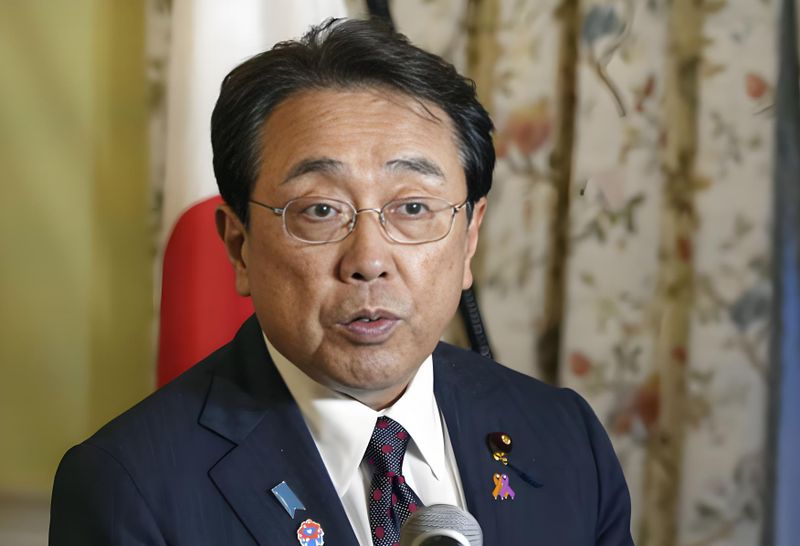
Japan's chief trade negotiator, Ryoichi Akazawa, recently stated that before the Trump administration officially signs the executive order to lower tariffs on Japan, he expects to make at least one more trip to Washington to push the commitment forward. Previously, both sides reached a preliminary consensus on reducing tariffs at the end of July, but the final procedures have yet to be completed.
Tokyo emphasized that the US has committed in the agreement to cancel the practice of adding existing tariffs on top of a 15% general tariff and gradually reduce tariffs on cars and auto parts to 15%. However, the specific timetable for implementation has not been clarified, leaving Japan's automotive industry and related exporters with concerns.
Temporary Cancellation of US Visit Highlights Differences
Ryoichi Akazawa had planned to depart for the US on Thursday to negotiate with US officials on the details of the executive order. However, at the last minute, due to unresolved procedural issues, he canceled the trip.
Nevertheless, officials from Japan's Ministry of Economy, Trade, and Industry, as well as the Ministry of Foreign Affairs, are still in the US, maintaining discussions with the Trump administration's trade team. Tokyo officials indicated that Japan will continue to urge the US to fulfill its commitments as soon as possible to ensure that the tariff reductions proceed as scheduled.
Car Tariffs are a Core Issue
For Japan, cars and parts are a crucial pillar of exports to the US, and tariff adjustments are vital for industry competitiveness. The US's previous practice of imposing tariffs on Japanese cars has long been a focal point of trade friction between the two countries. If tariffs can be uniformly reduced to 15%, it would undoubtedly be a significant benefit for Japanese automakers.
However, analysts caution that even if the agreement is implemented, the US may still adjust policies in the future due to domestic political or industrial pressure. Therefore, Japan is seeking institutional safeguards to avoid re-encountering tariff uncertainties.
Political Factors Increase Negotiation Difficulty
The Trump administration has been active in trade policy recently, with decisions to impose or reduce tariffs on goods from multiple countries closely related to political considerations. Against this background, even if a tariff commitment is reached between Japan and the US, it could still be delayed or reconsidered due to domestic political maneuvering in the US.
Ryoichi Akazawa emphasized that Japan seeks certainty in the current economic environment, especially as the export environment is affected by global trade tensions. Tokyo hopes that through this round of negotiations, a more predictable operating environment for Japanese businesses can be established.
Market Watches Implementation Timetable
Currently, the most concerning issue for Japanese and American companies and investors is when the tariff reduction measures can truly take effect. Given the automotive industry's heavy reliance on cross-border supply chains, any delay in policy could directly impact order and capacity planning.
Industry insiders predict that if the Trump administration can issue relevant executive orders by September, the tariff reduction measures could take effect by the end of the year at the earliest. However, if negotiations continue to drag on, it is possible that implementation might be postponed until as late as 2025.
Conclusion
Ryoichi Akazawa's statements reveal the complexity of Japan-US tariff negotiations. Although a consensus has been reached in the framework, final implementation depends on whether the Trump administration can swiftly sign and execute the executive order. For Japan, this is not just a matter of economic interest but a crucial test in stabilizing export environments and maintaining industrial confidence.
In the coming weeks, Japan's trade team may visit the US again, attempting to push the final step of the tariff reduction agreement. Regardless of the outcome, this issue will serve as an important indicator of the direction of the Trump administration's trade policy.