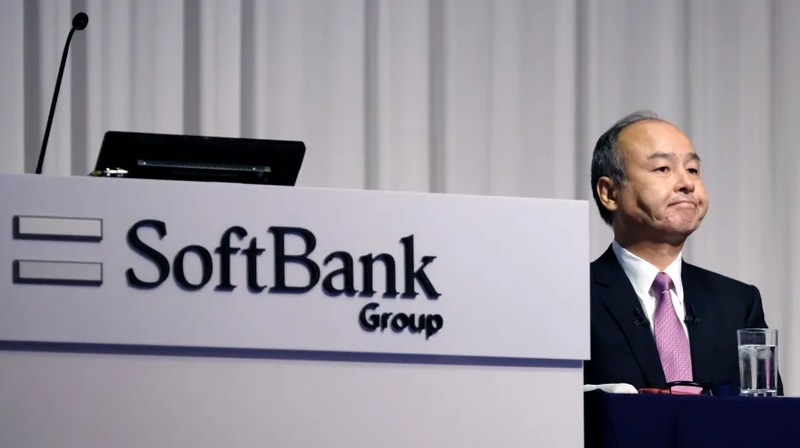
SoftBank Further Increases AI Investment Portfolio
According to several informed sources, the SoftBank Group board has officially approved an additional investment of up to $22.5 billion in OpenAI. This funding is an extension of SoftBank's previous $40 billion investment commitment, aimed at supporting OpenAI's corporate restructuring and future initial public offering (IPO) plans.
Sources indicate that this decision reflects SoftBank’s strong confidence in the artificial intelligence sector. With OpenAI’s valuation continuing to climb and global capital chasing AI infrastructure, Masayoshi Son hopes to further strengthen its strategic position in the AI ecosystem by increasing investments.
In April this year, SoftBank announced that it would jointly invest $40 billion in OpenAI with other investors, shouldering about $30 billion itself. To date, SoftBank has paid $7.5 billion and plans to disburse the remaining funds in phases after OpenAI completes its equity restructuring. In its latest decision, the board removed the original time limit, indicating that SoftBank is willing to extend the funding investment cycle for this long-term bet.
Escalating Financial Pressure Sparks Concern for SoftBank's Funding
However, behind the significant investments lies SoftBank’s increasingly strained financing pressure. Just last week, SoftBank returned to the overseas bond market for the second time, planning to raise $1.5 to $2 billion through dollar bonds and issue approximately €500 million in euro bonds.
This move continues its aggressive global financing strategy this year. So far, SoftBank has raised approximately $24 billion.
In Japan, SoftBank also issued bonds worth up to ¥600 billion (approximately $4 billion) through the personal investor channel, setting a record for the largest-scale personal bond issuance in Japanese history.
Analysts point out that frequently relying on public market financing rather than traditional bank loans reflects SoftBank's increasingly prominent cash flow issues.
Additionally, SoftBank's Vision Fund recorded a loss of ¥115 billion in the fiscal year ending March this year, with investment returns falling by 40% year-on-year. The poor performance of the core fund has reduced external investors’ trust, thereby weakening its future fundraising capability.
Strategic Position Marginalized, Risks May Further Intensify
Despite SoftBank's repeated emphasis on its strategic commitment to OpenAI, its actual influence in the AI industry chain is gradually diminishing.
Currently, OpenAI, aside from collaborating with SoftBank on the "StarGate" project, has also formed deep alliances with tech giants like NVIDIA, AMD, and Oracle, signing data center cooperation agreements worth over $100 billion in total. In comparison, SoftBank’s positioning in OpenAI's ecosystem seems relatively peripheral.
Analysts indicate that if SoftBank cannot continue to increase funds or expand its shareholding before OpenAI's future listing, the returns on its early investments might be quite limited.
More seriously, about 70% of SoftBank’s assets are publicly listed company shares, which means its operational space is limited. There is widespread market concern that this high-leverage state will make its financial structure more fragile.
Credit Rating Risk Rises, Future Uncertainties Persist
S&P Global recently warned that if SoftBank's loan-to-value (LTV) ratio exceeds 25%, its credit rating might be downgraded. If SoftBank includes its unlisted investments in OpenAI, StarGate, and chip company Ampere Computing, this ratio might already be over the limit.
This means that while pursuing AI expansion, SoftBank is undertaking increasingly rising credit risk.
In summary, SoftBank’s approval of additional investment in OpenAI is a crucial step in strengthening its AI strategy, yet it also reveals its dual predicaments in terms of financial and strategic positioning. Whether SoftBank can maintain its core position amid the AI wave will depend on its ability to balance the delicate relationship between financing pressure and investment returns.