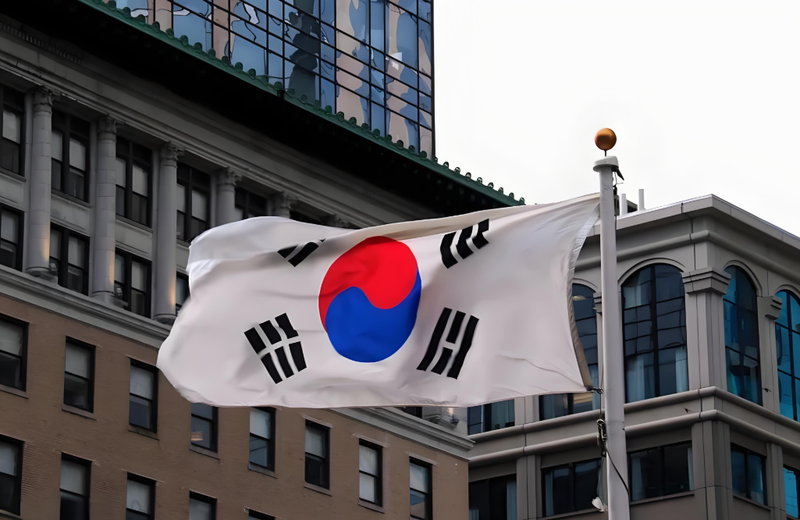
South Korean Central Bank Lowers Growth Forecast
The latest statement from the South Korean central bank shows that even though there have been some positive outcomes in trade talks between South Korea and the United States, the tariffs imposed by the U.S. will have a "significant" negative impact on the South Korean economy. The central bank's data indicate that the country's economic growth rate is expected to be just 0.9% in 2025 and only 1.6% in 2026, both well below the historical average.
The central bank emphasized that the average tariff rate from the U.S. has surged from previous zero tariffs to about 15%, directly impacting South Korea's export-driven economy. The large proportion of exports going to the U.S. makes South Korea extremely sensitive to changes in the external environment.
Export Industries Face the Brunt
As a major export-oriented economy globally, South Korea's core industrial chain is highly dependent on overseas markets. Analysts note that the hike in U.S. tariffs most significantly affects South Korea's exports of electronics, automobiles, and semiconductors. Since these industries constitute the core of South Korea's foreign trade, rising tariff costs will undermine their international competitiveness.
An automotive industry association representative mentioned that the U.S. is a crucial market for Korean car manufacturers. The increased tariffs not only raise prices but may also force companies to cut their profit margins. Meanwhile, semiconductor exports might risk order shifts due to changes in U.S. policy.
Extent of Growth Damage is Gradually Increasing
According to the South Korean central bank's estimates, the tariff impact will reduce the GDP by about 0.45 percentage points in 2025, with the impact expanding to 0.60 percentage points in 2026. This trend indicates that even though the market may absorb some shocks in the short term, medium- to long-term pressures could intensify.
Research institutions generally believe that if global demand continues to be weak, South Korea's economic growth might be further lowered. Especially in the situation of a lackluster recovery in European and Chinese markets, the cumulative effect of U.S. tariffs will be more pronounced.
Limited Policy Space, Urgent Structural Reforms
Faced with tariff impacts, the South Korean government and central bank have relatively limited policy options. Interest rate tools are hard to adjust significantly amid the conflicting demands of inflation and growth, while fiscal stimulus is constrained by budget limits. Analysts suggest that to cope with external shocks, South Korea needs to accelerate the transformation of its industrial structure and reduce dependency on a single market.
Strengthening trade ties with ASEAN and Middle Eastern markets is seen as a possible direction. Furthermore, promoting the expansion of high-end manufacturing and the digital economy is key to ensuring South Korea's long-term economic resilience.
Uncertainty in External Environment
It is noteworthy that U.S. tariff policies are not only aimed at South Korea but might also trigger a global trade chain rebalancing. The South Korean central bank warns that if trade frictions between major economies continue to intensify, South Korea might simultaneously face pressure from multilateral markets. Such uncertainty in the external environment casts a larger shadow over South Korea's economic recovery.
Conclusion
The warning from the South Korean central bank highlights the vulnerability of export-oriented economies in the backdrop of rising global trade protectionism. U.S. tariffs have become a significant variable affecting South Korea's future growth outlook. Balancing the retention of traditional industry advantages while fostering breakthroughs in emerging industries and market diversification will determine whether South Korea can maintain stable development amidst external challenges.