
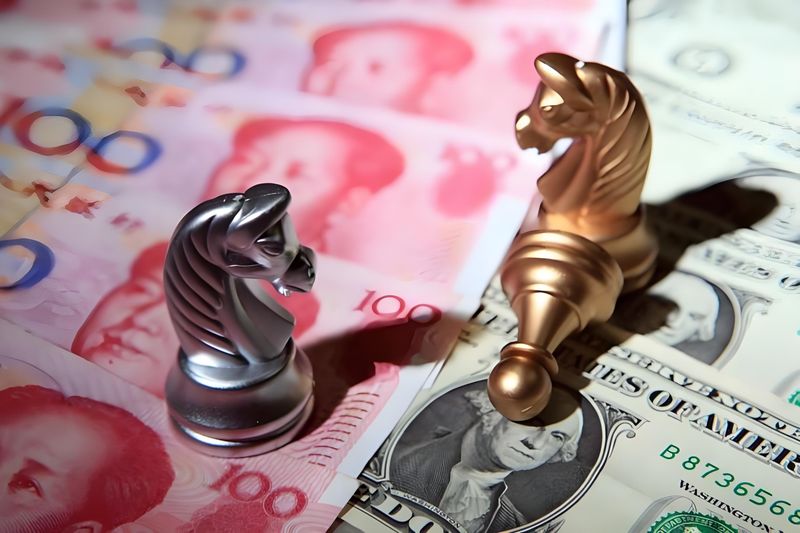
Offshore Yuan Reaches New High
On the evening of August 28, the offshore yuan experienced a strong rebound against the US dollar, climbing more than 300 points in a single day to reach a high of 7.1182 yuan, the highest since last November. As of the morning of the 29th, the yuan remained volatile near 7.12. Analysts believe that domestic policies to stabilize the exchange rate, a warming capital market, the inflow of foreign capital, and the dovish signals from the Federal Reserve have all contributed to the yuan's strength.
Federal Reserve Signals Dovish Stance
Recently, several senior Federal Reserve officials have made notably dovish comments, significantly boosting market bets on a September rate cut. In a speech in Miami, Governor Waller stated clearly that he would support a 25-basis-point rate cut at the September meeting and projected that a dovish path might continue for the next six months. He emphasized that while the core inflation in the U.S. is close to 2%, the risk of a deteriorating labor market is increasing, necessitating preemptive risk management.
New York Fed President Williams also mentioned in an interview that the interest rate policy is in a "moderately restrictive" range and if economic data continues to weaken, the Fed may have to adjust policies. These statements have directly reinforced market consensus on "gradual rate cuts."
Easing External Environment Alleviates Exchange Rate Pressure
The rise of the yuan is not solely reliant on domestic factors; changes in Federal Reserve policy expectations are a critical external driver. Market data shows investors generally believe there is nearly a 90% probability of a rate cut in September, with a cumulative rate cut of more than 50 basis points expected by the end of the year. In this context, the dollar index is under downward pressure, providing a favorable environment for the rebound of the yuan.
Analysts point out that if the Federal Reserve truly enacts its dovish stance, the allure of dollar funds will decline, further promoting capital inflow into the Chinese market and reducing external pressure on the yuan's exchange rate.
Domestic Policies Underpin Market Expectations
The People's Bank of China has reiterated in its monetary policy execution report the importance of market supply and demand in determining exchange rates, while emphasizing the prevention of excessive exchange rate adjustments. Industry insiders believe this policy statement provides a "safety net" for the yuan's trajectory.
Meanwhile, the stable performance of domestic stock and bond markets has attracted some foreign capital inflow, further enhancing market demand for the yuan. Securities firms expect that around the time of the Federal Reserve's rate cut, the scale of yuan settlements will likely expand, with a more pronounced trend of capital inflow.
Experts' Outlook on Future Trends
Looking ahead, many institutions believe the yuan is likely to maintain a strong volatile pattern. China Merchants Securities suggests that if the central bank continues to base its operations on market-oriented adjustments while the external environment improves, the yuan could potentially return to the "6 level."
However, some economists caution that the future trajectory of the yuan still depends on two factors: the effectiveness of domestic growth-stabilizing policies and the progress of China-U.S. trade negotiations and tariff engagements. If favorable outcomes are achieved in the fourth quarter, the yuan could gain more lasting support.
Conclusion
The yuan has experienced a significant short-term rally under the dual support of Federal Reserve rate cut expectations and domestic policy underpinnings. Although short-term market trends will still be influenced by non-farm payrolls and PCE data, overall, the resilience and potential appreciation space of the yuan are becoming more apparent. In the coming months, the global monetary environment and the trajectory of China-U.S. relations will be key variables in determining whether the yuan can sustain its strength.

