Consumption Trends Shift: From "Buying Large Items" to "Fulfilling Basic Needs"
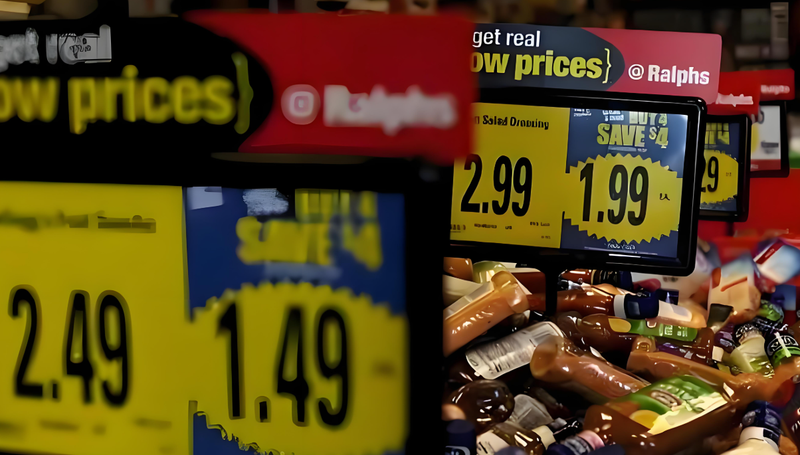
As the North American year-end shopping season approaches, Black Friday is no longer synonymous with a "big buying moment." Recent surveys show that more and more consumers are shifting their budgets from large-ticket items like giant TVs and luxury appliances to grocery goods, personal care, and basic home needs. Nearly half of the respondents prefer a balanced distribution of "essential needs plus a few high-end items," while about a quarter focus solely on "daily essentials." This marks a structural shift in Black Friday from "hoarding large items" to "filling gaps."
Increased Real Pressures: High Inflation and Tight Cash Flow
In 2025, American consumers are still grappling with high inflation. Although inflation has eased from its peak, sticky prices for food, necessities, and services have tightened monthly household cash flow. Retail feedback indicates many families are "running on empty" at month's end, preferring smaller, lower upfront purchases. For young and middle to low-income groups, the combination of student loan repayments resuming and a slowdown in real wage growth further compresses the space for discretionary spending.
Discount Credibility Deficit: 84% Don't Believe "Real Cheap"
Price credibility has become the "invisible threshold" for Black Friday this year. More than 80% of consumers believe there is a "price hike before discount" tactic, which undermines impulsive purchases and the willingness to buy large items. For retailers, the simple "XX% off" is no longer effective at driving conversion and may instead increase return and complaint costs. An industry consensus is forming to rebuild price credibility through clearer original price and discount disclosures and comparisons with same-period price trends.
Retailers' Strategy Adjustment: Returning to Efficiency and Structure
Under the pressure of average transaction value, leading retailers are responding in three ways:
- Shelf Structure: Increase the share of essential items and "high-frequency small packages," reducing long-term large inventory.
- Promotion Strategy: Set tiered discounts and bundle offers around "essential needs + popular best sellers" to enhance overall basket purchase rather than extreme single-product discounts.
- Digital Operations: Use member segmentation and behavior tagging to offer differentiated voucher packages and spending thresholds, thereby reducing ineffective subsidies and return rates.
Brand Opportunity: From "Low Price" to "Low Total Cost"
Consumers are more focused on "total cost of ownership" (including durability, energy consumption, consumables, and after-sales). This provides a breakout opportunity for mid-range durable goods and durable household products: not competing on the lowest price, but reducing long-term spending through durability and service. For retailers combining e-commerce and in-store experiences, offering a "trial-use—extended warranty—trade-in" cycle can increase repeat purchase loyalty during rational consumption periods.
Supply Chain Ripple Effects: Rebalancing Advertising and Inventory Management
This year, Black Friday advertising is emphasizing "price authenticity," "instant delivery," and "low return rates" as key elements. On the warehouse side, retailers prefer managing restocking with shorter forecasting windows to minimize inventory risks; suppliers need more flexible exchange and reverse logistics support to avoid "price inversions" and inventory buildups post-discount season.
Outlook: Rational and Long-Term, Trust Becomes the "Primary Driver of Sales"
The "essential and rational" shift in Black Friday is not a short-term noise but a structural adaptation during the high inflation cycle: consumers are carefully calculating their budgets, while retailers are returning to efficiency. Whoever can first rebuild the "worth buying" trust loop through transparent pricing, stable fulfillment, and quality after-sales service will be more likely to gain market share in tight budgets. As price trust is restored and supply chain efficiency improves, Black Friday may evolve from a "one-day stimulus" to a "season of efficiency."