

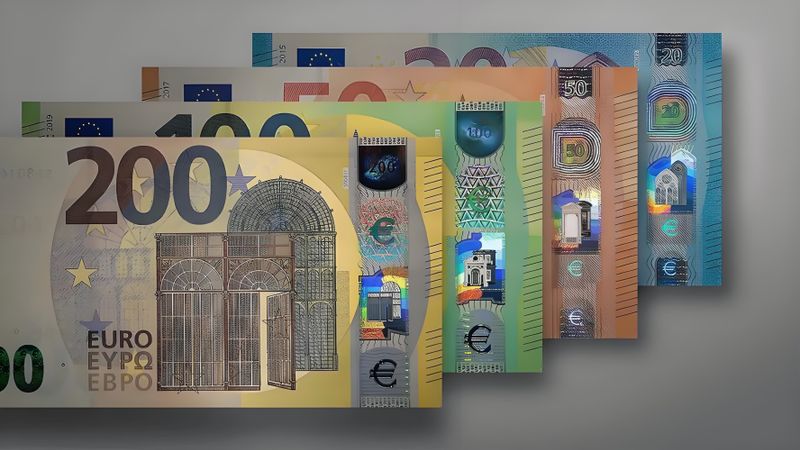
Eurozone Economic Growth Exceeds Market Expectations, Domestic Demand Key Driver
With recent quarterly data showing the Eurozone economy performing better than previously estimated, investor confidence in the region's growth prospects has been boosted. Growth momentum mainly stems from simultaneous improvements in private consumption and business investment, indicating that households and businesses are gradually regaining vitality after past pressures. Despite challenges such as tariff uncertainties and diverging global demand, the Eurozone has shown unexpected resilience.
Industry analysts point out that a robust employment situation is a crucial condition for supporting consumption. Many countries maintain low unemployment rates, and the momentum in wage growth remains stable, ensuring resident purchasing power does not show significant weakening. On the business side, lower financing costs have led to stronger investment intentions, particularly noticeable in sectors involving technological equipment and high value-added industries.
Stable Employment and Salary Data Support Ongoing Economic Recovery
In tandem with economic growth, employment and wage data also show improvement. Steady company recruitment demand is keeping overall employment levels rising, partially offsetting the drag from weak external demand. Wage growth remains at a high level, not only providing a guarantee for consumption capacity but also indicating that the labor market remains tight.
However, some institutions caution that the sustainability of wage growth could become a hidden factor for inflation risk in the future, depending on improvements in corporate productivity. If future wage growth outpaces increases in industrial efficiency, it could lead to rising industrial cost pressures.
Interest Rate Policy Maintains Observation Period, Rate Cuts Discussion Temporarily Delayed
With economic data showing positive signals, the European Central Bank's stance on interest rate policy is gradually stabilizing. Several senior officials recently stated that the current rate levels are close to a "neutral range," able to curb potential inflation pressures without dragging down economic growth. This attitude indicates that the European Central Bank does not have any immediate urgency to adjust policies.
Meeting minutes further confirm that governing council members generally believe that the improvement in economic conditions provides sufficient grounds for postponing rate cuts. As a result, the market has largely absorbed the scenario of "pausing rate cuts," predicting that discussions on rate cuts might be postponed until after 2026. Investment organizations point out that unless there is a significant economic turning point, the European Central Bank will prioritize maintaining policy stability to ensure that market expectations align with the actual economic situation.
External Risks Cannot Be Ignored, Regional Political and Trade Factors Pose Potential Disruptions
Although current data is favorable, the Eurozone's economic outlook remains influenced by politics and the global trade landscape. The rise in domestic political uncertainty in several countries, alongside potential ongoing geopolitical conflicts, could impact business confidence and cross-border investment in the coming months. Additionally, changes in trade rules and global supply chain adjustments are key risk factors affecting the manufacturing sector.
Market analysts emphasize that the Eurozone's economic resilience mainly comes from domestic demand, but if external demand continues to weaken, coupled with potential policy disagreements, economic momentum might experience fluctuations in the mid-term. Therefore, the Eurozone's sustained growth will depend on clear policies, a relaxed trade environment, and optimized industrial investment structures.
Structural Improvements Are Evident, but Uncertainty Remains
Overall, the Eurozone is showcasing resilience driven by strong domestic demand and a stable labor market, laying a solid foundation for future growth. However, in a backdrop of both challenges and opportunities, the economic outlook may still be affected by political and external shocks. The European Central Bank's short-term inclination to maintain policy stability means that the market will focus more on upcoming seasonal economic data to determine whether growth can continue stably.

