
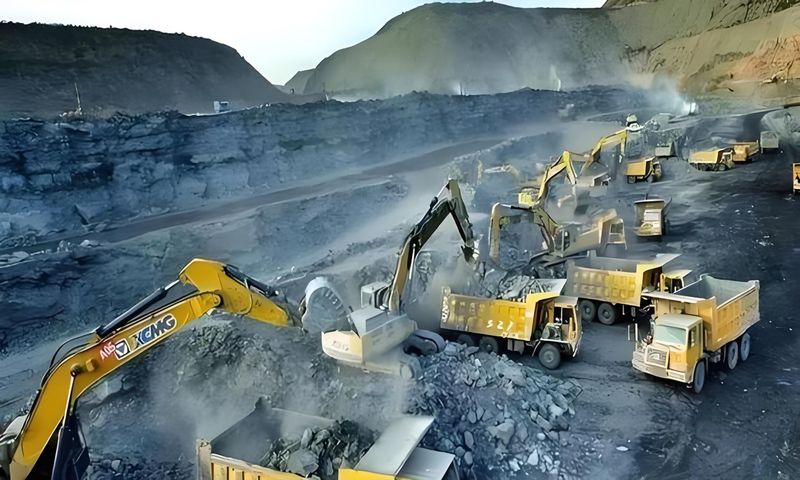
Rare Earth Concept Fully Explodes as Market Heat Rises Rapidly
Australian rare earth stocks experienced a collective surge on Monday. Several media reports stated that the Australian government is considering investing approximately $780 million to establish a strategic mineral reserve to strengthen its position in the global critical resources supply chain, as part of a potential cooperation agreement with the United States. Stimulated by this, market sentiment soared, with several rare earth stocks achieving their biggest intraday gains in months.
Arafura Rare Earths shares once surged 20%, marking the largest single-day gain since mid-January. Lynas Rare Earths rose 7.3%, Iluka Resources increased by 5.9%, and Australian Strategic Materials climbed over 9%. Analysts point out that this round of growth not only reflects investors' response to short-term policy benefits but also highlights a reassessment of the strategic value of Australia's rare earth industry.
Australia-U.S. Cooperation Expectations Boost Industry Confidence
It is reported that the Australian government plans to invest in establishing rare earth and critical mineral reserves to enhance resilience against supply chain disruption risks. This plan may also align with the resource strategies of U.S. defense and energy departments to ensure the stability of key material supplies amid global geopolitical tensions.
A government source who wished to remain anonymous disclosed that both sides are negotiating a "Rare Earth Supply Chain Security Cooperation Agreement," discussing joint reserves, technology sharing, and investment mechanisms in rare earth processing. If the agreement is reached, Australia will become one of the first countries outside the U.S. to have a national rare earth reserve system.
JP Morgan pointed out in its latest report that the U.S. is actively seeking to reduce its dependence on Chinese rare earths, and Australia, with its abundant resources, stable regulatory environment, and geopolitical friendliness, is likely to become a key alternative source.
Policy Promotion and Global Strategic Shift
The Australian government has recently elevated the critical minerals strategy to a national security level. According to the "Critical Minerals Investment Framework" released earlier by the Treasury, the government plans to invest over 3 billion AUD in the next five years, focusing on supporting rare earths, lithium, cobalt, and other energy transition-related mineral projects.
Experts believe the consideration of establishing a rare earth reserve is not only a "defensive measure" to address external risks but also an "offensive strategy" to enhance Australia's voice in the global new energy industry chain.
Helen Rowe, a resource policy expert at the Australian National University, analyzed: "As the U.S. demand for rare earths surges in the fields of energy transition and high-tech manufacturing, Australia will secure export resources in advance through the reserve mechanism, gaining pricing power over the next decade."
Capital Market Reacts Strongly, Foreign Interest Rises
Boosted by policy expectations, the trading volume of the rare earth sector increased nearly 60% compared to the previous trading day. Data shows that some international funds are accelerating inflow into the Australian resources sector, especially companies related to the new energy supply chain.
Arafura stated in its announcement that it is exploring long-term supply cooperation with multiple governments and enterprises, including customers in the U.S., Japan, and Europe. Lynas also announced plans to expand capacity at its Mount Weld project in Western Australia to meet growing global demand.
Analysts note that if a formal Australia-U.S. agreement is reached, Australia's rare earth industry may experience a new cycle of capital investment and international cooperation, further solidifying the country's core position in the global rare earth supply chain.
Risks and Challenges Still Present
Despite the positive market reaction, industry insiders warn that rare earth projects have long exploration-to-production cycles, high capital needs, and volatile prices. If future agreement negotiations do not proceed as expected or if the global economy slows down, related companies may still face profit pressure.
The Australian Mining Council stated in a release that while promoting the strategic reserve plan, the government should ensure flexible regulatory policies to avoid administrative delays in project implementation. Additionally, environmental standards and community cooperation will be key factors affecting the investment process.
Australia's Rare Earth Industry Enters Strategic Window
Overall, Australia's rare earth industry is experiencing a new historical turning point. The combination of policy signals and expectations of international cooperation provides it with strategic advantages in the global supply chain restructuring. If the Australia-U.S. agreement is finally implemented, it will not only strengthen Australia's position in the critical resources sector but may also reshape the global rare earth trade pattern.
Driven by energy transition and geopolitical competition, rare earths are no longer merely industrial raw materials but are becoming a "national security asset." Australia may be at a critical moment of transformation from a resource exporter to a supply chain leader.

