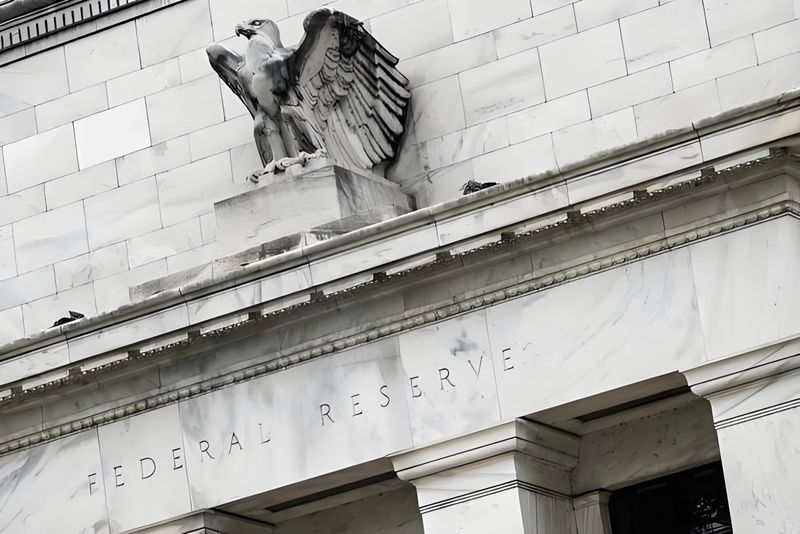
Federal Reserve's Independence Challenged Again
After the Federal Reserve announced a new round of interest rate cuts, its independence has once again become a focal point in the market. Recently, the Trump administration has been quite active, from publicly criticizing Chairman Powell, trying to dismiss board members, to pushing confidants into the decision-making body. These actions are seen as a direct challenge to the Fed's independent status. Analysts point out that the intervention of political forces could profoundly change the logic of modern monetary policy operation.
Original Intent and Evolution of Institutional Design
Since its establishment in 1913, the independence of the Federal Reserve has been a core feature of its system. Whether it's the 14-year term for the chairperson or the financial arrangement that doesn't rely on congressional funding, the original intent was to shield the central bank from short-term political interference. However, historical experience shows that whenever economic or inflationary pressures intensify, the White House tends to exert influence over the Federal Reserve. Instances like the 1950s Treasury-Federal Reserve Accord and Volcker's fight against inflation in the 1980s exemplify the long-standing tension between independence and political contests.
Trump's "Three-Step" Strategy
After Powell did not succumb to political pressure, Trump started to seek influence through personnel adjustments. First, he pushed for the dismissal lawsuit of Board Member Cook, then nominated several confidants to the Board. As some regional Federal Reserve presidents are about to be replaced, it is anticipated that Trump might further exert influence at the local level. This series of actions indicates Trump's attempt to change the decision-making balance of the Federal Reserve through structural arrangements.
Potential Reshaping of the Decision-Making Mechanism
The Federal Reserve's monetary policy tools include the federal funds rate, reserve requirement rates, and overnight reverse repurchase rates. Once the executive branch controls a majority of seats, it might not only lead to a reduction in interest rates but also create policy hedging between the Board of Governors and the Open Market Committee. Experts worry this will cause the market to lose confidence in the Federal Reserve's decision-making framework, weakening its policy transmission effectiveness.
Potential Impact on Global Markets
The impact of the Federal Reserve's compromised independence extends beyond domestic boundaries. As the U.S. dollar is a major global reserve currency, its credibility heavily relies on the central bank's independence and public trust. If political interference undermines market confidence, it could accelerate the global "de-dollarization" trend, increase long-term U.S. treasury yields, and raise government financing costs. International rating agencies even warn that the U.S. credit rating might face new pressures because of this.
Lessons from History and Reality
Such cases are not unprecedented. Political interference during Nixon's era led to hyperinflation, and Turkey's central bank's passive policies have resulted in prolonged high prices. In contrast, central banks that maintained independence managed to quickly curb inflation post-pandemic. Research indicates that central bank independence is a crucial cornerstone for controlling prices and maintaining market trust.
Chain Reactions Among Global Central Banks
As a benchmark in the global central banking system, a weakened independence of the Federal Reserve would serve as a negative example for other countries. Over a hundred central banks have gradually gained independence in past decades, and any reversal in the U.S. could trigger "imitation risks," affecting global monetary policy stability.
Conclusion
As the confrontation between Trump and the Federal Reserve intensifies, global market tensions are rising. Regardless of the final outcome, this power struggle clearly reveals one fact: the future of the Federal Reserve's independence will not only determine the trajectory of the U.S. economy but also profoundly impact the stability of the global financial system.