
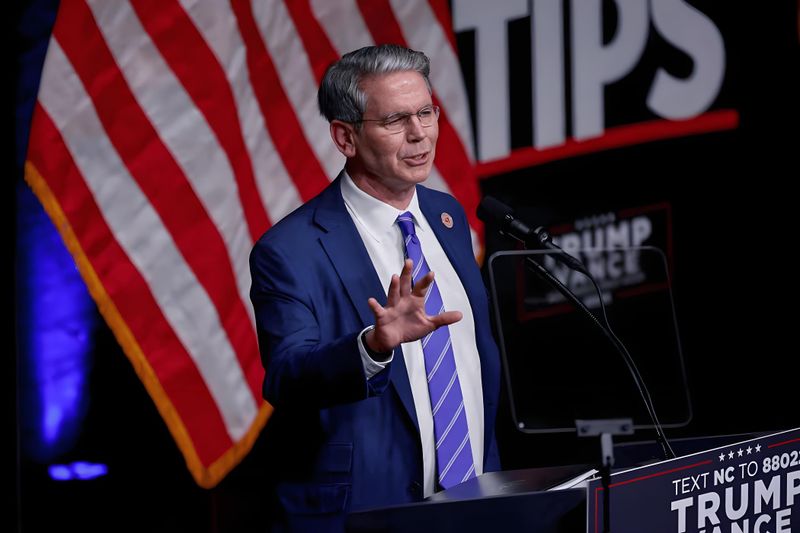
Significant Increase in Likelihood of Interest Rate Cuts Warned by Bessent
Recently, U.S. Treasury Secretary Bessent pointed out in a media interview that the significant revision of the latest employment data has greatly altered the market's expectations for monetary policy. He believes that if such data had been released earlier, the Federal Reserve might have started lowering interest rates in the summer, substantially increasing the possibility of a 50 basis point cut in September.
Bessent stated bluntly that the current interest rate level is too restrictive for the economy and suggested gradually lowering it by 150 to 175 basis points in the coming months. Although his views differ from the Trump administration's demand for larger rate cuts, both are aligned on the direction of rate cuts. This statement undoubtedly strengthens the market's bet on major moves by the Federal Reserve.
Employment Data Revision Impacts Policy Judgment
According to the latest revised data from the U.S. Bureau of Labor Statistics, employment growth from May to July this year almost stalled, presenting a stark contrast to the previously indicated steady employment. Previously, the Federal Reserve predicted a robust labor market based on old data, thus keeping rates stable in June and July. Now, with the data reversal, the policy stance is under reevaluation.
Market analysts point out that this revision forces Federal Reserve officials to face the risk of rising unemployment rates. Some officials supporting rate cuts believe prompt action is essential to prevent the economy from slipping into a more severe recession cycle.
Interplay of Politics and Policy
Bessent's remarks are not only economic judgments but also contain political implications. Previously, Trump criticized the first rate cut last September as politically motivated and has continually pressured the Federal Reserve on policy direction. Currently, the Trump administration is seeking replacements for the current chairman Powell, with the potential list expanding to 11 candidates, indicating dissatisfaction and a desire to intervene in monetary policy decision-making at the top level.
Although the Federal Reserve emphasizes that policy decisions will rely entirely on economic data, free from external political influences, the market widely believes that, with the presidential election approaching and tariff policy impacts still unresolved, policy-making is inevitably influenced by the political climate.
Dual Consideration of Inflation and Tariff Factors
Recent data shows a moderate rise in U.S. inflation in July, with prices potentially accelerating in the short term due to tariff policy in the coming months. Nevertheless, more and more Federal Reserve officials tend to overlook price fluctuations caused by tariffs, focusing instead on signs of labor market weakness.
Some board members believe that if policy is not adjusted now, more substantial stimulus measures may be needed in the future. Bessent's proposed reduction of interest rates to about 3% approaches what the Federal Reserve describes as a "neutral level," meaning monetary policy would neither excessively stimulate nor suppress economic growth.
Market Nearly Certain of Rate Cuts
Influenced by Bessent’s open statements and employment data revisions, market expectations for a Federal Reserve rate cut in September have surged. Futures market prices indicate that the probability of a 50 basis point cut is nearly one hundred percent.
Analysts point out that if the Federal Reserve undertakes a large-scale rate cut in September, it will signify a major shift in its policy stance, laying the foundation for economic trends within this year and even into 2026. However, this move could also trigger ongoing debates about inflation control and policy independence.

