
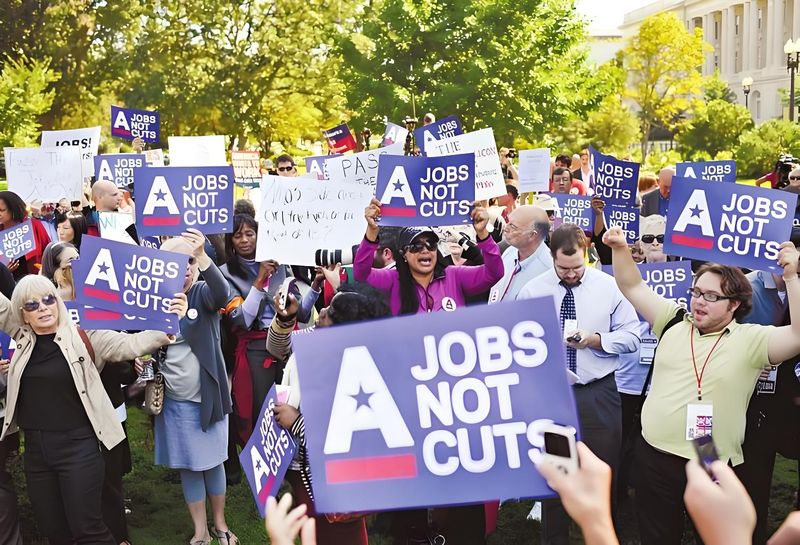
Collapse in Worker Confidence Raises Market Concerns
The US job market is facing unprecedented pressure. The latest survey by the New York Federal Reserve shows that workers' confidence in finding new employment after being laid off has reached its lowest level since 2013, with pessimistic sentiments pervading almost all groups. Those with mid-to-low education levels are particularly worried about the future. The weakening job market is gradually eroding consumer spending willingness and overall economic confidence.
Reasons Behind the Worsening Employment Environment
Against the backdrop of a sharp slowdown in job growth, companies have become more cautious in hiring. Employers are setting stricter standards when selecting candidates, leaving many job seekers feeling that opportunities are scarce. Meanwhile, those currently employed are increasingly hesitant to leave their jobs due to concerns about future risks, fearing the unknown market is becoming a new factor hindering labor mobility, exacerbating job market stagnation.
Technological Advances Intensify Employment Insecurity
The widespread adoption of artificial intelligence and automation, which was expected to enhance productivity, has instead accelerated layoffs in the short term. Industries such as finance, technology, and manufacturing are streamlining their workforce to reduce costs. Although this trend is reflected in improved corporate profitability, it is creating new anxieties at the societal level, with workers fearing that traditional jobs will gradually be replaced by machines.
Employment Trend Index Continues to Decline
The Employment Trends Index of The Conference Board continued to decline in August, hitting its lowest point since 2021. This downward trend not only reflects a lack of momentum in corporate hiring but also highlights a weakening economic growth driver. Analysts point out that trade barriers, tariff pressures, and slowing consumption may collectively prompt companies to adopt a more conservative stance in the coming months.
Data Shocks and Market Reactions
The latest report from the U.S. Department of Labor shows that new job additions are far below market expectations, with previous data revised down to negative values. This signal has deeply shocked the market, with investors fearing that unemployment rates will continue to rise. Macroeconomic research institutions predict that this weakened trend may persist for years, dragging down the pace of US economic recovery.
Rate Cut Expectations and Heightened Risk Aversion
Amid continuing weakening job data, the market widely anticipates the Federal Reserve will announce a rate cut at its September meeting. Although there is disagreement on the specific extent, the expectation of loose monetary policy has become a consensus. Investors are inclined to seek safe havens amidst uncertainty, and gold, as a traditional safe asset, has become the preferred capital destination.
Gold Reaches Record High
The demand for safe havens has pushed gold prices past the $3,600 per ounce threshold, setting a new historical record. Analysts believe that as long as weak job markets and inflation pressures coexist, the appeal of gold will persist. In the short term, the direction of Federal Reserve policies and employment data will continue to be key factors determining gold prices.
Resonance of Employment and Policies
In the future, whether the US job market can regain vitality will be crucial to economic recovery. If worker confidence does not recover, both consumption and investment activities will be suppressed. Meanwhile, a Fed rate cut might offer some support but cannot fundamentally solve structural contradictions. Against this backdrop, gold prices may continue to benefit from risk aversion, while the US economy faces the dual challenges of employment and growth.

