

Federal and Provincial Disagreements Intensify, Trade Dispute Escalates
Trade tensions between Canada and the United States are heating up again, sparked by a television advertisement from the Ontario government. President Trump recently announced an additional 10% tariff on Canadian exports, claiming that the ad contains "misleading propaganda," which has stirred American public opinion. This move has immediately caught the attention of Ottawa, prompting the Canadian federal government to swiftly act to stabilize diplomatic and economic situations.
Dominic LeBlanc, a Canadian cabinet minister, stated on social media that the federal government is the only legitimate entity to conduct trade negotiations with the U.S., emphasizing that "any discussions involving tariffs and international agreements must be handled at the federal level." This statement aims to clearly outline the jurisdictional boundaries between federal and provincial governments regarding trade matters.
Carney Defines Responsibility Boundaries, Calls for Restraint
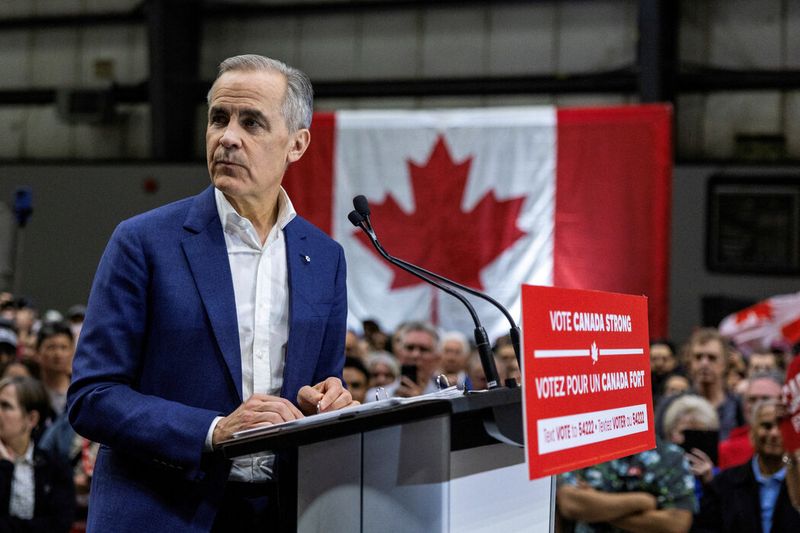
Prime Minister Mark Carney, during a meeting in Malaysia, addressed related issues, stating that the Canadian government is committed to mending economic and trade relations with the U.S. through diplomatic channels. He stressed that "the federal government is Canada’s sole authority in formal negotiations with the White House."
Carney emphasized that trade policies concern national interests and must be executed within a unified framework, adding, "Federal-led centralized negotiations are the best way to safeguard Canada's interests."
Carney also urged provincial governments to avoid independent actions that could lead to misunderstandings, risking the overall national negotiation process. He added that Canada's goal remains to achieve reciprocal and fair trade relations, rather than escalating tensions through media disputes.
Ontario Announces Suspension of Advertisement, Distances from Political Intent
The other key figure in this matter, Ontario Premier Doug Ford, quickly responded after the controversy intensified, announcing that the advertisement would be pulled next Monday.
Ford clarified that the ad's purpose was to "enhance public support for Canadian manufacturing," not to provoke the U.S. government or interfere in diplomatic affairs. He also called on both the U.S. and Canada to "return to the negotiating table" to resolve the trade dispute constructively.
However, Ford's statement did not entirely ease external skepticism. Some Canadian political figures argue that this incident reflects the provincial government's lack of coordination with the federal government in external communications, leading to potential international misconceptions as official positions.
Domestic Reaction Divided, Local Support Persists
Despite the federal government's clear stance to delineate boundaries, Ontario's actions still garnered support from some provinces.
The Premiers of Saskatchewan and Alberta publicly praised Ford for "daring to directly communicate with the American public," believing that this approach helps increase Canada's initiative in public opinion.
They noted that the strong reaction from the Trump administration precisely indicates that the advertisement "achieved its purpose."
However, economists generally believe that such "localized diplomacy" can result in confused negotiation messages, weakening Canada's unified stance in international trade talks.
A policy adviser, who preferred to remain anonymous, noted, "In the sensitive context of current U.S.-Canada relations, any uncoordinated actions could be misconstrued by the U.S. as provocative behavior."
Federal Leadership Framework May Strengthen
In light of the increasingly complex relationship with the U.S., the Carney government is expected to tighten the coordination authority over trade policies further.
Sources indicate that the federal cabinet is considering establishing "provincial communication guidelines," requiring local governments to report to Ottawa before engaging in international communications to prevent similar incidents from reoccurring.
Analysts believe that although this incident is isolated, it highlights the issue of authority boundaries between the Canadian federal and provincial governments in the field of economic diplomacy.
In the future, the Carney government may leverage this as an opportunity to strengthen the centralized decision-making mechanism for trade matters, ensuring Canada's negotiation stance remains unified and robust amidst rising global trade uncertainties.

