

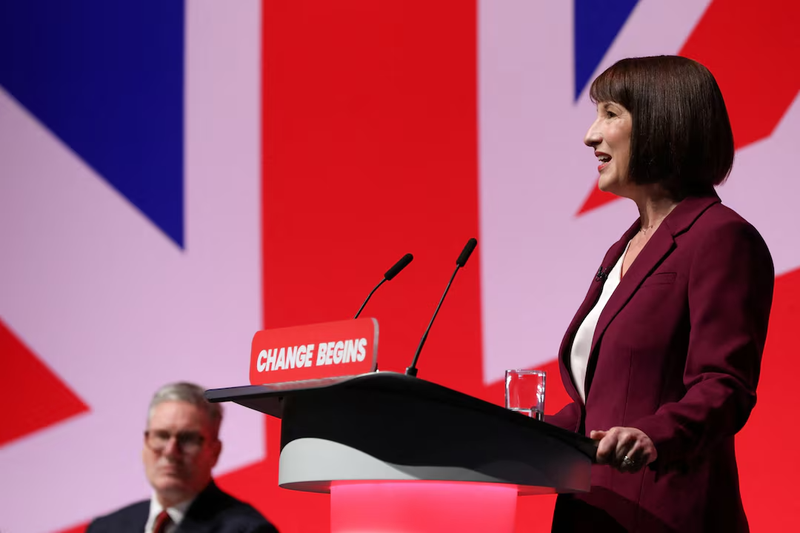
Budget Adjustments Imminent: Government Faces Tough Choices
UK Chancellor Rachel Reeves is reconsidering the contents of the budget set to be announced on November 26, potentially abandoning the previously planned income tax increase. This shift is seen as a reflection of the Labour government's challenging balance between political pressure and financial realities.
Insiders revealed that the Treasury initially planned to boost revenue by raising the income tax rates for basic and high-income groups. However, Labour's top officials are concerned that this move might breach campaign promises and undermine public trust in the government. Ultimately, Reeves might opt for a "low-conflict" route, addressing part of the shortfall through technical tax adjustments and modest tax hikes.
Labour Party Divisions Widen as Political Pressure Increases
Political tensions within the Labour Party are escalating. Several MPs have warned that raising personal income taxes could erode Labour's support base among middle-class voters. Meanwhile, Prime Minister Keir Starmer's government finds itself in a political whirlwind due to a senior cabinet member allegedly initiating a leadership challenge, complicating budget coordination efforts further.
An official familiar with the Treasury’s plans indicated: "There are effectively two budget drafts at present—one featuring aggressive tax increases, and another that leans towards the status quo with minimal revenue adjustments. Reeves originally supported the former, but internal opposition has forced her to reconsider."
Budget Shortfall Reaches £35 Billion
According to the latest Treasury estimates, the UK government needs to fill a budget gap of up to £35 billion. This figure highlights the imbalance between expanding public expenditure and sluggish tax growth. Should the income tax increase be abandoned, the government will have to seek alternative measures.
Possible actions include lowering the threshold for certain taxes, reassessing capital gains tax, and broadening the scope of the bank profits levy. Additionally, the Treasury is considering cutting non-essential spending programs to reduce the deficit.
An analyst noted: "Without raising taxes, the government will either have to cut public spending or increase borrowing. Either approach poses risks to the UK's economic recovery."
Exit Tax and Limited Partnerships Under Scrutiny
Sources have revealed that Reeves is re-evaluating proposals for an "exit tax" for high-net-worth individuals and taxation of limited liability partnerships. The former aims to prevent wealthy groups from shifting assets to low-tax regions, while the latter targets professional firms exploiting tax loopholes to avoid income tax.
However, these proposals face implementation challenges. Fiscal policy experts caution: "An exit tax could trigger capital outflows, and reforming partnership taxation will likely meet strong resistance from legal and financial sectors."
Fiscal Outlook and Market Expectations
The UK's market response to budget uncertainty is gaining momentum. The pound briefly weakened against the dollar during Thursday's early trade, and government bond yields edged up, reflecting investor concerns that fiscal discipline loosening may drive long-term borrowing costs higher.
Financial institutions generally believe that if the government ultimately opts to forgo direct tax increases, it will maintain market stability in the short term, though medium-term fiscal pressures are unlikely to ease. A Barclays report stated: “Political compromises in the budget could undermine the UK's fiscal sustainability reputation, especially against a backdrop of record-high debt levels.”
Budgetary Balance is the Biggest Test
With only two weeks until the budget announcement, the dual pressures of politics and economics are becoming increasingly apparent for Reeves. She must fulfill Labour's promise of “no tax increases” while covering a budget shortfall of several billion pounds.
Regardless of the final outcome, this budget will serve as a litmus test for the new government’s governing capabilities and policy direction. UK media broadly believe that Reeves' decisions are not only about fiscal balance sheets but also about the future political fate of the Labour Party.

