
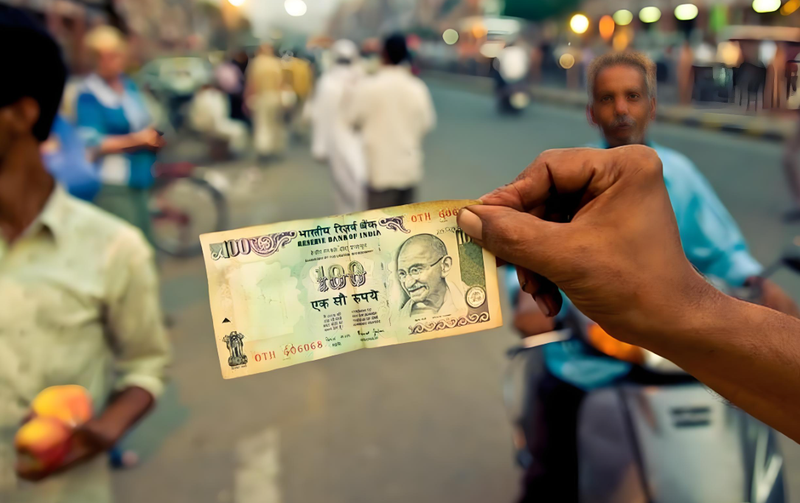
India's Economy Shows Resilience Amid Hidden Risks
In its latest monthly bulletin, the Reserve Bank of India highlighted that the Indian economy is demonstrating relative stability and resilience, driven by a strong recovery in rural demand. However, the central bank also issued a warning about the deepening trade tensions with the United States, which could potentially become a future downside risk to economic growth.
Inflation Levels Below Target
According to the bulletin, the average inflation level for this fiscal year is expected to be significantly below the central bank's target of 4%. This indicates that the price pressures in India are relatively controllable, giving policymakers some maneuvering room.
A low inflation environment suggests that the central bank might consider slightly easing monetary policy if necessary, to balance external shocks and domestic growth demands.
U.S.-India Trade Frictions Raise Concerns
In recent years, the United States has imposed tariffs on some of India's export goods, including steel, aluminum, and certain manufactured items. This not only increases the costs for Indian export companies but also weakens their competitiveness in the international market. The central bank pointed out that if trade frictions escalate, it may lead to export obstructions, affecting overall economic growth.
Given India's heavy reliance on the U.S. market, this risk could have a more direct impact on employment and supply chain stability.
Monetary Policy Remains Flexible
The central bank emphasized in the bulletin that the future path of monetary policy will continue to rely on new data and domestic economic performance, particularly the evolution of inflation dynamics. The central bank is committed to seeking a balance between supporting economic growth and maintaining price stability.
In early August, the Reserve Bank of India decided to keep the key interest rate unchanged at 5.50%, signaling caution and stability. Despite holding rates steady, the current low inflation and potential external risks provide room for limited easing in the future.
Rural Demand Acts as Support
Domestically, rural consumption and agricultural production are viewed as the core pillars supporting current economic growth. A good monsoon season has boosted agricultural output, increasing rural income levels, which in turn has revived demand for consumer and durable goods.
Analysts believe that this revival in rural demand will, to some extent, offset the adverse effects of external trade frictions, providing a "buffer" for the economy.
Expert Opinions and Market Reactions
Economists generally believe that although India's economic fundamentals remain solid in the short term, increasing external uncertainties will complicate future policy challenges. If the U.S. continues to expand tariff coverage, India may need to mitigate risks by enhancing fiscal support, boosting domestic demand, and seeking diversified export markets.
In the market, the Indian rupee has remained relatively stable lately, but investors have begun to pay more attention to trade policies and global economic volatility.
Conclusion
Overall, the latest statements by the Reserve Bank of India reflect the resilience of the domestic economy but also highlight the severity of external risks. As the potential impact of U.S.-India trade frictions begins to materialize, the central bank may be compelled in the coming months to make tough decisions between supporting growth and maintaining stability.
This situation not only concerns India itself but will also have profound implications for confidence and capital flows in global emerging markets.

