

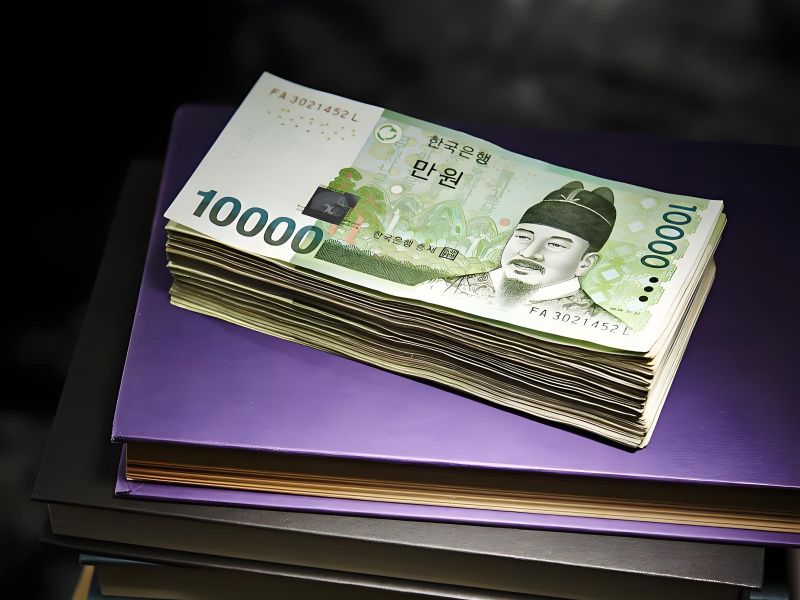
The South Korean Won Under Pressure Again, Reaches a Fifteen-Year Low
Recently, the South Korean won has been weakening against the US dollar, nearing its lowest level since the 2008 global financial crisis. This has heightened market attention on the possibility of foreign exchange intervention by South Korea's central bank. Data shows the won briefly dropped to around 1480 against the dollar, just a step away from its historic low. Although there was a slight rebound in early Asian trading, the overall trend remains weak.
Since the second half of 2024, the won has depreciated by about 6%, making it one of the worst-performing major currencies in the Asia-Pacific region. Analysts point out that the weakness of the won is not a short-term phenomenon but a result of sustained capital outflows, a narrowing trade surplus, and investors' dim expectations for Korea’s economic growth.
The Clash Between Foreign Capital Withdrawal and Reform Expectations
The decline of the won is closely linked to structural changes in South Korea's capital markets. This year, foreign investors have been consistently reducing their holdings of South Korean stocks. According to the Korea Exchange, the net selling by foreigners in October exceeded $5 billion, marking a six-month high.
Additionally, at the end of September, the Korean government announced plans to allow 24-hour trading of the won and relax restrictions on non-resident transactions from next year. While the policy intends to enhance the won's internationalization and attract foreign investment, it has, in the short term, raised concerns about liquidity and market volatility.
A Seoul-based foreign exchange analyst noted, "The depth of Korea's market is not yet sufficient to support full liberalization. The short-term hesitation or withdrawal of foreign capital is a preemptive response to potential volatility risks."
South Korea's Central Bank Takes Cautious Stance, Intervention Signals Unclear
Facing the accelerated decline in exchange rates, Bank of Korea Governor Lee Chang-yong mentioned that the central bank might intervene if the market experiences "excessive volatility." However, he also emphasized that the current trend of the won primarily reflects rising global uncertainties and the impact of US Federal Reserve policies, cautioning against exaggerating its crisis nature.
Industry insiders believe that behind the central bank's cautious stance is a complex policy balance: on one hand, a depreciating won benefits export companies; on the other, inflation pressure and capital outflow risks may intensify with declining exchange rates.
Unlike Japan's frequent verbal interventions with the yen, the Korean central bank prefers using "implicit tools" to stabilize the foreign exchange market, including guiding state-owned institutions to intervene or adjusting foreign exchange positions. At the end of last year, the Korean National Pension Service (NPS) sold dollar assets and increased domestic equity investments to cushion the downward pressure on exchange rates.
Macroeconomic Challenges Constrain Policy Maneuverability
The International Monetary Fund (IMF) forecasts that South Korea's economic growth rate in 2025 will be only 0.9%, the lowest among major Asian economies. The weak growth outlook limits the scope for rate cuts, while high bond yields further tighten liquidity.
This week, South Korea's 10-year government bond yield rose to a 16-month high, reflecting market sentiment that the monetary easing cycle may be nearing its end. If the central bank intervenes too early or cuts rates, it could trigger an acceleration of capital outflows, exacerbating financial market instability.
Therefore, some market observers believe Korean authorities may adopt a "gradual defense" strategy—adjusting foreign exchange positions through state funds and strengthening cross-border capital controls, rather than direct intervention.
Regional Effects and Future Outlook
The weakness of the won is not just an issue for Korea itself but a microcosm of broader pressure facing Asian currencies with the strengthening dollar. The Japanese yen has fallen below the 155 mark, and both the Indian rupee and Philippine peso linger around multi-year lows. The increased interlinking of regional currencies means that if the Korean market experiences severe fluctuations, it could trigger a chain reaction in the Asian financial sector.
Currently, the market generally expects that if the won falls below the psychological threshold of 1500, the Bank of Korea will have to take substantial action. In the coming weeks, foreign capital flows, US inflation data, and changes in the Federal Reserve's rate cut expectations will all be key variables affecting the won's fate.
As one Korean economist put it, "The pressure on the won comes not only from the external strength of the dollar but also from internal confidence wavering—and confidence is the most challenging aspect for the central bank to directly influence."

