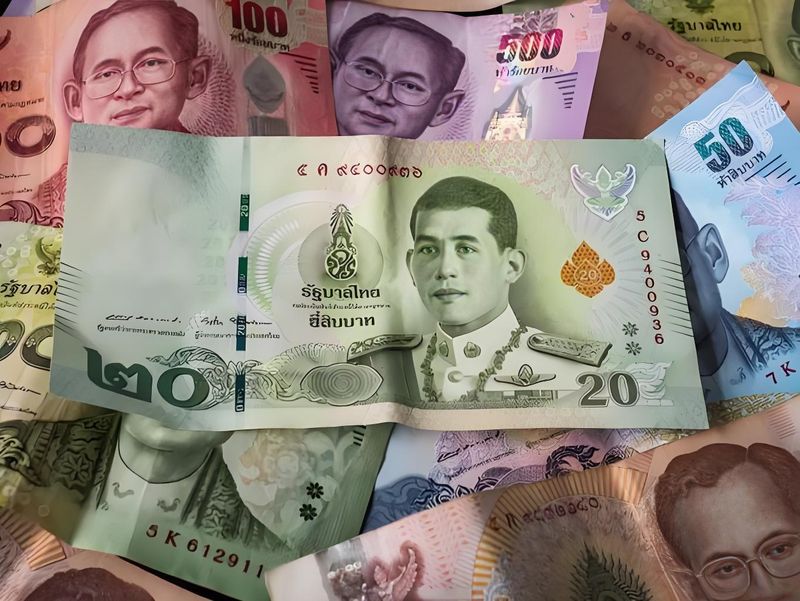
Thai Baht Reaches New High, Reflects Confidence in Improved Trade Environment
Latest data from July shows the Thai Baht strengthening slightly against the US dollar to 32.138, reaching its highest level since February 2022. This appreciation trend is seen as being driven by market optimism regarding an impending trade agreement between Thailand and the United States, also reflecting renewed investor interest in emerging market risk assets.
Although the dollar remains strong overall, the independent strengthening of the Baht signifies a reevaluation of Thai fundamentals by the market. As negotiations progress and geopolitical risks temporarily cool, Thai assets may attract broader international capital allocation.
Trade Negotiations Indicate Positive Signals, Possible New Chapter for Thai-U.S. Relations
Amid a global backdrop of protectionism and tariff disputes among major economies, the progress of bilateral talks between Thailand and the U.S. is particularly critical. While an official agreement has not yet been announced, multiple indicators suggest that both parties are engaging in intensive communication on core issues such as tariff reciprocity and rules of origin.
Analysts point out that if Thailand can make moderate concessions in areas like the digital economy, agricultural product access, and supply chain standards, it may secure tariff reductions or even quota relaxations from the U.S. for Thai products, significantly boosting confidence in Thailand's export sector.
A recent report from a research institution under Thailand's Ministry of Finance also indicated that a potential agreement with the U.S. could stabilize foreign trade expectations and reduce the institutional uncertainty faced by exporters, thereby supporting the long-term fundamentals of the Thai Baht.
Renewed Enthusiasm from Foreign Investors, Improved Expectations for Capital Markets
Currency strengthening often attracts overseas investors to reevaluate asset values, and the rise of the Baht is already reflected in capital flows. Data from the Bangkok Stock Exchange shows foreign investors have been net buyers of Thai stocks for three consecutive trading days, particularly focusing on the energy, utilities, and export-oriented manufacturing sectors.
At the same time, the Thai bond market has seen a simultaneous drop in yields and a rise in holdings. The market anticipates that, should Thai-US trade talks lead to an agreement, Thailand's government financing costs will further decline, increasing the appeal of bond market allocations.
An analysis from an international rating agency suggests that stable trade expectations and a strong currency will enhance Thailand's external debt repayment capabilities and may lead to a positive revision in credit outlooks within the year.
Macroeconomic Policy Stance Remains Moderate, Central Bank May Control Intervention Pace
Although the Baht's appreciation aligns with fundamental logic, the Bank of Thailand also needs to balance exchange rate stability with maintaining export competitiveness. In a recent statement, the Bank of Thailand mentioned it is "closely monitoring" Baht exchange rate fluctuations and will take necessary measures as market developments dictate to maintain financial stability.
It is widely expected that if the Baht appreciates too quickly, the central bank may intervene moderately or provide verbal guidance to slow the pace of capital inflows, preventing excessive pressure on export companies.
Negotiation Outcomes Will Determine Trend Continuation
While the current trend of the Baht is strong, its sustainability will depend on the final results of trade negotiations. If Thailand and the U.S. formally sign an agreement in the short term, the Baht could further challenge the 31.800 level. However, if negotiations encounter obstacles or if the U.S. issues more intense pressure signals, it may trigger profit-taking, pushing the exchange rate back above 32.500.
Overall, the recent rise in the Baht is not just a reaction to a single event, but a testament to the robust economic structure of Thailand and the improvement in policy expectations. Investors should closely monitor negotiation dynamics to assess the subsequent performance trajectory of exchange rates and asset prices.