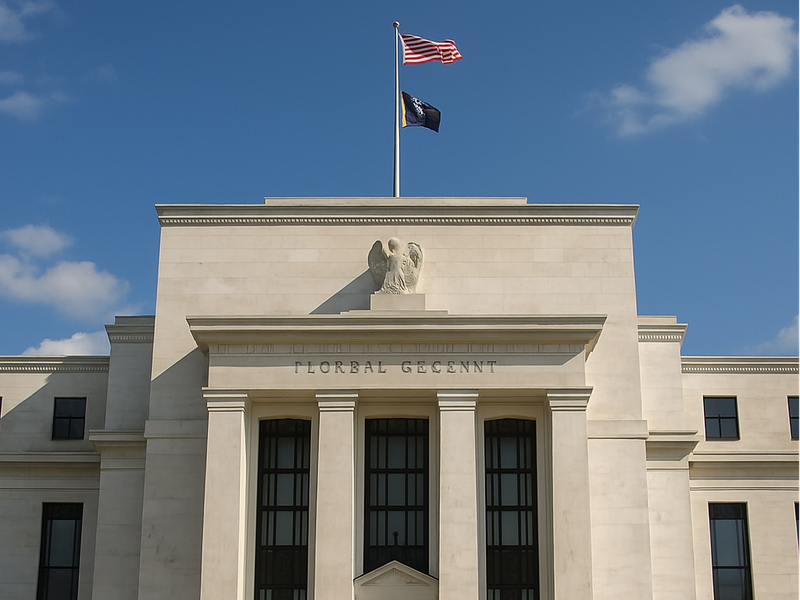
Global Payment System Enters Deep Waters
The United States Federal Reserve announced Wednesday that it will hold a high-level conference on payment innovation on October 21. This move indicates that the Federal Reserve is actively addressing the rapidly changing landscape of payment technology and attempting to strike a balance between regulation and development in the digital wave. In recent years, the rise of mobile payments, cross-border settlements, and crypto-assets has continuously challenged the traditional financial system, and the Federal Reserve's statement underscores its focus on the future of the payment landscape.
Stablecoin Applications Garner Attention
One of the agenda items is the application and regulation of stablecoins. As dollar-pegged stablecoins expand rapidly in the global financial market, they are becoming crucial tools for cross-border payments, digital asset trading, and decentralized finance. However, the compliance, asset reserve transparency, and potential impact on monetary policy of stablecoins have raised significant concerns among policymakers. Industry insiders expect the Federal Reserve to listen to insights from experts, scholars, and industry representatives during the conference to lay the groundwork for more defined regulatory frameworks.
AI Drives New Payment Models
Another highlight is the integration of artificial intelligence with the payment industry. AI technology has shown enormous potential in areas such as risk monitoring, fraud prevention, user behavior prediction, and smart contract execution. The Federal Reserve noted that the introduction of AI could reshape the payment industry chain, enhancing efficiency and security, albeit accompanied by challenges in data privacy and algorithm bias. The conference may address how to ensure the robustness and fairness of the payment system while advancing innovation.
Prospects and Challenges of Financial Tokenization
Financial products and services tokenization have been on the rise, covering a range of assets from real estate to bonds. Through tokenization, assets can be digitized, fragmented, and swiftly circulated on a distributed ledger, improving liquidity and transparency. However, potential risks cannot be overlooked, including the lack of standardized technology, insufficient investor protection, and an incomplete legal framework. The Federal Reserve's choice to focus on this topic reflects its intention to find a balance between regulation and innovation.
Policy Signals and Market Reaction
Analysts believe this payment innovation conference is not just a platform for academic and industry exchange but may also emit significant policy signals. If the Federal Reserve proposes stricter regulatory plans for stablecoins or tokenized products, the market could experience short-term volatility; conversely, if it emphasizes openness and cooperation, it might create a broader development space for fintech companies.
Conclusion
As fintech evolves rapidly, payment methods are undergoing an unprecedented revolution. From stablecoins to AI to financial tokenization, each innovation could be a key variable in reshaping the financial system. The impending Federal Reserve payment innovation conference may set a pivotal moment in the evolution of payment landscapes for the coming years.