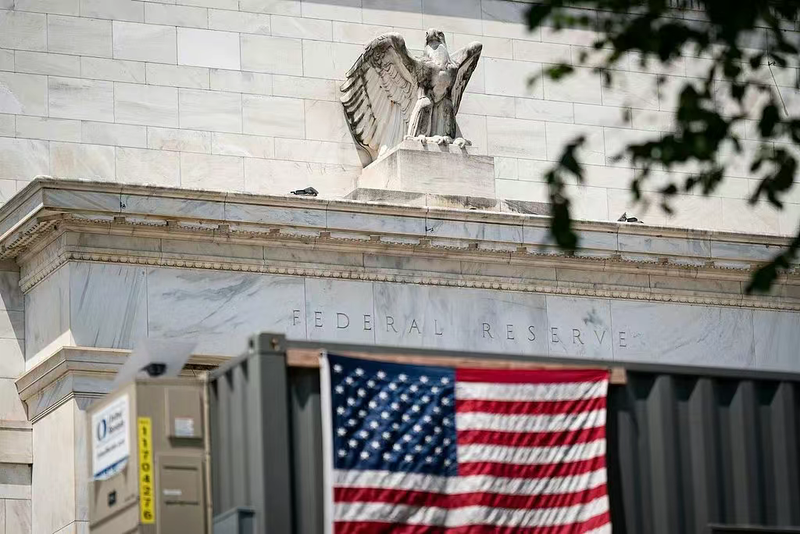
Federal Reserve Maintains Stable Rates, Remains Cautious Amid Pressure to Cut
On July 30, local time, the Federal Reserve concluded a two-day policy meeting, opting once again to keep the federal funds rate target range unchanged at 4.25% to 4.50%. This decision met the expectations of most economists but continued the policy of inaction since the beginning of the year, indicating that the Federal Reserve is still adhering to its gradual policy path despite intertwined economic data and political pressures.
Chairman Jerome Powell stressed at the post-meeting press conference that current economic uncertainties are still high, insufficient to justify a rate cut decision. He added that the Federal Reserve will continue to adjust its policy stance based on a "meeting-by-meeting, data-driven" approach.
Internal Split Seen in Voting, a Rare Occurrence in 32 Years
The most notable aspect of this decision was not the outcome, but the process. The Federal Reserve decision-making body saw a rare occurrence of two governors voting against the decision. Governors Jonathan Brown and Mary Daly advocated for a small preemptive rate cut to counter potential risks like tightening credit and a gradually slowing job market.
This marks the first time since 1993 that multiple senior officials have openly opposed a policy stability decision, highlighting a substantial internal divide within the Fed regarding economic assessment and future policy paths. This development also prompted outside observers to reevaluate the Fed's traditional image of unanimity.
Market Focuses on September as Pressure from Trump Intensifies
While the Federal Reserve announced unchanged rates, the White House continued to call for more monetary easing. According to insiders, President Trump's team hopes for a "symbolic" rate cut at the September policy meeting to boost stock market confidence and support economic data ahead of the election.
The market generally expects that whether the Fed adjusts its policy in September will depend on upcoming key economic data, including non-farm payroll, CPI inflation, and consumer confidence. Internal split voting is also interpreted by the market as opening a subtle window for a September rate cut.
Divergences Highlight Policy Risks, Investors Should Be Alert to Increased Volatility
The meeting did not provide further details on asset-liability plans, but analysts pointed out that the Fed's current policy-making is under dual pressure: on one hand, addressing the challenge of possible economic slowdown, and on the other, maintaining the sustainability of inflation downtrend.
The JPMorgan economic team warned that if internal Fed opinions continue to diverge, the uncertainty over future policy paths may increase financial market volatility, especially posing pressure on interest rate-sensitive industries and emerging markets.
Rate Hike Cycle May Have Ended, Transition Window Not Fully Open
Although the meeting did not signal a clear transition, the voting differences within the board and Powell's cautious statements reveal that the Federal Reserve remains in a wait-and-see stance regarding the economic outlook in the coming months.
For the market, the series of macroeconomic data before the September policy meeting will be crucial. If the trends of slowing employment and declining inflation continue, policy shift may come onto the agenda. However, under the current backdrop of intensified long-short battles, the Fed's future direction remains highly uncertain.