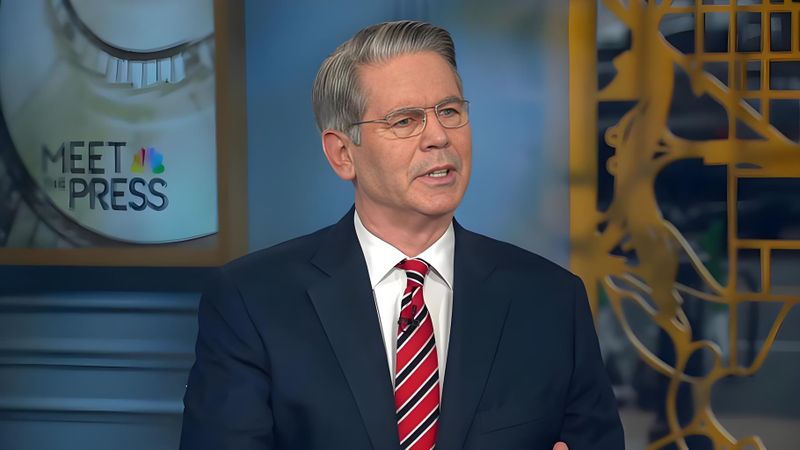
Besen Reaffirms Commitment to Reform, Reflects on Flaws in Banking Regulatory System
At the opening of a conference focused on financial regulation, U.S. Treasury Secretary Besen made a high-profile statement, calling for a systematic overhaul of the current banking regulatory framework. He noted that the current system is overly complex and inefficient, with some rules no longer aligning with the current market structure and economic development needs.
Besen particularly highlighted that U.S. financial regulation often results in "reactive policy accumulation," leading to overlapping systems, reduced operational efficiency, and limitations on banks' lending capacity.
Focus on Capital Requirement Structure, Proposes to Abandon "Dual Structure"
One of Besen's main criticisms was the "dual capital requirement structure" proposed in 2023 but not yet implemented. This structure requires banks to adopt the stricter of two risk capital assessment systems, indirectly raising the capital threshold for banks.
He pointed out that this proposal is not based on actual risk assessment but is a product of "artificially set higher capital floors." He argued that such measures would constrain the capital efficiency of medium to large banks and are contrary to the overall direction of "modernized financial regulation."
Modernizing the Financial System: Avoiding One-Size-Fits-All, Encouraging Opt-In Mechanisms
To increase policy flexibility, Besen suggested establishing an "opt-out mechanism," allowing certain banks not covered by new capital rules to voluntarily join for greater regulatory flexibility. He believes this structure could reasonably direct capital release and reduce capital redundancies in the banking system, providing significant relief particularly for small and community banks.
He emphasized, "Rationalization is not weakening regulation but making it more precise and adaptable."
Treasury Strengthens Coordinating Role, Calls for Joint Promotion of Reform
In this speech, Besen also clarified that the Treasury will play a stronger leading role in the financial regulatory field. He criticized the phenomenon of regulatory fragmentation, stating that certain regulatory agencies have "severe parochialism," hindering the formation of a reform consensus.
"The Treasury should not just be an observer, but a initiator and coordinator of reform," he emphasized, promising to promote the establishment of a tighter policy coordination mechanism among regulatory agencies.
Promoting Both Innovation and Stability, Policies Shift Towards Pragmatism
Besen stated that while advancing regulatory reform, the U.S. will continue to uphold financial security and consumer protection. He believes the regulatory framework must unleash innovation and economic growth potential while ensuring systemic stability.
He cited the Silicon Valley Bank incident as an example, noting that even under extreme risk, a systemic firewall must be maintained. But he also warned against making overly punitive rules that inhibit financial institutions' ability to serve the real economy.
Financial Reform in Washington Stirs New Waves, Policy Direction Worth Watching
Besen's speech indicates the Trump administration's signal of pushing for a "simplification" policy in the financial sector, suggesting that future banking capital regulation may shift towards a more flexible and pragmatic direction.
Currently, there are mixed reactions in the market to such adjustments. On one hand, the banking industry generally welcomes the reduction of regulatory burdens; on the other hand, some analysts worry that overly rapid deregulation could accumulate financial risks. How the Treasury and the Federal Reserve balance "stability" and "flexibility" will become the focus of market attention going forward.