
New Zealand's Inflation Slows Less Than Expected, Market Reacts Cautiously
According to the latest data released by Statistics New Zealand in July, the nationwide Consumer Price Index (CPI) annual growth rate in the second quarter of 2025 was 2.7%, slightly higher than the previous quarter's 2.5%, but still below the market expectation of 2.8%. Despite the annual rate increase, the quarterly growth rate fell from 0.9% in the previous quarter to 0.5% this quarter, indicating that upward pressure on prices is easing.
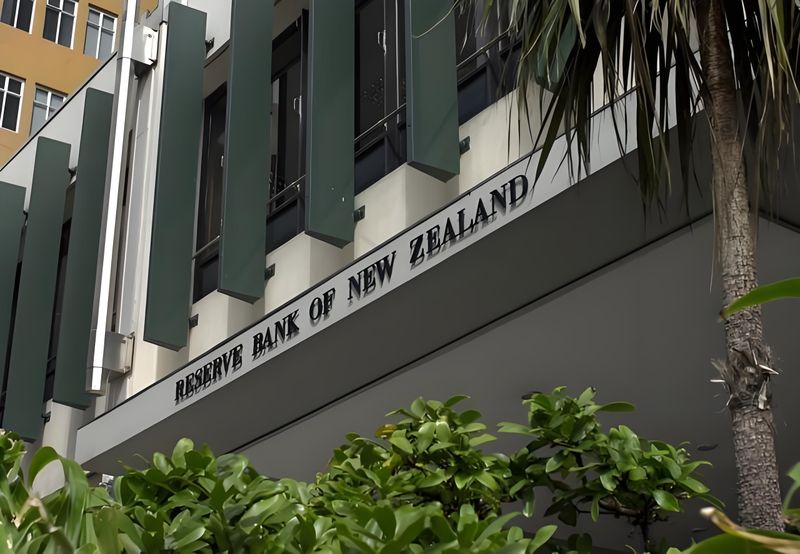
This report has led to a re-evaluation of the New Zealand Central Bank's interest rate path. Initially, amid an overall weak economy and a global easing environment, the market had widely bet that the Reserve Bank of New Zealand (RBNZ) would start a loosening cycle at next month's policy meeting, but this lower-than-expected inflation data has made such predictions less certain.
Local Taxes and Housing Rents as Key Drivers
Statistics New Zealand pointed out that the main drivers of the annual price increase in the second quarter were local government taxation and rising housing rents. Particularly in densely populated cities like Auckland and Wellington, the continuous rise in housing-related costs is putting pressure on household expenses.
In addition, municipal tax hikes in some areas have driven up the cost of everyday service items, albeit slightly, sufficiently showing a marginal acceleration of inflation on a macroeconomic level.
Meanwhile, the growth pace of food prices slowed and energy prices remained stable, offsetting some of the upward factors, keeping the overall inflation in a relatively moderate range.
Rate Cut Window Temporarily Delayed, Economy Still Needs Support
Given the current inflation trend, some market institutions believe that the probability of the New Zealand Central Bank cutting rates in August has significantly decreased. Market interest rate futures indicate the expectation of a rate cut has dropped from the previous 60% to less than 30%. Analysts at JPMorgan noted that since the current CPI does not significantly deviate from the target range, the RBNZ may keep the current policy rate unchanged, waiting for more economic data to verify whether economic weakness persists.
However, many analysts also emphasize that the New Zealand economy still faces certain downward pressure. The slowdown in GDP growth, cooling labor market, and weakened consumer spending willingness all limit the space for sustained upward inflation. This means that if future quarterly data show another decline in CPI, the central bank may reconsider the option of cutting rates.
Investors Eye Signal of Monetary Policy Shift
The financial market reaction is relatively mild. The New Zealand dollar fluctuated briefly against the U.S. dollar before stabilizing, without significant rebound or drop. The bond market continues to attract investor attention, particularly inflation-linked bond yields remain relatively stable, indicating that the market is not panicking about the current price trend.
Forex traders expressed that the key in the coming weeks will be whether RBNZ officials release more dovish signals and whether preliminary inflation projections for the third quarter will be further revised.
Central Bank Walks a Tightrope, Economy Still Uncertain
Although the annual inflation rate slightly exceeds the previous quarter, the overall data still shows that New Zealand's inflation remains within a reasonable range, not yet constituting an urgent reason for policy tightening. The central bank needs to find a new balance between supporting economic growth and curbing inflation.
In the global context where major economies are gradually shifting towards easing, whether New Zealand will follow the same path still requires close monitoring of future economic data trends and their effect on market sentiment.

