
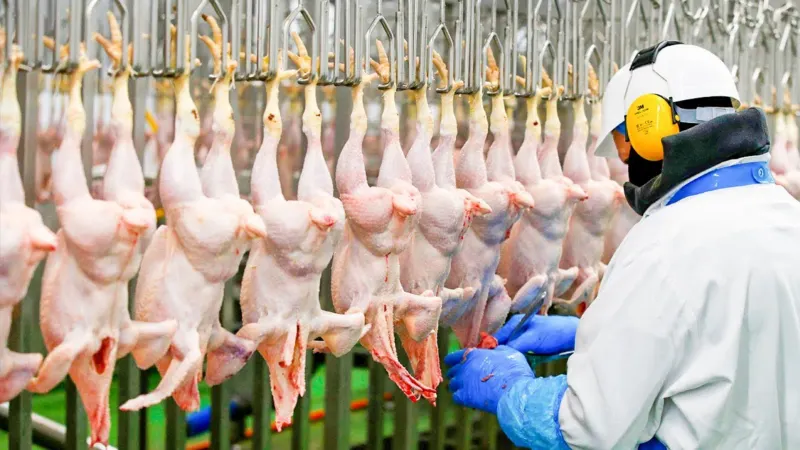
South Korea Quickly Implements Import Restrictions
The South Korean Ministry of Agriculture, Food and Rural Affairs has announced a complete suspension of imports of poultry and related products from Argentina for goods shipped after August 17. This action is due to a confirmed case of highly pathogenic H5 bird flu at a farm in Buenos Aires Province, Argentina. This decision reflects South Korea's high level of vigilance in preventing the entry of foreign epidemics.
According to official explanations, apart from completely banning new shipments, poultry products exported from Argentina after August 3 must undergo testing for highly pathogenic bird flu upon arrival in South Korea to ensure there is no risk of virus entry. This is the first major health challenge faced since South Korea opened up to Argentine poultry imports last December.
Limited Impact on the Domestic Market
Although the ban may cause concern among some importers, the South Korean government emphasizes that Argentine poultry accounts for a very small percentage of total poultry imports in South Korea, only 0.2%. As a result, the suspension of imports has limited direct impact on the domestic supply chain, and significant market price fluctuations are unlikely.
South Korea has long relied mainly on countries like the United States and Brazil for poultry products, with these countries accounting for over 90% of exports. Therefore, industry insiders believe that this policy is more of a precautionary measure in terms of epidemic prevention rather than an urgent response due to trade dependency.
Argentina's Epidemic Sparks International Caution Again
On August 19, the Argentine government confirmed a case of highly pathogenic bird flu at a farm in the Buenos Aires Province. This outbreak is particularly noteworthy as it is the first major epidemic event since South Korea approved the import of Argentine poultry.
The H5 strain of avian influenza is considered highly contagious and widespread, potentially causing large-scale poultry deaths and long-term impacts on the trade reputation of poultry-exporting countries. With South Korea announcing a suspension of imports, whether other countries will adopt similar restrictions becomes a major issue facing Argentina's agricultural sector.
Continuation of South Korea's Epidemic Prevention Strategy
In recent years, South Korea has implemented relatively strict policies for preventing the import of animal diseases. From beef to poultry, South Korea has established rigorous quarantine and testing systems. The restriction on Argentine poultry aligns with this approach, maintaining stringent prevention standards even for minor import percentages.
A South Korean agricultural policy expert pointed out, "For South Korea, food safety and public health take precedence over trade volume. Even with imports under one percent, decisive measures will be taken." This reflects South Korea's "zero tolerance" attitude toward epidemic risks.
Possible Domino Effect in the International Poultry Market
Although South Korea's import volume is small, its ban may influence confidence in the international poultry market. If more countries follow suit, Argentine poultry exporters may face a sharp decline in orders. Considering that bird flu outbreaks are often accompanied by increased trade barriers, Argentina may need to communicate with major buyers to demonstrate its prevention capabilities and transparency in quarantine.
Meanwhile, other major poultry exporting countries may benefit. Brazil and the United States, in particular, could further consolidate their market shares. Domestically, South Korea may slightly increase alternative imports to ensure stable supply.
Conclusion
The suspension of Argentine poultry imports by South Korea, although having limited impact on the domestic market, once again highlights the impact of avian flu on the international food trade system. For South Korea, this decision demonstrates a firm stance on epidemic prevention; for Argentina, it signifies the need to accelerate preventive measures to avoid the epidemic evolving into a long-term export crisis.
This event reminds global agricultural and food trade markets that in a highly interconnected supply chain environment, any regional epidemic can potentially trigger a global chain reaction.

