
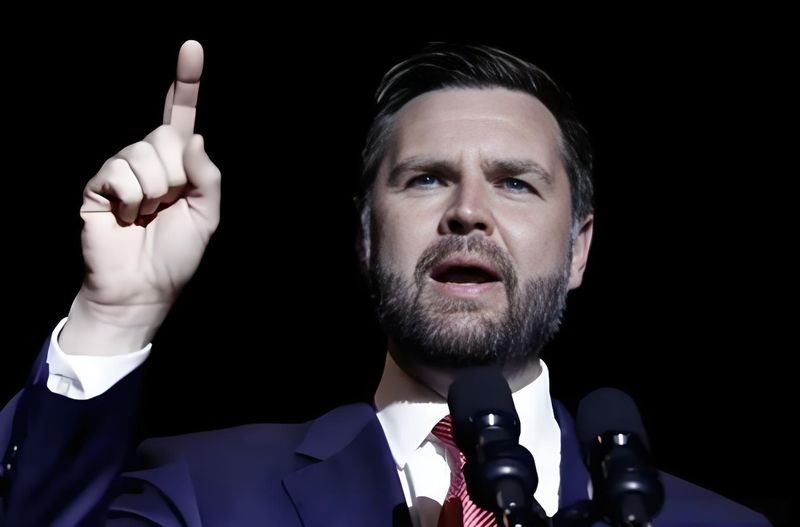
Trump Rarely Opens Up, Vance Becomes a Key Figure
At a White House event, U.S. President Trump rarely expressed publicly that Vice President JD Vance is "most likely" to be the successor of the "Make America Great Again" (MAGA) political movement he leads. Although his tone was cautious, it was widely interpreted as a signal for his 2028 electoral strategy.
For a long time, Trump has maintained an ambiguous stance on the topic of successors. Although he has praised Vance and Florida Senator Marco Rubio multiple times, he has never clearly specified anyone as his "designated heir." This is the first time he has provided such a clear political position to Vance with the term "most likely".
This statement also lays the groundwork for future power restructuring within the Republican Party. Even though Trump added that "there are other talented individuals," his reference to a "front-runner" has garnered significant attention from the core circles of the Republican Party.
Vance's Journey from Critic to Die-hard Ally
JD Vance was not initially part of the Trump camp. Early on, this former senator from Ohio was outspoken in his criticism of Trump, even being regarded by the media as a representative of the "anti-Trump voices." However, since his successful Senate run in 2022, his stance has undergone a dramatic shift. Not only has he frequently endorsed Trump's policies, but he has also become his running mate in the 2024 election.
This transformation is not unique. Several political figures under Trump have undergone similar shifts from critics to loyal allies. Vance's conversion is particularly noteworthy because he has not only adopted Trump’s economic populism but also frequently emphasized core values such as "anti-establishment" and "America First" in his speeches.
Now, as Vice President, Vance has become one of the most visible and controversial figures within the Republican Party. His increased visibility and policy involvement surpass those of previous vice presidents, laying a public opinion foundation for his succession.
Trump's Third Term Ambitions Vanish Completely
Trump also denied the possibility of seeking a third term during an interview with CNBC on the same day, stating that he "most likely won't" run again. This may indicate that he has begun contemplating his political legacy and succession planning.
Although his close associates previously voiced exploratory thoughts on bypassing constitutional restrictions to seek a third term, the Constitution explicitly prohibits a president from serving three terms, rendering these ideas impractical in the face of legal and real-world constraints.
"I haven't made a final decision yet, but JD is indeed performing very well," Trump commented. Although the statement seems vague, it subtly hints at his inclination towards a successor.
Outline of Right-wing Successor Lineup Emerges
In addition to Vance and Rubio, outsiders also see South Carolina Governor Henry McMaster, Texas Governor Greg Abbott, and former press secretary Kayleigh McEnany as potential members of the successor lineup.
Within the Republican Party, there's a faction that believes the future successor should not solely rely on Trump's popularity but should explore new right-wing ideological paths independent of his political legacy.
However, it is certain that as Vice President, Vance’s natural "baton" position places him a step ahead of other potential candidates. Whether he can ultimately stand out will depend on whether he can solidify the conservative base while expanding middle voter support in his future governance.
As the 2028 election approaches, Trump's every word and action will influence the future direction of the Republican Party, with Vance's ability to truly take up the "MAGA" torch becoming a focal point in American politics.

