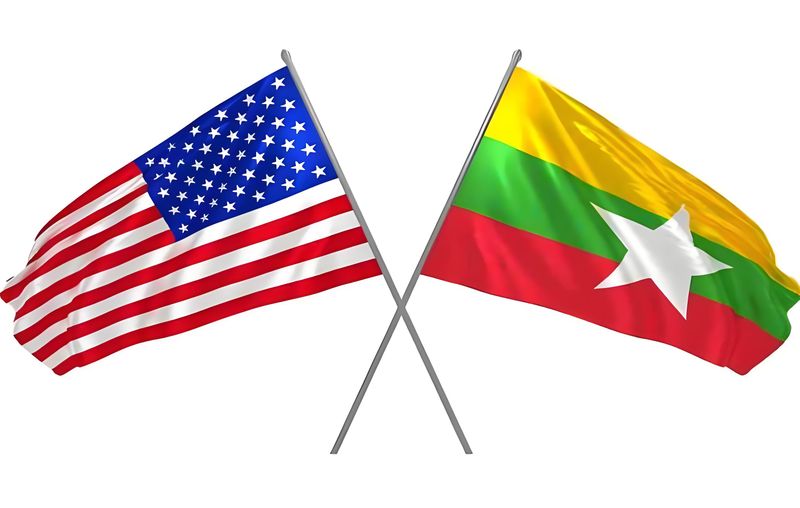
Myanmar Proposes Zero Tariff to Avoid Tariff Shock from the U.S.
As the U.S. plans to impose a 40% tariff on Myanmar starting August 1st, Myanmar has proactively proposed imposing zero to 10% tariffs on U.S. goods in exchange for the U.S. reducing tariffs on Myanmar goods to a 10%-20% range. The Myanmar military government also stated its willingness to send a high-level delegation to the U.S. to seek a breakthrough window before the tariff deadline.
This move not only reflects Myanmar's dependence on the U.S. market and dollar capital flow but also shows how smaller economies are adopting more flexible strategies to gain breathing space in negotiations amid increasing global trade protectionism.
Trump’s Tariff Strategy Becomes Negotiation Leverage
The new round of reciprocal tariff policies announced by the Trump administration demonstrates a consistent "pressure first, negotiate later" strategy. Although the new tariff rate initially scheduled for July 9th was postponed to August 1st, tariffs imposed on Myanmar, Malaysia, Japan, and other countries remain high.
Market observers noted that Trump left room for adjustments in his tariff policies and hinted in letters that he was willing to adjust the rates up or down based on negotiation outcomes. This gives countries like Myanmar an opportunity to reduce losses through negotiations within the "window period."
Additionally, Trump offered conditions wherein opening markets or investing in U.S. manufacturing plants could result in tariff exemptions, aimed at attracting industries back to the U.S., and restructuring trade frameworks and supply chains.
Myanmar's Garment Industry and Exports Face Adjustments
Although the proportion of Myanmar's garment exports to the U.S. is not high, the garment and textile industry, as an important labor-intensive sector in Myanmar, remains significantly affected by the tariff shock. If a 40% high tariff is implemented, it would further harm the bargaining power of Myanmar's garment and some light industry export companies.
However, some analysts point out that due to the garment industry's strong supply chain flexibility, some exporters might cope with the uncertainty of tariff policies by shifting production locations or flexibly adjusting order structures.
Furthermore, Myanmar is attempting to buffer the impact of restricted U.S. exports by flexibly structuring its exports and strengthening cooperation with the ASEAN market.
A New Balance in Southeast Asia May Emerge
In the context of the reciprocal tariffs pushed by Trump, some Southeast Asian economies are accelerating negotiations with the U.S. to mitigate the risks of tariff shocks arising from foreign trade dependence. Previously, Cambodia achieved a substantial tariff adjustment through high-level interactions, providing a reference for countries like Myanmar.
Some research institutions indicate that the current U.S. tariff adjustments are still backed by the larger background of U.S.-China contention, and Southeast Asian countries might be incorporated into a new supply chain and export balance arrangement. As a key node country in the region, Myanmar's tariff negotiation outcomes could influence trade negotiations with the U.S. by other countries within the region.
Market Focus on Pre-August Negotiation Window and Potential Impacts
As the August 1st tariff implementation date approaches, whether Myanmar can secure a tariff reduction or extension during the window period has become a market focus. If the two sides can reach a compromise on tariffs, it will alleviate operational pressures on Myanmar's export companies to some extent and may provide a reference path for other countries facing similar tariff issues.
At the same time, for the U.S., though high tariffs align with the "manufacturing repatriation" strategic goal, they might also lead to rising import costs in the garment and light industries, thereby escalating domestic inflation levels, and becoming a potential variable for monetary policy.
In the coming weeks, whether the Myanmar delegation visits the U.S. and the negotiation results will become important signals for assessing the stability of regional trade and supply chains by investors.