

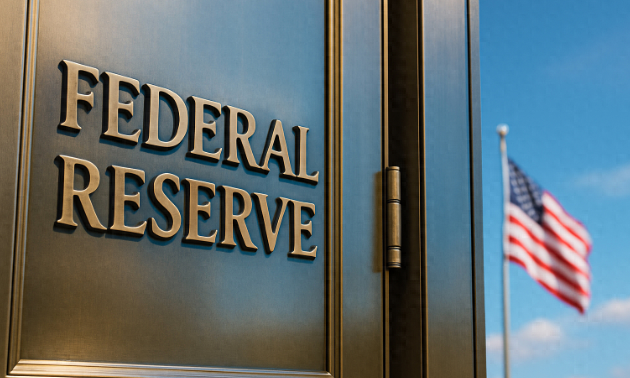
Fed Meeting Approaches: Trump Criticizes Powell, Pressures for Rate Cuts Again
On Monday evening, Eastern Time, while on a joint trip to Asia with President Trump, U.S. Treasury Secretary Scott Bennett confirmed that the list of successors for Federal Reserve Chairman Jerome Powell has entered its final stage. Trump is expected to announce his decision by the end of the year, sparking a renewed market scrutiny of the Fed's independence and future policy direction.
Bennett revealed that the five individuals on the final candidate list include current Fed Vice Chair for Supervision Michelle Bowman, Fed Governor Christopher Waller, White House National Economic Council Director Kevin Hassett, former Fed Governor Kevin Warsh, and Rick Rieder, Head of Global Fixed Income at BlackRock. The list includes representatives from academia, policy, and market sectors, indicating the White House is seeking a balance between expertise and political loyalty.
In an interview, Trump harshly criticized Powell once again for being "slow to act," stating his failure to cut rates in a timely manner has stunted economic growth. He remarked, "Our Fed Chair isn't smart enough. He should have lowered rates much earlier." This comment continues his longstanding dissatisfaction with Powell and is seen as yet another public signal of market pressure.
Selection Likely by Year's End: Fed Independence Under Test Again
Analysts point out that Trump's eagerness to finalize a successor by the end of the year might be related to Powell’s term nearing its end. As per regulations, the Fed Chair must be selected from among board members, with presidential nominations requiring Senate approval. Powell’s chair term will conclude in May next year, but his board term extends until early 2028. If he stays on the board, Trump will lose the chance to add an ally.
Previously, after Kugler's resignation, Trump swiftly nominated Milan to fill the board vacancy, interpreted externally as "early maneuvering." These actions suggest the White House may be aiming to reshape policy dynamics within the Fed to garner more support for its rate-cut advocacy.
Peter Conti-Brown, a professor at the University of Pennsylvania’s Wharton School and finance regulation expert, warned: “If the Fed is overly infiltrated by political appointments, its independence will be severely undermined. Central bank officials' duties should be to maintain monetary stability, not to further presidential agendas.”
Markets Focus on Twin Thunderclap: Fed and RBNZ Decisions
Besides the Fed's monetary policy meeting, investors are also focusing on the soon-to-be-released policy statement from the Reserve Bank of New Zealand (RBNZ). Given the New Zealand dollar's sensitivity to interest rate changes, global markets are facing a "double whammy" test.
The market widely expects that in this meeting, the Fed will announce another 25 basis point rate cut, adjusting the benchmark interest rate range to 3.75%-4.00%. Simultaneously, the RBNZ might signal the end of its easing cycle. If the two central banks diverge in their tone, the NZD/USD exchange rate is likely to experience significant volatility.
Forex strategists pointed out that the New Zealand dollar is currently in a technical consolidation phase. If the RBNZ sends a hawkish signal while the Fed suggests further rate cuts, the New Zealand dollar could briefly strengthen to break the 0.6000 level. However, if the RBNZ maintains a cautious tone and market risk appetite declines, the exchange rate may quickly fall back.
Interplay of Policy and Politics Weakens Market Sentiment
Trump’s high-profile statements have added uncertainty to an already cautious market. Investors worry that the Fed may be forced under political pressure to speed up the easing process, diminishing the dollar’s appeal. Meanwhile, economic signals from New Zealand also show signs of recovery, and if the RBNZ decision is strong, the New Zealand dollar could become a short-term safe-haven alternative asset.
Traders generally believe this week’s “dual central bank event” will become one of the most critical nodes in the foreign exchange market this year. Risk asset sentiment may fluctuate sharply with Powell’s tone and the RBNZ's policy statement.

