
Powell Under Attack Again, Market Nerves Tighten
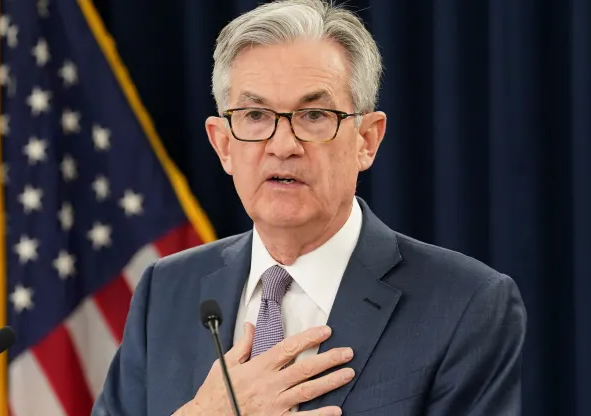
Recently, President Trump has once again targeted Federal Reserve Chairman Powell, with his strong rhetoric raising deep concerns about the Federal Reserve's political independence. Against this backdrop, the U.S. dollar index has again fallen below the 98 mark, almost erasing all gains driven by this year's "big and beautiful" fiscal stimulus package. Meanwhile, gold prices have hit a five-week high as investors seek safe-haven assets.
Financial markets are sending unusual signals through interest rate swap tools—the decoupling trend between the 5-year forward inflation swap rate (5y5y inflation swap) and the 2-year OIS reflects increasing misalignment in market perceptions of monetary policy directions and the Fed's independence.
Diverging Economic Data, Rate Cut Prospects Controversial
Despite Trump's demand for swift and substantial rate cuts, the Fed's "dual mandate" indicators—employment and inflation data—do not support immediate action.
On one hand, the U.S. labor market remains resilient, with employment data exceeding expectations and the unemployment rate continuously declining; on the other, although there are signs of inflation easing, it still remains above the Fed's 2% target, with recent monthly data showing a rebound.
However, from a fiscal perspective, high interest expenses are straining government spending. In the first quarter of 2025, federal interest expenses exceeded $278 billion, accounting for more than 15% of expenditures, maintaining a high level for six consecutive quarters. Fiscal constraints are pressing the Fed to consider a rate cut window from another angle.
Rising Dollar Risks, Trade Deficit Tug-of-War
Following the implementation of the "reciprocal tariffs" policy, the U.S. trade deficit briefly narrowed but quickly rebounded the following month, highlighting the policy's instability and difficulty in sustaining structural improvements. Coupled with sluggish consumption and GDP growth, economic downdraft pressures are accumulating, casting a shadow over the dollar's stability.
Investors are increasingly concerned about whether the dollar's "anchor" is loosening. Amid escalating political interference and the Fed's policy constraints, the dollar's core credit support faces challenges. The continuous strengthening of gold is a concentrated manifestation of this risk sentiment.
Powell's Future Uncertain, Legal and Political Struggles in Tandem
Although the market is highly sensitive to rumors of Powell's potential dismissal, the political and legal realities pose huge obstacles. Treasury Secretary Besant warns that removal actions are not only procedurally complex and potentially delayed by litigation but could also lead to the Vice Chairman's succession, continuing current policies, making dismissal efforts counterproductive.
Additionally, there are clear divisions within the Republican Party regarding Powell's removal, with significant uncertainties surrounding Trump's chances of success even if he pushes aggressively.
The Core Behind the Trust Crisis: Is the Dollar's Global Status Shaking?
Today, the Federal Reserve faces not only difficult policy path decisions but also a trust crisis. If the Fed's credibility is continuously undermined, the U.S. dollar, as a global reserve currency, will be reevaluated.
As reflected by the divergence of interest rate tools, market concerns are now beyond just the question of a rate cut but whether monetary policy can still maintain institutional credibility. This deep-seated systemic worry is the true "Achilles' heel" of the dollar.
The End of Policy Game, or a Test of the Dollar's Faith?
Whether Powell will remain in his position until 2026 is still unknown, but it is certain that amid Trump's frequent pressure, rising fiscal risks, and global investors reallocating assets, the Federal Reserve must not only guard its independence but also face severe tests of the dollar's credit foundation. This contest around monetary policy independence and dollar stability may just be beginning.

