

Trump Absent from Hearing, Focus Shifts to System and Power Boundaries
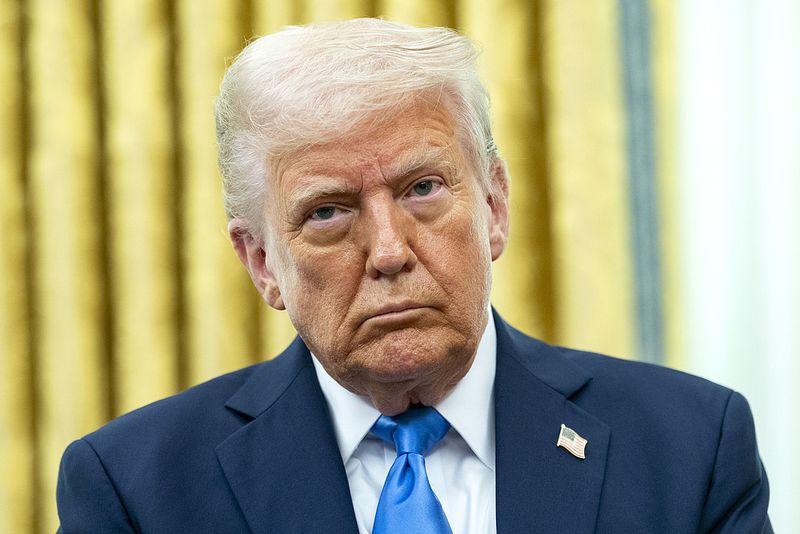
U.S. President Trump has confirmed that he will not attend the Supreme Court hearing this week, which will examine the legality of his global tariff policies. This decision rekindles political intrigue around a case already under close scrutiny. While returning to Washington from his Mar-a-Lago estate in Florida, Trump stated that he hopes the hearing "will not be disrupted by his personal presence," emphasizing that the case "pertains to the country, not the individual."
The Supreme Court is set to hear the Trump administration's appeal on Wednesday against a lower court's ruling. The federal appeals court previously determined that Trump exceeded his presidential powers under the International Emergency Economic Powers Act (IEEPA) in implementing some tariff measures. This decision could have significant implications for the scope of future U.S. presidents' authority in economic and security policies.
Another Collision Between Presidential Power and Judicial Checks
At the core of this case is whether the president has the authority to impose large-scale tariffs without congressional approval under the guise of "national security." Previously, the Trump administration implemented high tariffs on goods from multiple countries via executive orders, claiming the measures protected U.S. manufacturing and defense interests. However, this approach sparked widespread controversy.
Legal experts argue that the Supreme Court's ruling will serve as a crucial milestone in defining presidential economic intervention powers. If the court upholds the lower court's decision, future presidents may face stricter limitations when taking economic actions in the name of national security. Conversely, if the ruling favors Trump, it would significantly expand the economic autonomy of the executive branch.
Michael Lawrence, a Harvard Law School professor, commented: "This is a rare case concerning the core of presidential power in decades. The Supreme Court is not merely adjudicating trade issues but examining the balance of power system itself."
Tariffs and National Security: Dual Considerations of Politics and Economy
In an interview with reporters, Trump reiterated the importance of tariffs, calling them "a key tool of national security." He stated that for decades, the U.S. had been "passively hit" in international trade, and tariff policies are necessary to rebuild economic sovereignty.
"If we don't have tariffs, we don't have national security," Trump emphasized. "Countries that impose tariffs on us benefited from our open market, and now it's time for us to set the rules."
Analysts believe Trump's remarks are both a defense of the policy's legality and a strategic move in preparing for potential electoral strategies. Tariffs have been a key component of his "America First" economic philosophy and an essential issue for attracting manufacturing voters.
Supreme Court Ruling Could Reshape Trade Policy Framework
The Supreme Court is expected to issue a final ruling in the coming months. If Trump is victorious, the U.S. president's trade decision-making power will be further strengthened, potentially affecting future governments' policy flexibility regarding China-Europe trade. If he loses, Congress may regain some oversight on tariffs and trade policies, altering the current executive-dominated situation.
The Washington think tank "Center for Strategic and International Studies" (CSIS) noted that regardless of the outcome, this case will profoundly impact the future direction of U.S. foreign economic policy. "It's not just a debate about trade; it's a litmus test for the balance of power," stated the report.
Political Winds and Social Reactions
Trump's absence is seen by outsiders as a strategic arrangement. On one hand, he aims to prevent the hearing from turning into a political show; on the other, this stance focuses the case on the institutional discussion of "presidential power and national security." Within the Republican Party, there is broad support for Trump's firm stance, while the Democratic camp calls for the restoration of transparency and congressional oversight in trade policies.
Analysts suggest that regardless of the ruling's outcome, this hearing will be one of the most symbolic legal battles of Trump's presidency. It concerns not only the success or failure of policies but also the future boundaries of American executive power.
American Balancing Act Under Institutional Test
Trump's decision to not attend the hearing makes this already complex judicial debate even more intriguing. With issues of tariffs, national security, and presidential power intertwining, the U.S. Supreme Court's decision will serve as a key marker for political and economic balance in the coming decades.
This contest is about far more than one president; it concerns the resilience and boundaries of America's institutional framework itself.

