

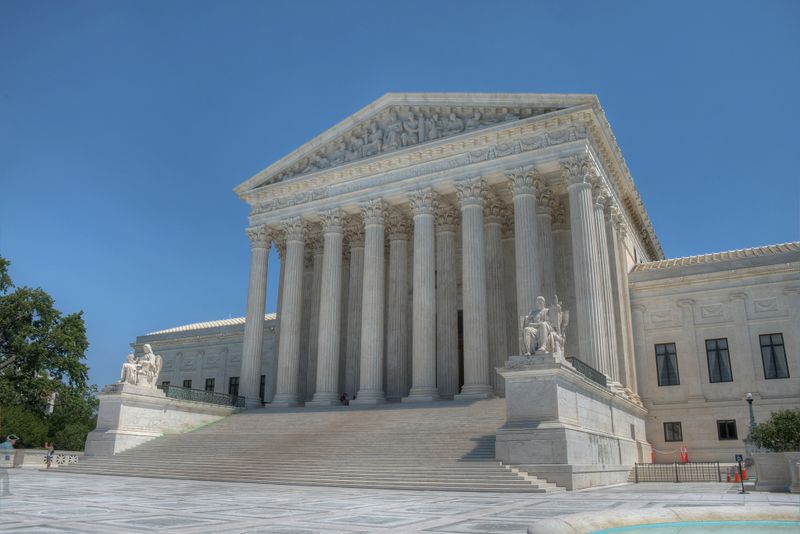
US Supreme Court Hearing Draws Global Attention
At a US Supreme Court hearing held in Washington, the White House's practice of imposing global tariffs based on the International Emergency Economic Powers Act is facing constitutional scrutiny. This debate not only relates to the boundaries between the executive and legislative powers in the US but could also alter the future landscape of international trade.
The debate lasted from late at night on November 5 to the early hours of the next day, attracting live broadcasts from numerous media outlets, including CNN, The New York Times, and the BBC. Although the final judgment has not yet been announced, several justices' questions have revealed their evident concern over the expansion of executive power by the White House.
Core Controversy: Misuse of Emergency Powers?
The core issue of this litigation is the International Emergency Economic Powers Act, enacted in 1977. The White House claims that the act grants the president broad powers to intervene in trade during a "national emergency," and tariffs are a "legitimate means" to address trade imbalances.
However, lawyers for the businesses argue that the law does not explicitly authorize the president to tax foreign countries, and that tariffs essentially act as taxes on US consumers and businesses, violating the principle of separation of powers, which assigns taxing authority to Congress. This argument has resonated with some justices who question whether the White House is using "emergency status" as a pretext for executive overreach.
Judicial Scrutiny: Boundaries of Power and Constitutional Crisis
Several justices focused their inquiries on three key questions: whether the president has unlimited taxing authority, whether the burden of tariffs is indeed shouldered by American citizens, and the potential constitutional implications of the ruling. Some justices noted that supporting the White House's position might allow future presidents to similarly expand executive power at the expense of Congressional checks.
Other justices expressed concern that overly restricting presidential power could weaken the US's ability to respond to sudden international crises. This debate highlights the longstanding tension in American institutional design between administrative efficiency and restraint on power.
The White House vs. Business Camps Clash
White House lawyers argue that the long-standing trade deficit represents a "state of emergency," and tariff policies aim to force nations back to the negotiating table rather than directly increase domestic taxes. They insist that tariffs are a "means," not an "end."
Prosecuting lawyers counter that the White House's interpretation blurs the boundary of emergency powers, in effect granting the president an "unlimited pass" to exert pressure on the global economy. If this logic is upheld by the Supreme Court, any future president could cite "national security" as a pretext to impose economic sanctions or tax interventions.
Potential Consequences: Tariff Policies Entering a "Legal Reformation Period"
Analysts generally believe that the Supreme Court's decision could be unfavorable to the White House. If deemed to have overstepped its authority, the future of US trade policy would have to revert to Congressional control. Even so, the White House might still seek other taxation avenues under Section 122 of the Trade Act or the 1930 Tariff Act.
US Treasury Secretary Besant emphasized before the hearing that even if they lose, the government "still has multiple ways" to maintain tariff policies. Meanwhile, business lawyers stated that if the White House continues imposing tariffs through other legal means, they will keep filing lawsuits to defend their legitimate rights.
Global Impact: Trade Order Faces Redefinition
This case is not only a test of the US constitutional system but may also mark a turning point for global trade order. Should the Supreme Court rule the president exceeded his authority, it would mean that US trade policy must return to a legal framework. Conversely, if the ruling supports the White House, the global economy will have to contend with a US where executive power is more centralized.
Regardless of the outcome, this tariff lawsuit signifies the official start of the "judicialization" process of US foreign economic policy, and its impact may extend far beyond Washington, affecting global markets and the international legal system.

