
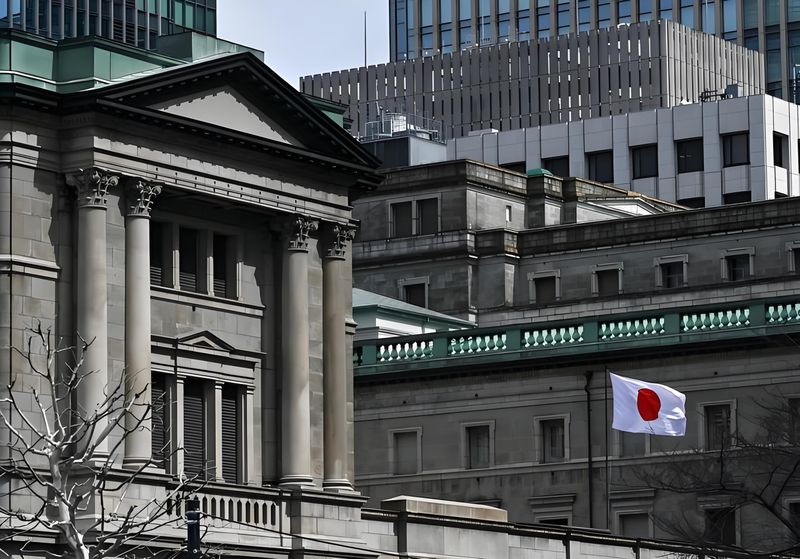
Market Test Under the Shadow of Central Bank Tightening
The 10-year government bond auction set for this Tuesday in Japan is seen as a key test of investor risk appetite. As the market broadly bets on a possible rate hike by the Bank of Japan in the coming months, investors' interest in long-term bonds is being challenged. The current 10-year yield hovers above 1.6%, nearing a high not seen in over a decade. Some institutions believe that investors may remain on the sidelines unless yields significantly break through.
Meanwhile, the Bank of Japan is gradually reducing its bond purchases in an attempt to mitigate the side effects of prolonged easing. This move, while aiding in the restoration of normal market functions in the bond market, has placed pressure on auction demand. Market participants point out that if the demand for the 10-year bonds falls short, it may trigger further yield increases.
Vice President's Speech Coincides with Political Review
On the day of the auction, Bank of Japan Deputy Governor Noriyuki Himino will give a speech. The market expects he might reveal hints about the future direction of monetary policy. If his comments lean hawkish, it could strengthen rate hike expectations, thereby diminishing investor interest in the 10-year bonds.
On another front, the Liberal Democratic Party will conduct a review of its July election failures on the same day. Whether to expedite a change in party leadership remains a potential variable. Investors are concerned that if the ruling foundation wavers, it could challenge fiscal policy continuity, thereby impacting market sentiment.
Investor Approach Turns Cautious
Recently, the demand for Japanese government bond auctions has generally fallen short of expectations. Last week's issuance of 2-year government bonds even recorded the lowest demand in 16 years, indicating a waning interest in short- to medium-term issues. While some ultra-long-term bonds have received some support due to reduced issuance sizes, the 10-year bonds have not enjoyed the same conditions.
Strategists note that the market is currently in a "wait for signals" status: on one hand, there is concern about further yield increases leading to book losses; on the other, there is reluctance to miss out on locking in yields.
Global Environment Combined with Local Factors
In addition to the actions of the central bank and domestic political dynamics, the global environment also affects the Japanese bond market. The high US fiscal deficit and fluctuations in US bond yields may have spillover effects on global capital allocation. Some international investors have already shown caution towards Japanese bonds, opting instead to increase holdings in UK bonds, Australian bonds, and other alternatives.
Domestically, inflation pressure and a tight labor market have raised the probability estimate for a Bank of Japan rate hike to over 70%. This perception keeps current interest rate levels from being seen as the “end point,” increasing investor hesitancy.
Focus on 30-Year Auction and Subsequent Supply
If the demand for the 10-year government bond auction this Tuesday is insufficient, investor concerns might quickly spread to Thursday's 30-year government bond issuance. Given the intensive issuance of 20-year and 40-year bonds in September, market supply pressures might amplify further.
The Ministry of Finance recently communicated with primary dealers to discuss whether to reduce the issuance of long-term government bonds to mitigate volatility. While this move forms some support for ultra-long-term bonds, it has not directly improved the investment logic for 10-year bonds.
Conclusion
The Japanese 10-year government bond auction is at a sensitive juncture where multiple factors intertwine. Uncertainty over central bank policy, potential changes in the political landscape, and global bond market linkage effects together create a cautious market atmosphere. The outcome of this auction will affect not only the short-term yield trajectory but also serve as a crucial reference for investors evaluating the outlook for the Japanese bond market.

