
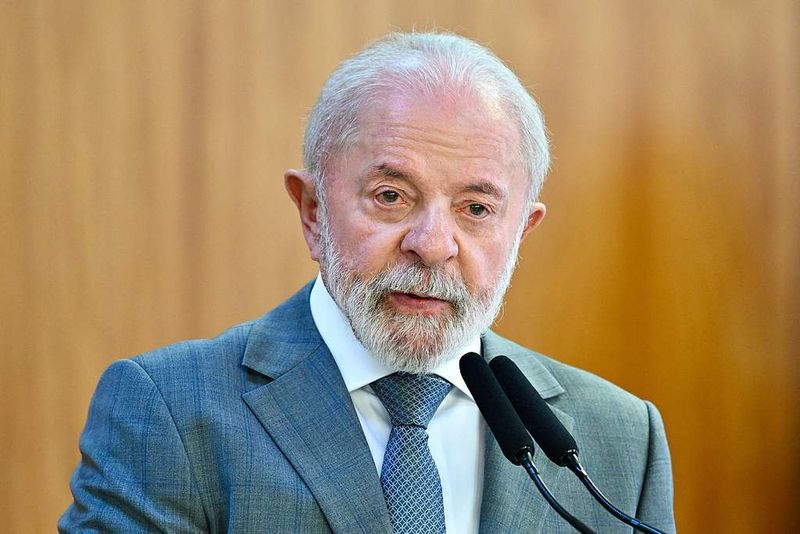
Brazil's Central Bank Maintains Interest Rates Unchanged for the Second Time
The Monetary Policy Committee (Copom) of the Central Bank of Brazil announced during its meeting on September 17th to keep the benchmark interest rate unchanged at a high level of 15%. This marks the second consecutive time the central bank has adopted a wait-and-see approach since concluding a prolonged rate hiking cycle in July.
In its statement, the central bank pointed out that uncertainties in both global and domestic environments remain prominent, particularly as inflation pressures have not fully abated, necessitating a highly cautious monetary policy stance. The decision also emphasized that if new risks arise in the future, the possibility of policy tightening cannot be ruled out.
Slight Improvement in Inflation Expectations
The latest forecast released by Brazil's central bank shows that the national broad consumer price index (IPCA) is expected to rise by 4.8% in 2025, a slight downward revision from previous projections. Nevertheless, this level remains above the upper limit of the central bank's official target range. Analysts point out that fluctuations in food prices, instability in the energy market, and uncertainties in global commodity prices are key reasons for maintaining high interest rates.
High Interest Rates May Persist Until 2026
Financial markets widely anticipate that Brazil's central bank will not immediately follow the U.S. towards a loosening monetary policy stance in the short term. Surveys indicate that most institutions believe the earliest window for a rate cut could appear in January 2026, at which point it might be slightly reduced by 25 basis points. If this prediction comes true, the benchmark rate would decrease to 14.75%, still maintaining a relatively high level since 2006.
Market participants believe the high interest rate strategy reflects not only the central bank's vigilance against inflation but also its consideration of capital flows and exchange rate stability.
Domestic Economic and Policy Challenges
Analysts generally believe that despite some easing in inflation trends, structural conflicts within Brazil's domestic economy still exist. Rising labor market costs, increased public fiscal pressures, and risks associated with international trade frictions may continue to constrain economic performance in the coming months. The high-interest-rate environment also puts significant pressure on business investment and consumer demand, yet the central bank continues to prioritize price stability.
Brazilian Real Rises to a 15-Month High
Amid sustained monetary policy pressure, the Brazilian Real has recently continued to strengthen. The USD/BRL exchange rate once fell to 5.29, marking a 15-month high. So far this year, the USD/BRL has cumulatively dropped by over 14%.
Foreign exchange analysts noted that strong interest rate levels have attracted foreign capital inflow, strengthening the local currency's performance. However, if the U.S. continues on a more accommodative path while Brazil maintains high rates, it may lead to market volatility.
Outlook
Economists point out that Brazil's central bank is currently caught in a difficult balance: on one hand, maintaining monetary stability and controlling inflation, while on the other, dealing with economic growth slowdown and uncertainties in the external environment. Until inflation relief becomes clearer, the central bank may continue to err on the side of caution.
As the latter half of 2025 approaches, if global demand recovers, international trade frictions ease, and domestic economic activities stabilize, Brazil's central bank may gradually start a rate-cutting cycle.

