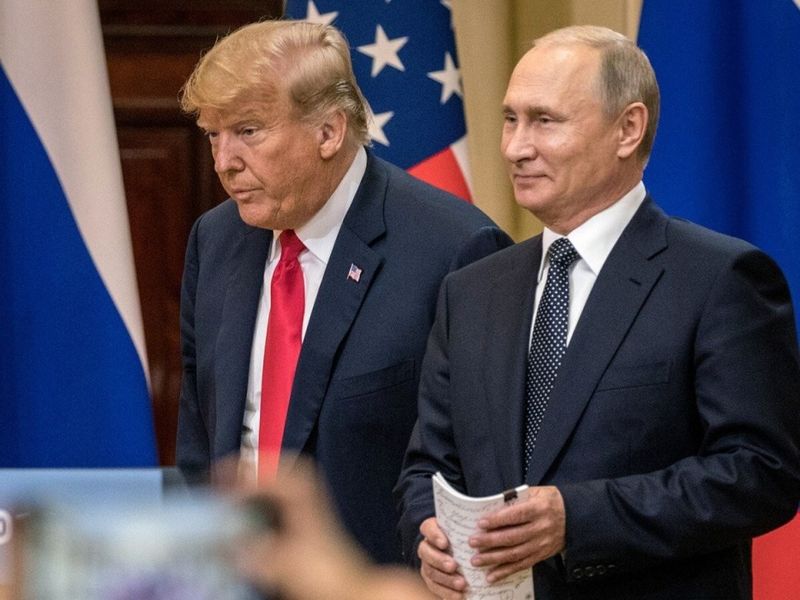
Amid a complex weave of global economic and geopolitical tensions, the 2025 G7 Summit was held on June 16-17 in Kananaskis, Alberta, Canada. The summit aimed to foster unity among the nations in addressing the war in Ukraine, tensions in the Middle East, and global economic challenges. However, surprising statements by U.S. President Trump added complexity to the situation.
On the summit's first day, he publicly declared that expelling Russia from the G8 was a "major mistake" and stated that he maintained "direct communication" with Putin. This declaration caused awkwardness among the leaders present, exposing the cracks within the G7 that the summit aimed to mend.
G7 Summit Rifts Deepen: Trump Reintroduces Putin, Stirring Diplomatic Waters
Trump's statements, made alongside Canadian Prime Minister Justin Trudeau, sparked widespread debate. He claimed that Russia might not have invaded Ukraine in 2022 had they not been ousted from the G8, insisting that Putin "only wants to talk to me." This position challenged the collective G7 sanctions against Russia since 2014 and undermined confidence in the cooperation between Zelensky and the West.
French President Macron and German Chancellor Scholz both stressed their unwavering support for Ukraine, with Macron urging for a "strong, lasting peace." Nevertheless, Trump's lukewarm stance on increasing Russian sanctions cast doubt on this vision.
Middle East Tensions High, G7 Struggles for Consensus
Beyond the Ukraine issue, the Middle East situation also dominated summit discussions. Following Israel's attack on Iran on June 12, oil prices spiked. While the G7 intended to issue a statement urging restraint from all parties, Trump reportedly refused to endorse any documents calling for conflict de-escalation, once again hindering the G7's unanimity on key geopolitical issues.
Despite UK Prime Minister Starmer's "cautious optimism" that some agreement could be reached to ease tensions, the U.S. President's stance remains an undeniable obstacle.
Gold Benefits Sharply, Oil Prices Remain Volatile
Trump's pro-Putin stance has cast doubt on the U.S.'s commitment to sanctions, temporarily reducing expectations for an escalation in restrictions on Russian energy exports, which in turn led to a dip in oil prices. However, the ongoing uncertainties in the Middle East keep the market in a state of elevated volatility.
In contrast, the gold market has reacted more decisively. G7 division, rising Middle East risks, and potential challenges to the U.S. dollar's global standing have bolstered gold's appeal as a safe haven. Recent data shows gold prices have risen above $2,330 per ounce, reaching a new high since June, as investors see it as an effective hedge against uncertainty and policy imbalances.
Economic Discussions Stagnate, Markets Await Further Developments
Apart from geopolitical topics, the G7 planned to advance agreements on AI governance, immigration policy, and supply chain stability, but progress has been slow due to U.S. delays in approving any drafts. Host Canada has abandoned plans to issue a joint communiqué, opting instead for an "informal outcome document" to avoid a repeat of the 2018 Quebec Summit embarrassment, where Trump refused to endorse the communiqué.
European diplomats admit that despite the majority of G7 members aligning on economic issues, achieving substantial outcomes is nearly impossible without U.S. backing.