
Investors Bet on South Korean Companies Using Mergers to Overcome Trade Barriers
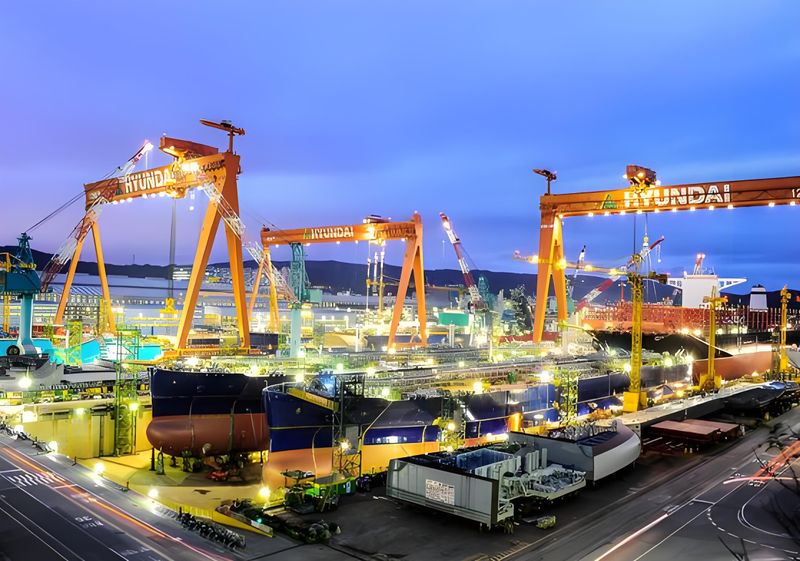
Shares of South Korean shipbuilding companies have surged significantly recently, as the market anticipates potential cross-border mergers to counteract possible U.S. tariff measures. HD Hyundai Heavy Industries saw an increase of over 9%, while Hanwha Ocean and Samsung Heavy Industries also showed notable strength. Although official intentions have not been confirmed, several South Korean media outlets, citing anonymous sources, reported that South Korea is exploring acquisitions of American shipbuilding companies to gain leverage in trade negotiations.
Investors interpret this move as a clever "strategic breakout"—on one hand, it could offer localization advantages amid geopolitical uncertainties, and on the other, it could serve as a "bargaining chip" in U.S.-South Korea trade negotiations to mitigate tariff impacts.
U.S. Shipbuilding Market May Face Structural Revamp Opportunities
The U.S. shipbuilding industry has been grappling with dual challenges of declining capacity and technological stagnation, with civilian ship manufacturing remaining marginalized. If South Korea can effectively integrate American shipbuilding resources, it would not only create local jobs but also fill part of the U.S. supply gap for high-tech vessels.
Analysts highlight that if South Korean companies can establish a substantial presence in the U.S., they may benefit from policy support under the U.S. "industrial reshoring" initiative. In the context of deepening civilian-military fusion policies, the U.S. stance on welcoming foreign investment to upgrade shipbuilding capabilities is more open than before.
Merger Intentions Send Strategic Signals
Although merger news is still in informal stages, the market views it as a preemptive response from the South Korean government and business sectors to anticipated U.S. trade policies. South Korea has long held a leading position in the global shipbuilding market, with its technology, delivery capabilities, and industry integration experience being competitive worldwide.
If South Korean companies successfully establish a U.S. presence, they could effectively mitigate tariff pressures and possibly gain new market share in broader transportation and offshore equipment sectors. Especially given the increasing U.S. demand for energy, military, and clean transport solutions, the global strategic importance of South Korean shipbuilding companies is being reassessed.
Market Maintains Cautious Outlook on U.S.-South Korea Negotiations
Although the U.S. and South Korea have yet to reach a formal trade agreement in the shipbuilding sector, the recent stock price increase reflects a degree of optimism in the market regarding negotiations. Institutional investors generally believe that if relevant acquisitions are finalized, it could herald a new model of U.S.-South Korea manufacturing cooperation.
However, some caution against existing uncertainties. Factors like U.S. domestic regulation, union attitudes, and national security reviews could become critical variables in project advancement. Whether South Korean companies can successfully navigate potential mergers remains dependent on multifaceted negotiations.
Shipbuilding Industry May Become Strategic Focus in New Phase of Industrial Diplomacy
The recent rise in South Korean shipbuilding stocks not only reflects the capital market's rapid response but also highlights the increasing convergence of industrial policy and diplomatic strategy. Amid ongoing global trade fluctuations, the shipbuilding industry is gradually evolving into a nexus for national industrial security, energy planning, and supply chain restructuring.
For South Korea, proactively positioning overseas assets and enhancing strategic industry influence aids in gaining more leverage in global policy negotiations. Meanwhile, the U.S., facing domestic capacity shortfalls, may also need to seek a new balance between national interests and foreign investment involvement.

