

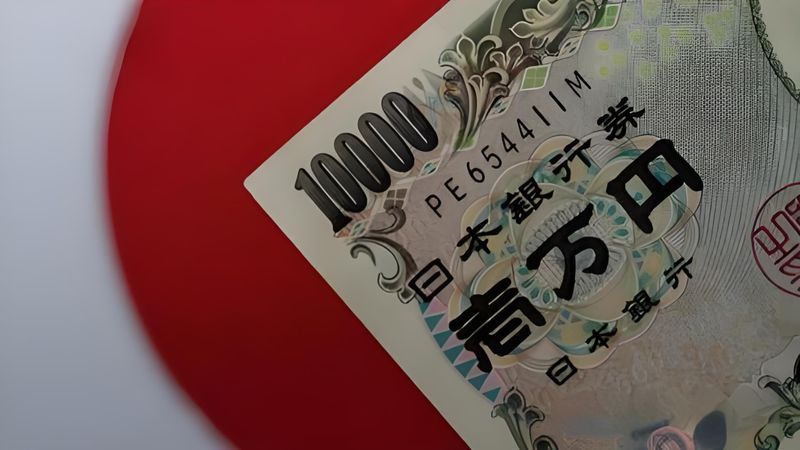
Yen's Significant Weakening Pushes Bank of Japan to Accelerate Policy Signals
As the yen continues to approach its weakest level of the year against the dollar, the Bank of Japan has begun to show a stronger inclination towards policy tightening. The latest comments came from Monetary Policy Committee member Junko Koeda, who emphasized in a public speech that Japan's current real interest rates are too low and that the central bank needs to speed up the normalization of monetary policy.
The rapid depreciation of the yen has drawn significant market attention to policy directions. Although Koeda's speech had a clearly hawkish tone, the foreign exchange market reacted only limitedly, with the yen continuing its prior downtrend. This indicates that the market is expecting more clear policy statements, especially against the backdrop of persistent inflation pressures and rising expectations for fiscal stimulus.
Shifting Tendencies Within the Central Bank as Rate Hike Discussions Heat Up
Koeda's speech is significant as she is not only among the first committee members to publicly express policy views but also specifies December as a possible timeframe for action. Calls for a rate hike within the Bank of Japan were first noted at the October meeting, when two members suggested an adjustment in policy rates. As more members are leaning hawkish, it is widely believed that a broader policy consensus is forming within the central bank.
Observers generally predict that the Bank of Japan could act by the end of this year, or at the latest by early next year. Recent expectations in the overnight swaps market also show that while bets on rate hikes have fluctuated, investors are increasingly focusing on whether the December policy meeting will bring substantial signals.
Economic Indicators Show Complex Signals with Strong Inflation Pressure
Koeda pointed out that Japan's economic supply-demand balance is improving. The output gap has returned to nearly zero, indicating an overall balanced economic state. Meanwhile, Japan's labor market remains tight, with labor shortages driving companies to continue increasing salaries and hiring demands.
Regarding price trends, Japan's core inflation has remained stable near the central bank’s target for over three years, with some months even significantly above the long-term target of 2%. With the yen's weakening further driving up import costs, inflation pressures could expand again, providing additional reasons for a rate hike.
However, Japan's latest GDP data shows a slight contraction in the third quarter, partly due to one-time factors. Most economists believe Japan's overall economy retains some resilience, but the choice of monetary policy remains a matter for cautious judgment.
Delicate Play Between Fiscal Policy Paths and the Central Bank's Stance
Notably, with new Prime Minister Sanae Takaichi pushing for large-scale stimulus policies, whether the Bank of Japan can adhere to policy normalization steps has become a focal point of external discussions. Takaichi supports accommodative policies, and some in her advisory team openly oppose a rate hike by the Bank of Japan in December.
Former Bank of Japan committee member Goushi Kataoka stated that a rate hike might be more suitable by next spring, arguing that the current economic situation still requires fiscal support and that premature rate adjustments could affect growth momentum.
The market is thus focused on whether the two major policy systems—fiscal stimulus and monetary tightening—will conflict over the next few months, affecting the timing of a rate hike.
Market Focused on December Decision; Yen's Trajectory as Key Reference
In the coming weeks, the yen's trend will serve as a barometer for the market's judgment of policy direction. If the exchange rate continues to approach its lowest levels for the year or several years, the Bank of Japan may be forced to further strengthen its hawkish stance to prevent further currency depreciation from triggering import-driven inflation risks.
As the December 19 policy meeting approaches, how the Bank of Japan balances inflation, economic performance, and the fiscal environment will determine the timing of the current tightening cycle.

