

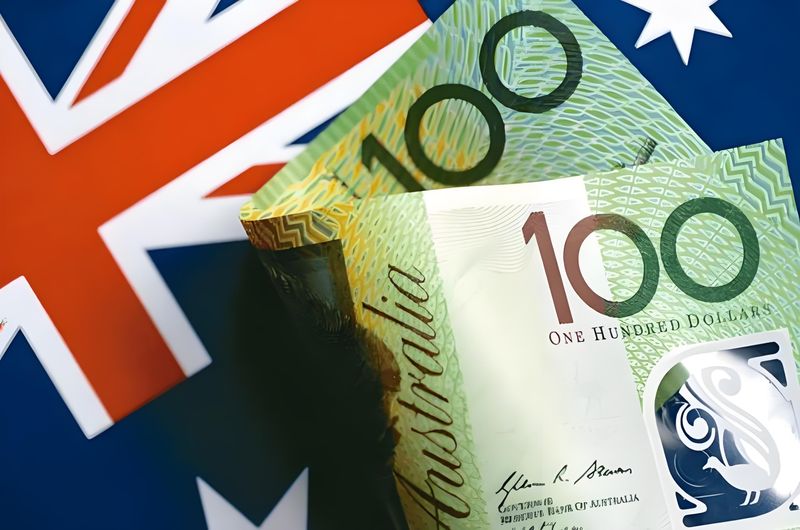
Australian Dollar Rises to Yearly High as Market Bets on Reserve Bank of Australia Rate Hike Next Year
On December 24, 2024, the Australian dollar inched up 0.1% against the US dollar to 0.6708, marking its highest level since 2024. The market generally believes that due to a weak US dollar and traders anticipating a rate hike by the Reserve Bank of Australia (RBA) next year, the Australian dollar's upward trend may continue.
This upward trend reflects strong data supporting Australia's economy. Recent robust spending and wage growth have heightened market attention on Australia's economic inflation pressures and increased expectations for an RBA rate hike next year. Market analysts believe the RBA may take rate hike measures next year, with the earliest hike possibly occurring in June 2024.
Australian Dollar Rises 1.4% This Quarter, Economic Data Supports Rate Hike Expectations
Recently, the Australian dollar's performance against the US dollar has been strong. Since the start of the quarter, the Australian dollar has risen by 1.4%. This increase has been primarily driven by Australia's strong domestic economic performance. Robust consumer spending and wage growth have bolstered market optimism towards the Australian economy and heightened expectations for an RBA rate hike.
According to Australian government data, strong wage growth and spending figures reflect the healthy state of the domestic economy. Especially amid inflationary pressures, the RBA might take further measures to counter rising prices, which has also fed into market bets on future rate hikes.
Traders Bet Over 70% Chance of RBA Rate Hike
Expectations for future RBA rate hikes are growing in the market. Overnight Index Swaps (OIS) indicate that the market currently anticipates two rate hikes by the RBA next year, with the probability of the first hike exceeding 70%. This expectation suggests that the RBA might raise rates before June 2024 to address inflationary pressures in the economy.
Currently, the market widely believes that the RBA will undertake more rate hikes in 2024, particularly against the backdrop of sustained economic growth and increasing inflation pressures. In the coming months, the exchange rate for the Australian dollar is expected to remain influenced by rate hike expectations.
Australian Dollar's Rise Closely Linked to Weak US Dollar
The strong performance of the Australian dollar is closely related to the weak US dollar. Recently, the US dollar has underperformed in the global market, especially amid the Federal Reserve's rate hike pause, which has reduced the dollar's appeal. This situation has provided room for other currencies to rise, with the Australian dollar being one of them. The rise of the Australian dollar reflects market confidence in the Australian economy and is partly driven by the weak US dollar.
Meanwhile, other factors such as a slowdown in US economic growth and increasing global market uncertainties have also reduced some demand for the dollar, further supporting the Australian dollar's upward momentum.
Future Outlook: Potential Trajectory of the Australian Dollar
As the market's anticipation of an RBA rate hike continues to intensify, the Australian dollar's upward trend may persist. In 2024, the exchange rate of the Australian dollar against the US dollar is expected to remain high, particularly if the RBA takes hike measures as predicted by the market, which could lead to a more robust increase in the Australian dollar.
However, despite current economic data supporting the Australian dollar's rise, global economic uncertainties remain key factors influencing exchange rate trends. In the future, the performance of the US dollar and changes in Australia's domestic economic situation will have significant impacts on the exchange rate of the Australian dollar. Investors should continuously monitor the RBA's policy actions and global economic changes to adjust their investment strategies accordingly.
Overall, the strong performance of the Australian dollar is closely associated with Australia's healthy economic growth, and market expectations for rate hikes may continue to support its upward trend. However, with the increase in global economic uncertainties, future exchange rate trends still require close observation.

