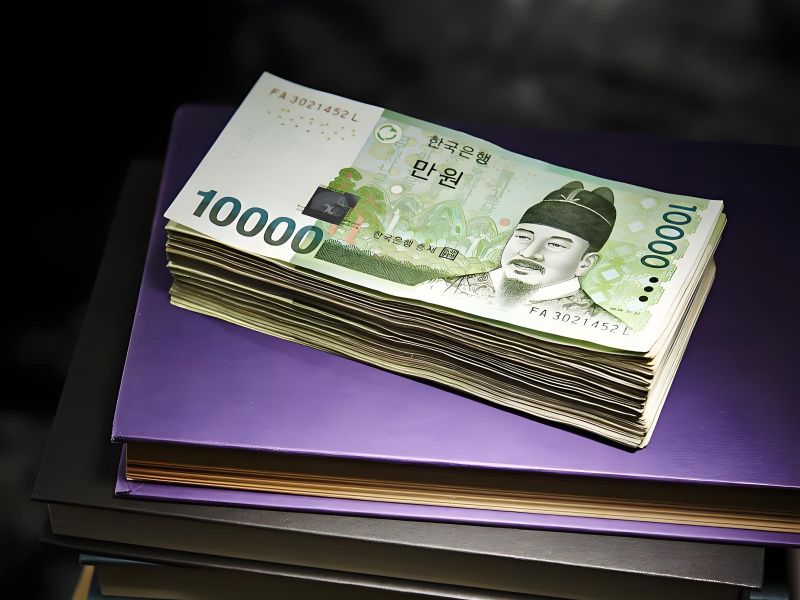
Pressure on Korean Won Rises Again, Government Urgently Responds to Risk of Fluctuation
On Monday, the Korean Ministry of Finance and the central bank issued a joint briefing, indicating significant recent fluctuations in the Korean won exchange rate. Authorities are closely monitoring foreign exchange market dynamics to prevent potential one-sided moves. This statement is seen as the government's official response to the recent rapid depreciation of the won.
According to data from the Seoul Financial Exchange, the USD/KRW rate exceeded 1,430 during trading, reaching a new high since mid-May. Analysts point out that this level has triggered the regulatory alert threshold, prompting the government to undertake verbal interventions to stabilize market expectations.
The Ministry of Finance emphasized that the recent won trends reflect "an interplay of complex internal and external factors," including the uncertainty of U.S. monetary policy, rising international political risks, and intensified foreign capital flows. The Ministry and the Bank of Korea (BOK) have activated a joint mechanism to enhance monitoring of market liquidity and cross-border capital flows.
External Pressure and Strong Dollar as the Main Causes
The market generally believes that the won's continued weakness is closely related to the global strength of the dollar. With the latest U.S. inflation and employment data remaining strong, the market is reassessing the timing of Federal Reserve rate cuts, driving the dollar index close to a two-month high.
An analyst from the Korea Development Bank noted, "The dollar's strength combined with the rise in U.S. Treasury yields has put pressure on Asian currencies. The depreciation of the won is more a result of changes in the external environment rather than a deterioration in South Korea's fundamentals."
Moreover, geopolitical uncertainties have also exacerbated risk-averse sentiments. Tensions in the Middle East, global supply chain fluctuations, and temporary international capital flows for risk aversion all put pressure on emerging market currencies. As a major trading currency in Asia, the won often acts as a barometer of changes in market risk appetite.
Authorities Strengthen Forex Stability Measures
In response to exchange rate fluctuations, the Korean government and central bank are jointly strengthening their foreign exchange management efforts. Finance Ministry officials disclosed that authorities have combined policy communication, market monitoring, and preventative liquidity tools to prevent disordered fluctuations in exchange rates.
A spokesperson for the Bank of Korea stated, "We will not tolerate disorderly one-sided market moves and will take appropriate measures if necessary to maintain market stability." Industry observers believe this implies that Korea may conduct "conditional intervention" or execute dollar liquidity operations through state-owned banks in the coming days.
According to data from the Bank of Korea, as of early October, the foreign exchange reserve stood at approximately $420 billion, providing ample ammunition for short-term interventions.
Won Fluctuations Impact Economic Confidence and Import Costs
The won's depreciation is impacting the South Korean economy. With heavy reliance on imported energy and raw materials, a weaker exchange rate could increase corporate procurement costs and consumer inflation pressure. The Korean import price index has risen for two consecutive months, and some manufacturers report further squeezed profit margins.
The Korea Eximbank Economic Research Center points out that a weaker won poses "dual challenges" to inflation management and monetary policy. If the exchange rate remains at a high level, it will increase the central bank's constraints within an interest rate cut cycle.
Moreover, the depreciation of the won may affect overseas investor confidence. Data shows a noticeable slowdown in foreign capital net inflows into the Korean bond market, while the pressure of fund outflows from the stock market is rising.
Fluctuations May Persist
Looking ahead, analysts generally believe that the won will continue to exhibit high volatility in the short term. If the dollar remains strong, the won could continue to test the key resistance level of 1,440. Morgan Stanley reports that unless the Federal Reserve provides clearer rate-cut signals, Asian currencies are unlikely to fully rebound.
Meanwhile, the market is also watching for the next policy moves from the Bank of Korea. If the won's decline widens, authorities may not rule out the use of currency swaps or direct interventions to stabilize the exchange rate.
Policy Coordination Key to Stabilizing the Won
The current won trend is at a sensitive stage. Industry experts believe that coordinated intervention by the Korean government and central bank will be crucial in shaping market expectations. Effective market operations following verbal warnings could help stabilize investor confidence and prevent market panic from spreading.
Overall, amid the dual backdrop of strong external U.S. dollar strength and domestic economic uncertainties, Korea's foreign exchange policy is facing a test. Balancing exchange rate stability with economic growth will be the core challenge for Seoul's financial authorities in the coming months.