• Home
  • Categories
  • News
  • Community
EN
EN
Home
CategoriesNewsGlossaryCommunityAbout Us
Contact Us
Social Media
Region
🌏International
Region
🌏International

Copyright © 2023-2026 Traderknows Ltd. All rights reserved.

Contact
Home
/
News
/
Korean hybrid vehicles risk losing their competitive edge amid tariffs and rising costs

Korean hybrid vehicles risk losing their competitive edge amid tariffs and rising costs

2025-09-15
Summary:The stalemate in U.S. tariff negotiations and delays in battery supply are causing Korean HEVs to face price increases and loss of market share.

韓國汽車

US-Japan Tariff Disparities May Reshape Market Dynamics

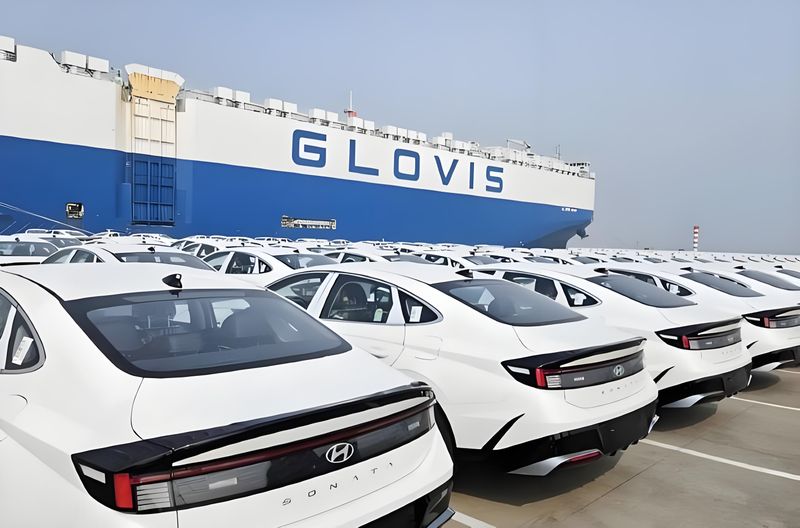
Recently, the US government is considering reducing the tariff rate on Japanese automobiles from the current 27.5% to 15% on the 16th of this month. Once this measure is implemented, Japanese brands like Nissan and Toyota will gain a greater price advantage in the US market. In contrast, due to stalled tariff negotiations between South Korea and the US, Korean car brands still face a 25% tariff burden. Experts point out that this disparity could directly undermine the competitiveness of Korean cars like Hyundai and Kia, placing their pricing strategies in a difficult position.

Rising Demand for Hybrid Cars Expected

With US electric vehicle subsidies nearing expiration, market demand for hybrid models is generally optimistic. However, Korean automakers are evidently lagging. Currently, Hyundai Motor Group does not have a local HEV production line in the US, and all models rely on exports from Korean factories. This means that even with strong demand, Korean brands will still need to fully bear high tariffs, making it difficult to convert cost advantages into market competitiveness.

Price Disparities May Alter Consumer Choices

Industry estimates indicate that if tariff disparities are fully passed on to retail prices, Korean model prices will exceed those of similar Japanese products. For instance, the price of the Kia Sportage Hybrid after tariffs will surpass that of the Toyota RAV4 Hybrid, making consumers more inclined to choose Japanese brands at similar price points. Industry insiders note that Hyundai can only maintain market share by compressing profit margins to avoid excessive pricing, which will further erode profitability.

Capacity Constraints Limit Mitigation Measures

Although Hyundai has announced plans to build an HEV production line in Georgia, USA, this project will not start production until 2025 at the earliest, providing little short-term relief from export pressures. Meanwhile, the battery plant jointly constructed by Hyundai and LG New Energy is also facing delays, with production expected to be postponed by 2 to 3 months. This delay not only affects battery supply but may also postpone the launch of some new models, further weakening the company's competitiveness in the North American market.

Risk of Market Share Erosion

According to Words Intelligence data, as of January-August 2025, Toyota dominates the US HEV market share, leading by more than half, with Honda in second place. Korean brands rank third but still lag significantly. If the tariff disadvantage persists for an extended period, Korean cars will not only struggle to narrow the gap but might also face a loss of market share. Analysts believe that Japanese cars will further consolidate their market position through price and capacity advantages.

Strategic Choices Under Multiple Pressures

Faced with dual challenges of tariffs and capacity, Korean automakers face difficult decisions. On the one hand, they need to maintain price competitiveness in the short term to stabilize sales; on the other hand, they must accelerate the construction of domestic production lines in the US to mitigate future policy and supply chain risks. Automotive experts point out that without timely improvements in supply and cost structure, Korean brands may lose leverage in the next round of hybrid car competition.


Business Cooperation Telegram Eng

Business Cooperation Skype ENG

Risk Warning and Disclaimer

The market carries risks, and investment should be cautious. This article does not constitute personal investment advice and has not taken into account individual users' specific investment goals, financial situations, or needs. Users should consider whether any opinions, viewpoints, or conclusions in this article are suitable for their particular circumstances. Investing based on this is at one's own responsibility.

The End
Previous
Next
Comments
0/1000
Written by
Created date:2025-09-15 01:32
Last Updated:2025-09-15 01:55
Independent Analysis: Manually researched and fact-checked by the TraderKnows Compliance Team, based on public regulatory records.
Wiki
Tariff

Tariffs are a type of tax that governments levy on imported and exported goods, typically appearing as a percentage of the value of the goods.

Recent Post

Broadcom AI Guidance Triggers Valuation Consolidation as Middle East Ceasefire Eases Oil

3 hours ago

Gold Prices Decline 1.2% as Middle East Tensions Escalate and US Dollar Strengthens

4 hours ago

US Stocks Retreat from Record Highs as Middle East Tensions and Redemption Limits Weigh

4 hours ago

Global Risk-Off Ignited by Fed Rate Hike Bets and Broadcom Revenue Miss

4 hours ago

Global Firms Accelerate Rare Earth Decoupling as Alternative Technologies Commercialize

4 hours ago

Euro Bond Yields Rise as Traders Bet on Three ECB Rate Hikes

4 hours ago

US Treasury Yields Climb as Geopolitical Tensions and Strong Macro Data Fuel Inflation Concerns

4 hours ago

Gold Prices Rebound as Oil and US Dollar Slip Amid Middle East Ceasefire Progress

4 hours ago

Yen Hits Crucial 160 Level as Mid-East Tensions Boost USD Triggering Intervention Fears

4 hours ago

Mideast Tensions Weigh on Asian Equities as Lebanon Truce Eases Oil Prices

4 hours ago

Coinbase Partners with US DOJ and Tech Giants to Freeze 3 Million in Crypto Linked to SE Asia Fraud…

4 hours ago

Jensen Huang Defends AI ROI in Taipei Citing Trillions in Value Created

4 hours ago

Middle East Tensions Spark Risk-Off Sentiment as Stocks Decline and Oil Pulls Back

4 hours ago

Fed Beige Book Shows Inflation Rising on Energy Costs Ahead of Warsh First Meeting

4 hours ago

WSTS Upgrades Forecast: Global Semiconductor Market to Exceed $1.5 Trillion in 2026

4 hours ago

Risk Warning

TraderKnows is a financial media platform, with information displayed coming from public networks or uploaded by users. TraderKnows does not endorse any trading platform or variety. We bear no responsibility for any trading disputes or losses arising from the use of this information. Please be aware that displayed information may be delayed, and users should independently verify it to ensure its accuracy.