
Investigation Schedule Adjusted Again
The Australian Anti-Dumping Commission announced that the anti-dumping review process for steel rebars exported from China, initially set to be completed within the year, is now extended to late 2025 and early 2026. Specifically, the basic facts report is expected by December 10, 2025, and the final report will be submitted to the Minister for Industry and Science by February 16, 2026. This adjustment implies that related companies and stakeholders face prolonged uncertainty.
Background Review: Anti-Dumping Measures Lasted Ten Years
Since launching the anti-dumping investigation on Chinese steel rebars in 2015, Australia has repeatedly applied trade remedy measures on these products. The affirmative decision in 2016 led to a decade-long measure implementation period. Subsequent sunset review investigations were initiated by local company InfraBuild (Newcastle) Pty Ltd in 2020 and 2025, reflecting ongoing concerns in the Australian steel industry about competition from Chinese imports.
Baowu Steel Proactively Applies for Review
Notably, apart from the sunset review initiated by Australian companies, Chinese exporter Baowu Group Echeng Steel Co., Ltd. also applied for a review in May 2025. Their main appeal is to examine whether the current variable factors under anti-dumping measures need adjustment. The market interprets this move as an effort by Chinese steel companies to improve their export environment through legal procedures to reduce long-term tariffs and market entry barriers.
Scope of Products Involved and Industry Impact
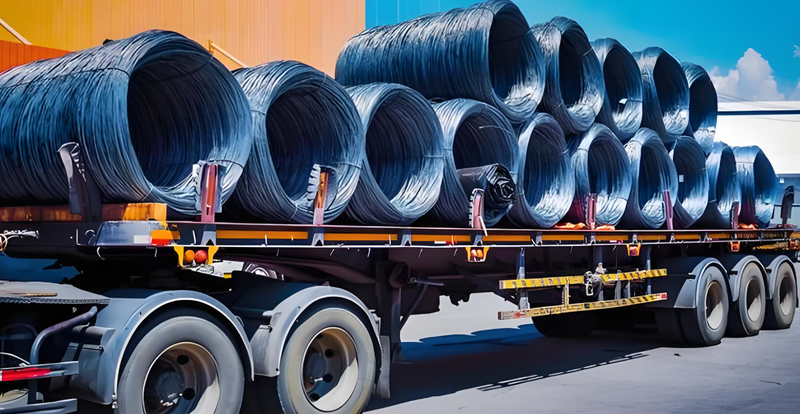
The case involves rebars with a diameter of 50 millimeters or less, mainly used in construction and infrastructure. Although plain round bars, stainless steel, and rebar mesh are not within the applicable scope, restrictions on ordinary rebar imports may indirectly affect the costs and supply chain of Australia's domestic construction industry. Industry experts indicate that if the review delay results in long-term measures, it will continue to increase building material prices, putting pressure on real estate development and public works budgets.
Parallel Review Progressing
The current situation is complex, with both the second sunset review driven by Australian companies and specific exporter reviews requested by Chinese companies progressing simultaneously. The sunset review directly concerns whether measures will continue, while the company review affects the specific tax rate. The outcome could be divergent. This parallel investigation is uncommon in past cases and adds uncertainty to policy direction.
Outlook and Stakeholders' Concerns
From the time schedule, the next six months will be a critical window period for all parties to submit evidence and statements. Australian domestic steel companies hope to maintain protective measures to avoid impact from low-priced imports, while Chinese exporters aim for more favorable treatment through the review. Trade law experts note that such cases usually involve more than just price fairness and reflect a broader struggle over industrial policy and trade relations between the two countries. With the investigation delayed, the final result could significantly affect the bilateral trade landscape post-2026.

