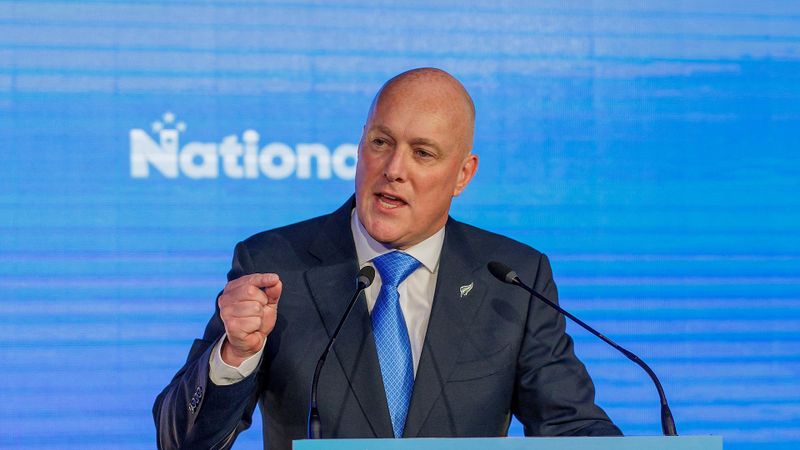
Global Trade Order in Turmoil, New Zealand Calls for Rebuilding Trust
At the Asia-Pacific Economic Cooperation (APEC) meeting in South Korea, New Zealand Prime Minister Christopher Luxon warned that the global trade system is undergoing its most profound structural changes in decades. He pointed out that the boundaries between economic policies and security strategies of countries have blurred post-pandemic, and international cooperation mechanisms are losing their foundation centered on rules.
Luxon stated that the past globalization framework played a significant role in promoting trade and economic growth, but today's world order is shifting from "rule-oriented" to "power-oriented." He emphasized that this trend is weakening the coordination effectiveness of international institutions and is exposing small open economies to greater external risks.
Integration of Economy and Security, Geopolitical Competition Intensifies
Luxon noted that the lines between global economy and security have become indistinguishable. Supply chains are not only about efficiency but have become a core issue of national security. From critical minerals and semiconductors to energy transport routes, countries are reassessing dependencies and strengthening strategic autonomy.
"Economic policies now have security attributes, and trade agreements are not just about the distribution of benefits but about building systems of trust," he said in his speech. Analysts believe this means that small and medium-sized economies like New Zealand must seek a balance in major power competition, maintaining an open market while ensuring national security.
The New Zealand government has been increasing its investment in the Indo-Pacific region in recent years, hoping to reduce reliance on a single market through regional multilateral cooperation. Luxon emphasized that strengthening trade and economic relations with Asian economies and promoting digital trade and green energy cooperation will be New Zealand's strategic focus.
Old "Rule-Based" Order in Decline
Luxon's statements align with Canadian Prime Minister Mark Carney's views. Both leaders believe that the multilateral trade system that supported global prosperity in recent decades is being weakened. Especially in the context of rising protectionism and intensified geopolitical competition, the traditional concept of "free trade" is giving way to "strategic trade."
Carney pointed out at the meeting that the "golden era" of globalization has ended, and countries are beginning to reshape supply chains and industrial layouts dominated by their national interests. This trend, while increasing resilience in the short term, may weaken global economic efficiency in the long term.
Observers believe that the protectionist policies from the Trump administration period have laid the groundwork for long-term instability in the world trade system, and the continuation of these policies along with regional economic fragmentation has deepened these rifts.
New Zealand Seeks a Path of Balance
Facing global economic fragmentation, New Zealand is working to maintain strategic neutrality among major powers. Luxon emphasized that open trade remains a core principle of New Zealand's foreign and economic policy, but "openness must be built on mutual trust and transparency rules." He urged countries to remain rational in competition and resolve differences through multilateral frameworks.
New Zealand is currently promoting trade and economic cooperation with ASEAN, South Korea, and Japan while actively participating in Indo-Pacific Economic Framework (IPEF) negotiations to expand export markets and enhance supply chain security. Experts point out that this "multilateral defensive strategy" helps to raise its voice in the global trade restructuring.
The Test of Global Consensus in the New Order
The fragmentation of the global trade system not only reflects the complexity of geopolitics but also reveals a turning point in the era of globalization. Luxon's warning reminds the world that if countries continue to replace cooperation with confrontation and barriers with rules, the global economy will face new fragmentation risks.
New Zealand's stance perhaps represents the common voice of small and medium-sized economies: In a turbulent world order, adhering to openness, trust, and cooperation is the only path to stability and mutual success.