

2025 Year-End Battle: Technology and Finance Under Pressure Amidst Light Trading
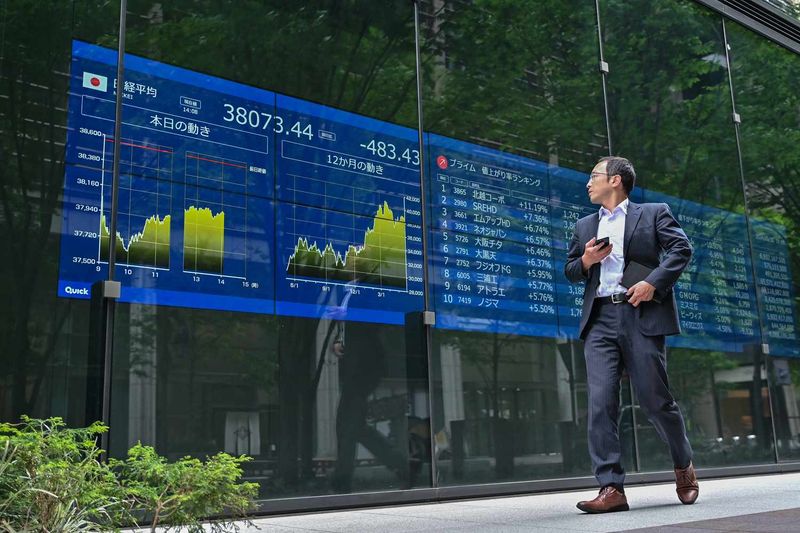
On Monday, December 29, Eastern US time, the Japanese stock market faced its last trading day of 2025. In the light atmosphere ahead of the year-end holidays, market sentiment turned cautious as the Nikkei 225 index fluctuated down throughout the day, ultimately closing down 0.4% at 50,344.61 points. Despite the slight adjustment on the day, the Nikkei index performed impressively throughout the year, with an annual increase of nearly 28%. This marks the third consecutive year of annual gains, having even surpassed the 50,000-point mark in the second half of the year, setting a new historical record.
On the day's market, the previously leading technology sector and the interest rate-sensitive financial sector became the hardest hit by sell-offs. The major stock SoftBank Group fell sharply by 2.6%, dragging down the overall market performance. Meanwhile, financial services giant SBI Holdings also recorded a 1.7% decline. Analysts pointed out that since the Bank of Japan raised the policy interest rate to a 30-year high of 0.75% in mid-December, investors preferred to take profits from overly increased technology and financial stocks at the year-end to avoid potential interest rate hikes in 2026.
Calm Currency Market: Dollar Holds Steady Against Yen at 156 Range
In the foreign exchange market, the yen's exchange rate maintained a relatively stable stance on the last trading day. The dollar against the yen was reported at 156.05, slightly recovering from 156.20 at the Tokyo stock market's close on Monday. The yen's recent trend is mainly affected by the tug-of-war between the Bank of Japan's hawkish signals and the slowing expectations of the Federal Reserve's interest rate cuts. Although the Bank of Japan’s minutes showed several members supporting continued interest rate hikes, no significant volatility was observed in the currency market amid the light pre-holiday trading.
Investors are currently in a wait-and-see mode, watching to see if the yen will regain strength at the start of 2026. The strength of the yen is not only directly related to overseas profit conversions for export-oriented giants like Toyota and Sony but also influences domestic inflation pressure in Japan. The market generally expects that if the yen continues to strengthen, it might put further valuation pressure on the export sector early next year, potentially causing more significant fluctuations in the Nikkei index above the 50,000 mark.
Policy Outlook: “Abeconomics 2.0” Under Sanae Takaichi's Leadership
Beyond short-term market fluctuations, investors' deeper concerns focus on the policy developments of Japan's new Prime Minister Sanae Takaichi. Since taking office, Sanae Takaichi has emphasized reviving the Japanese economy through active fiscal expansion, technological nationalism, and defense modernization. The market even refers to her policy path as “Abeconomics 2.0,” anticipating that large-scale government spending could offset the negative impacts of demographic decline and global trade fragmentation.
The Sanae Takaichi government is currently working to promote a record budget plan for the 2026 fiscal year, focusing on self-sufficient semiconductors, AI research and development, and renewable energy infrastructure. While these long-term visions provide structural support to the stock market, the expansion of fiscal deficits has also triggered concerns in the bond market. As we enter 2026, whether the Japanese stock market can continue its three-year bull run will largely depend on whether Takaichi’s new policies can effectively boost domestic demand and enhance the global competitiveness of Japan’s technology industry without causing rampant inflation.

