
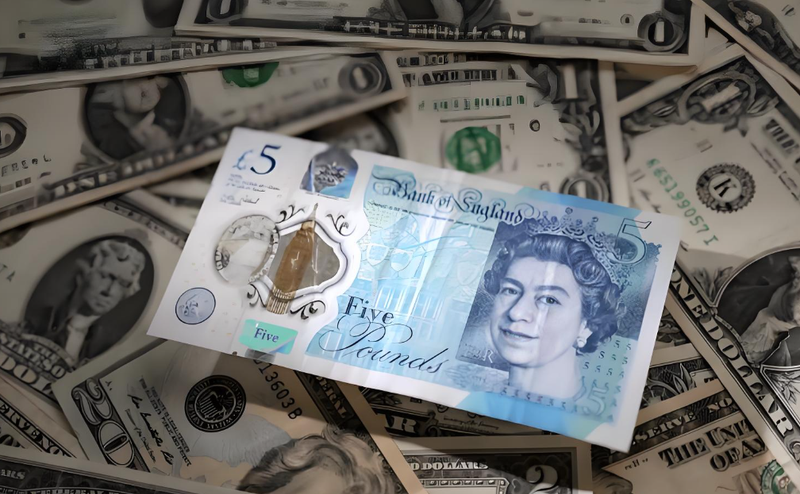
Mixed Retail Data with Limited Reaction from the Pound
The latest data from the UK's Office for National Statistics shows that retail sales in July rose by 0.6% month-on-month, far exceeding the market expectation of 0.2%, indicating continued consumer resilience. However, on a year-on-year basis, the increase was only 1.1%, falling short of the market's general expectation of 1.3%, highlighting the lack of economic growth momentum.
Market interpretation suggests that the retail sector's stronger-than-expected performance is largely reflective of short-term factors and insufficient to reverse the overall economic slowdown. Under continued pressure on consumer confidence, the pound failed to strengthen, instead maintaining its weakness in the forex market.
Rising Policy Disagreements at the Bank of England Confuse Markets
Policy uncertainty has similarly weakened the pound's support. Governor Bailey reiterated the long-term trend of falling interest rates during a parliamentary hearing but emphasized significant uncertainty over the pace of rate cuts. Meanwhile, the Deputy Governor and some Monetary Policy Committee members have taken a hawkish stance, warning that inflation risks have not subsided.
This clear divide makes it difficult for markets to judge the future policy path, causing investor expectations to fluctuate, with short-term funds preferring to sell the pound to avoid potential risks.
Eurozone Data Approaching with Markets Focusing on Fundamentals
In contrast, the focus in the euro market has shifted to the upcoming second-quarter GDP data. General forecasts suggest the Eurozone GDP grew by 1.4% year-on-year and 0.1% quarter-on-quarter, consistent with previous data.
At the European Central Bank, Executive Board member Schnabel stressed that interest rates are already mildly accommodative and there is no urgency to lower them further, while Governing Council member Lane explicitly stated there is "no reason for adjustment." This cautious tone has provided stable policy support for the euro, keeping it relatively firm ahead of the data release.
Technical Indicators Show EUR/GBP Under Short-term Pressure
From a technical perspective, the EUR/GBP has fallen for three consecutive trading days, recently trading near 0.8670. After breaking below the 20-day moving average, the price remains under pressure, showing a bearish pattern.
If the exchange rate cannot stabilize above 0.8680, bears may further test the crucial support level of 0.8650. If this level is breached, the decline may extend to 0.8620. Conversely, if a short-term rebound breaks through 0.8720 and holds, it could reopen the space for a rally.
Volatile Pattern Likely to Continue
Overall, despite better-than-expected UK retail sales, the pound's overall weak state remains unimproved, and policy divisions further weigh on its performance. Eurozone data and the European Central Bank's cautious stance have in part supported the euro's stability.
Under the influence of dual factors, the EUR/GBP is likely to maintain a short-term volatile downtrend. The market's focus will be on the soon-to-be-released Eurozone GDP data, which, if deviating from the forecast, could serve as a key catalyst in determining the next stage of exchange rate movements.

