Treasurer Issues Rare Warning
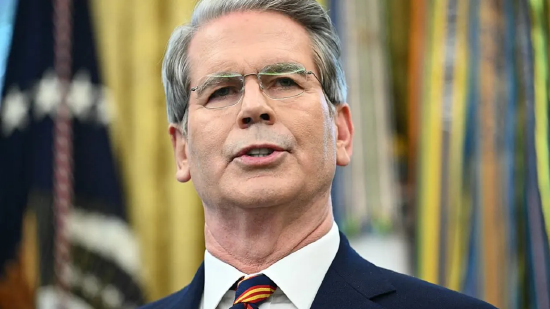
U.S. Treasury Secretary Scott Besant stated in a Sunday interview that if the Supreme Court ultimately rules President Trump's tariff plan illegal, the Treasury Department may be forced to refund nearly half of the collected tariff revenue. He bluntly stated that this would pose a "catastrophic shock" to the Treasury.
Although Besant still emphasizes having "confidence" that the Supreme Court will support Trump's policy, he acknowledges that if an unfavorable outcome occurs, the government will have no choice but to comply with the court's judgment.
Legal Dispute Enters Critical Stage
The case originated from a ruling by the Court of Appeals last month. The U.S. Court of Appeals for the Federal Circuit found that Trump's use of the "Liberation Day" declaration as the basis for imposing "reciprocal tariffs" on the majority of global imports exceeded the president's statutory authority.
Trump has formally requested the Supreme Court to expedite the review, with hearings potentially taking place as early as the beginning of November, and a prompt decision on the legality of the disputed tariffs following soon after. Typically, the Supreme Court requires a longer period to decide, but the White House appears eager to shorten the process.
According to estimates by the Tax Foundation, Trump's tariffs originally covered nearly 70% of U.S. imports, and if the ruling is unfavorable, this coverage could abruptly drop to 16%.
Potential Fiscal Consequences
The Treasury's concern is that if the tariff policy is overturned, the substantial tariffs already paid will need to be returned to companies and importers. This means the U.S. government could face refund expenditures amounting to hundreds of billions of dollars, further expanding the fiscal deficit.
Besant previously estimated that if the Supreme Court does not rule until the summer of 2026, cumulative tariff revenue might reach between $750 billion and $1 trillion. Such a magnitude of refunds would not only disrupt fiscal balance but could also trigger a chain reaction in financial markets.
Government Plans "Plan B"
Facing the risk, the White House economic team is exploring alternatives. National Economic Council Director Kevin Hassett revealed that if the Supreme Court rules the tariffs illegal, the government might rely on Section 232 of the Trade Expansion Act of 1962 to reinstate some measures.
Under this law, the president can impose tariffs when determining that a particular type of import poses a threat to national security. The Trump administration had already expanded tariffs on steel and aluminum in August of this year and threatened to impose high tariffs on semiconductors and pharmaceuticals.
This means that even if the legal basis for "reciprocal tariffs" is lost, the White House may still maintain tariff barriers under the guise of "national security."
Dual Impact on Businesses and Markets
If the risk of refunds becomes a reality, U.S. import businesses and multinational companies may receive an unexpected influx of cash, temporarily alleviating operational pressures. However, at the same time, the uncertainty of policies may make businesses more cautious, delaying investment and expansion plans.
In the market, investors are closely monitoring the Supreme Court's movements. Analysts indicate that if the tariff decision is reversed, the dollar and U.S. debt may come under pressure, while price fluctuations in affected goods' imports and exports will also intensify.
International Trade Relations Are Stirred Again
Trump's tariff policy not only affects the U.S. domestic economy but has also sparked widespread controversy in the international community. The EU and major Asian economies have repeatedly criticized U.S. actions as undermining the multilateral trade order.
If the U.S. is forced to change policy due to judicial decisions, international trade relations may experience short-term repair but may also lead to the U.S. seeking more aggressive alternative measures, thereby further increasing global trade uncertainty.
Awaiting Supreme Court Decision
Currently, all eyes are on the Supreme Court. The decision will not only determine the fate of Trump's tariff policy but will also be an important test for U.S. fiscal sustainability.
Besant's warning suggests that the government is preparing for the worst-case scenario, while the market and businesses have no choice but to prepare in advance amid uncertainty. How the final result will unfold will be gradually revealed in the coming months.