Negotiation Background: US Tariff Pressure Forcing Key Agreement
With the effective date of the US's high tariff policy approaching on August 1, the American government accelerated negotiations with South Korea. Previously, Trump threatened to impose tariffs of up to 25% on Korean products, severely threatening South Korea's key export industries. As a global leader in chips, automobiles, and machinery manufacturing, the Korean economy faces significant external pressure. The two sides finally reached an agreement, providing a stable tariff environment for Korean exports and marking a new chapter in bilateral trade relations.
Agreement Highlights: 15% Tariff Set, Stabilizing Export Expectations
According to the agreement, the US will standardize tariffs on imports from Korea at 15%, which is lower than expected and significantly better than the previously threatened levels. The Korean side confirmed that cars, semiconductors, and pharmaceuticals will not be treated differently, while sensitive categories such as rice and beef will remain import-restricted. Official statements explained that this eliminates policy uncertainties for Korean manufacturing and offers substantial aid for export companies to rebuild market confidence.
Investment Commitment of Up to $350 Billion, Focusing on High-Tech and Green Industries
The Office of the President of South Korea announced a $350 billion investment plan committed to the US, covering shipbuilding, semiconductors, nuclear power, green batteries, and biotechnology sectors. It plans to invest $150 billion in shipbuilding partnerships and the remaining $200 billion mainly in high-tech and clean energy innovations. The plan will include new investment projects and integrate existing US assets, ensuring transparency and high alignment with US industrial policies.
Energy Procurement Agreement Signed Synchronously, Expanding Market Boundaries
In the energy sector, South Korea pledged to purchase $100 billion worth of US energy products, including liquefied natural gas, over the next three and a half years. As part of the agreement, US companies will have comprehensive access to the Korean market, including automobiles, trucks, and agricultural products, without additional import tariffs. This is a significant result of the US's push for energy exports and industry linkage.
Intensive Corporate Collaboration, High-Tech Deployment Following
Following the announcement of the agreement, related companies quickly responded. Samsung Electronics signed a $16.5 billion chip supply agreement with Tesla to support its electric vehicle and autonomous driving research. LG New Energy reached a $4.3 billion contract with Tesla for lithium iron phosphate batteries for energy storage systems. These business collaborations directly reflect the agreement's institutional implementation, showing Korean companies' swift substantive involvement in US investment and industrial cooperation.
Foreign Exchange and Investor Reactions: Korean Won Sensitive to Short-Term Fluctuations but Overall Stable
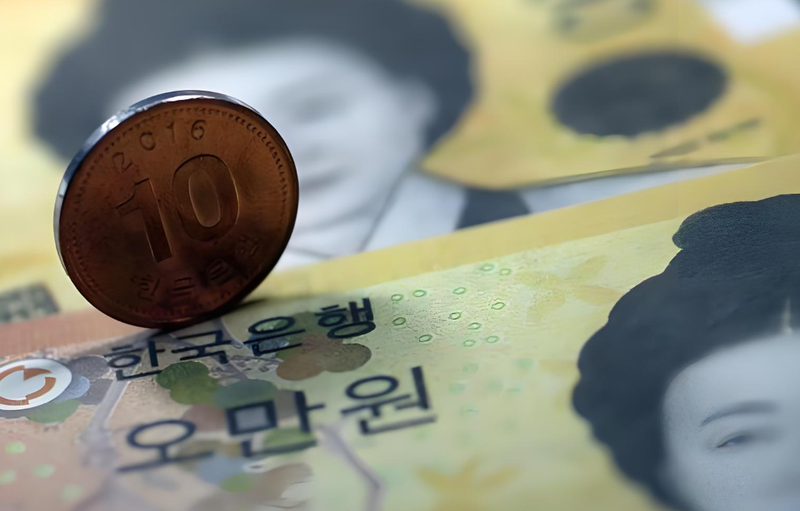
After the news of the agreement, the Korean won briefly rose 0.4% against the dollar, to around 1,386.80, having once dropped to 1,397.28, before fluctuating down to the 1,391.80 level. Investors remain cautious about the agreement's details and are monitoring the pace of subsequent investment initiations and policy implementation. A macro analyst noted that if the agreement gradually translates into capital inflow, it could provide structural support to the won.
Execution Details and Policy Coordination are Key
Despite the scale of the agreement, fulfilling the pledged investment amount, clarifying implementation timelines, and ensuring fund transparency remain key issues. In the coming weeks, South Korea and the United States will launch joint working mechanisms to implement the terms of the agreement, clarifying review and audit processes.
South Korean President Lee Jae-myung is expected to visit the White House in the next two weeks for formal consultations with Trump. Observers will closely monitor the agreement's execution performance and how related corporate and policy coordination unfolds concurrently.