
US Treasury Seeks to Stabilize Argentine Market
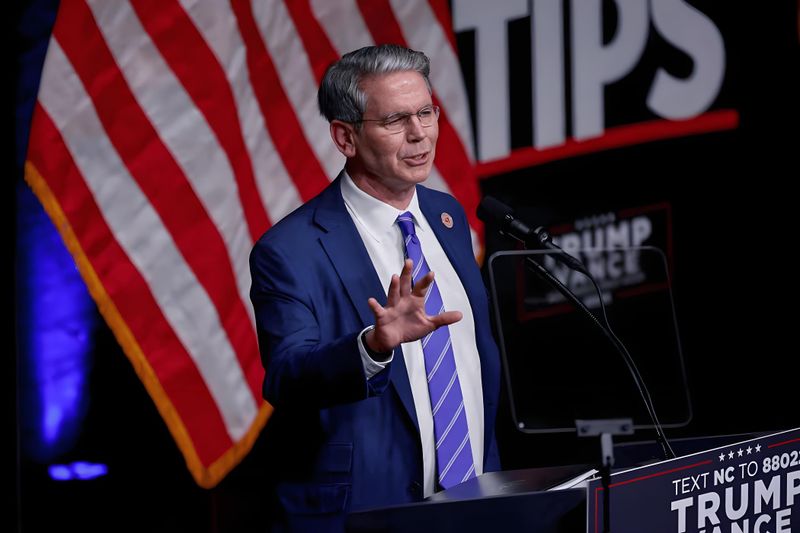
As Argentina's economy faces turbulence ahead of key elections, the US Treasury is considering significant measures to support the country. Treasury Secretary Besent revealed that Washington is in discussions with Buenos Aires over a $20 billion currency swap line and is prepared to directly purchase Argentine dollar bonds to give the Milei government breathing room.
Besent emphasized that this aid should be viewed as a "bridge to the election," aimed at ensuring market confidence does not collapse at a critical moment. He stated that the US will not allow financial turmoil to derail Milei's reform plans.
Peso and Bond Market Rebound, Central Bank Policy Shift
Following the announcement, the Argentine market reacted immediately. The peso strengthened against the dollar by over 2% at one point, and dollar bonds rallied across the board, with some recovering losses from the local election aftermath. However, the Argentine Central Bank unexpectedly cut the one-day repo rate to 25%, directly weakening the peso's gains. Analysts noted this highlights the authorities' balancing act between curbing inflation and stabilizing the exchange rate.
Historical Context and New Round of Assistance
This is not the first time the US has stepped in at a crucial juncture. Back in 2018, Trump pushed the IMF to approve a massive aid package for Argentina. The current maneuver marks the administration's second major financial intervention in Argentina's situation. Unlike before, the assistance is not limited to international organization channels but directly utilizes US Treasury resources, including the Exchange Stabilization Fund and potential swap mechanisms.
Market and Analyst Perspectives
Financial markets generally interpret this move as positive. Analysts believe that if the agreement is implemented, it will significantly improve Argentina's short-term financing environment, paving the way for its return to the international capital markets by 2026. The chief economist of Adcap Grupo Financiero pointed out that this helps alleviate concerns about liquidity shortages.
At the same time, some warn of the risks involved. US economist Brad Setser reminds that lending to Argentina has historically been fraught with "easy to lend, hard to recover" challenges, potentially repeating the IMF's experiences in the long run.
Interplay of Elections and Policy
For President Milei, this potential support is not only an economic cushion but also a political advantage. He hopes to expand his party's influence in the midterm elections on October 26, but recent lackluster performances in local elections have raised concerns. The US financial backing might temporarily stabilize voter confidence, earning time for his reform agenda.
However, Argentina's structural economic challenges have not disappeared. Although inflation has dropped from nearly 300% to 34%, economic activity remains sluggish, with pressures on employment and consumption. Even with aid, Milei will need to strike a difficult balance between advancing reforms and maintaining social stability.
Geopolitical Dynamics and Diplomatic Considerations
These discussions are also seen as part of the geopolitical maneuvering in US-Latin America relations. The $20 billion swap line would surpass Argentina's current arrangement with the Chinese central bank, highlighting the US's desire to weaken the influence of other major powers in Latin America through financial means. During Trump's tenure, the US adopted a hard stance toward Brazil, Mexico, and Venezuela, while distinctly supporting Milei.

