
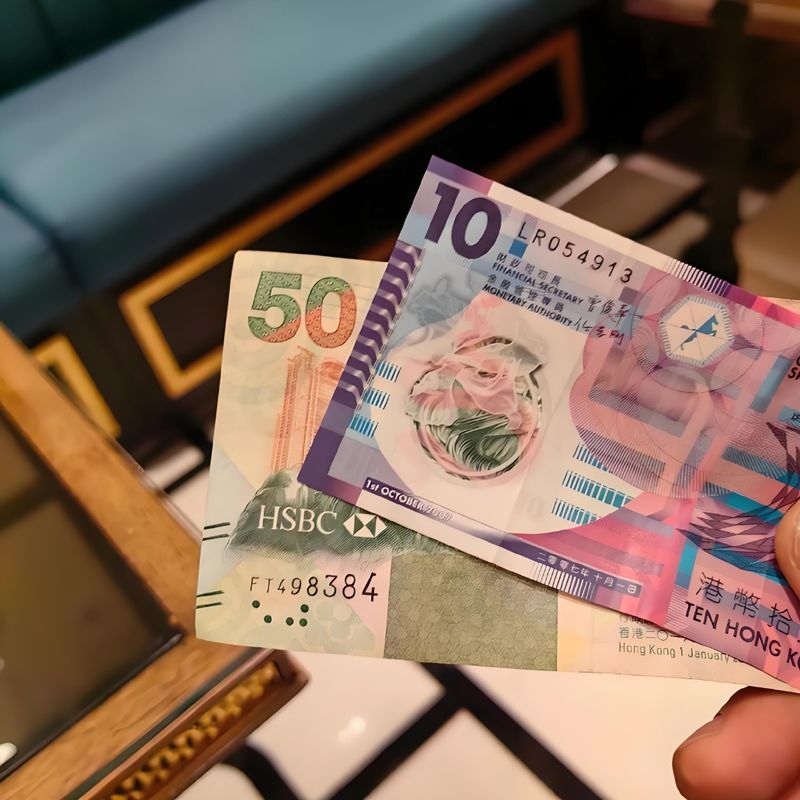
Hong Kong Dollar's Exchange Rate Rebound Draws Attention
After experiencing volatile movements for nearly two months, the exchange rate of the Hong Kong dollar against the US dollar has seen a strong rebound. On the afternoon of the 18th, it surged to a high of 7.7926, marking a phase peak and a daily increase of 0.35%. Notably, this is the fifth consecutive trading day that the Hong Kong dollar has strengthened, successfully breaking multiple resistance levels between 7.85 and 7.80 within just a few weeks. This trend is widely seen as breaking the long-standing pattern of maintaining the weak side convertibility undertakings.
Impact of HKMA's Interventions Evident
Analysts point out that the key driver of this appreciation round is the repeated interventions by the Hong Kong Monetary Authority. The HKMA's consistent operations in the market, involving the depletion of the Aggregate Balance, have gradually altered the supply-demand dynamics of funds. As the balance decreased to a certain level, the interest rate spread between the Hong Kong dollar and the US dollar narrowed, prompting the unwinding of some arbitrage trades, which in turn rapidly strengthened the Hong Kong dollar. This "gradual change leading to a qualitative change" effect is the direct impetus for the "dramatic" reversal seen in the Hong Kong dollar over the short term.
Fed Policy Expectations as a Booster
Beyond local factors, the international environment has also played a role in aiding the Hong Kong dollar's movement. As the market bets on a potential interest rate cut by the Federal Reserve as early as September, the overall strength of the dollar has shown signs of loosening, with capital flows trending toward emerging markets and high-liquidity assets becoming more evident. The Hong Kong dollar's peculiar linkage to the US dollar makes it attractive for more speculative and arbitrage capital under the expectation of a weaker dollar, further accelerating its appreciation pace.
Southbound Funds as a Key Supporter
Recently, continued additions of southbound funds from mainland China into the Hong Kong stock market have been a crucial support for the Hong Kong dollar's appreciation. Data shows that several leading technology and financial stocks in the Hang Seng Index have witnessed significant net buying over the past two weeks, spurring active market trading. This inflow of funds not only boosted market sentiment but also created additional demand for the Hong Kong dollar in the foreign exchange market, amplifying its upward momentum against the US dollar.
Investor Sentiment and Future Outlook
The rapid rebound of the Hong Kong dollar has refocused market investors on Hong Kong assets. Some foreign banks have noted that while the current trend has short-term momentum, its potential to become a long-term trend depends on several key variables: the actual policy path of the Federal Reserve, the sustainability of Hong Kong's capital flows, and whether the HKMA will continue its intervention strength in the future.
Analysts warn that although the swift appreciation of the Hong Kong dollar can ease previous long-standing pressures of maintaining weakness, it may also increase market volatility. If the dollar unexpectedly strengthens or southbound funds weaken, the Hong Kong dollar could still face a risk of retreat. Therefore, investors need to remain cautious in the short term to avoid blindly chasing highs.

