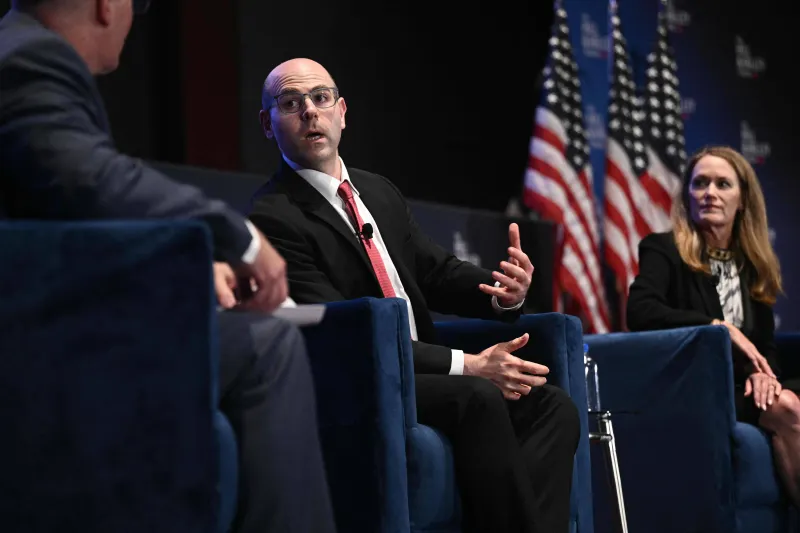
Milan's First Speech Attracts Attention
Stephen Milan, the newly appointed Governor of the Federal Reserve, made his public debut in New York, stating that the current policy interest rate is too high and, if maintained, will lead to unnecessary layoffs in the labor market. His statement marked his first policy declaration upon joining the board, immediately sparking strong reactions in both the market and academia.
Emphasis on Overestimated Neutral Rates
Milan pointed out that the so-called neutral rate is declining, yet the market and some officials continue to overestimate its level. He believes that tariff policies, immigration restrictions, and recent fiscal measures have collectively pushed the potential interest rate lower. According to his personal model estimates, the neutral rate is around 2.5%, significantly below the Federal Reserve's general expectation of 3%. He criticized outsiders for failing to fully consider changes in fiscal and border policies, thereby misjudging the actual tightening level of monetary policy.
Divergence from the Majority of Officials
In the recently concluded interest rate meeting, the Federal Reserve opted for a gradual 25 basis point rate cut, but Milan cast a dissenting vote, advocating for a one-time 50 basis point cut. He emphasized that the current interest rate level is approximately two percentage points higher than the neutral rate, and a timely adjustment is necessary to prevent a severe impact on employment. In contrast, St. Louis Fed President Musalem and Atlanta Fed President Bostic both signaled caution, emphasizing that further easing must be premised on controllable inflation risks.
Advocacy for Faster and Larger Easing
Milan not only called for accelerating the pace of rate cuts but also proposed a cumulative 125 basis points reduction in the coming months. This stance is much higher than the mainstream forecast within the Fed, with the median projection of 19 officials being only 50 basis points. He warned that an over-reliance on lagging inflation indicators could repeat the late-century mistake of "over-tightening and emergency reversal."
Policy Orientation Sparks Debate
Milan's aggressive stance has sparked widespread discussions in the market. Some analysts believe his background aligns more closely with the White House economic team's perspective, prioritizing employment over inflation concerns. Others point out that his stance highlights growing differences of opinion within the Federal Reserve, making upcoming votes potentially more contentious.
Risks and Outlook
From the employment side, while the recent U.S. unemployment rate remains low, some industries have already shown signs of slowing hiring; from the price side, tariffs and energy volatility continue to pose upside risks. This means that the Federal Reserve needs to find a more nuanced balance between employment and inflation. If Milan's views gain more support from other officials, it could prompt the market to preemptively account for a more aggressive easing path; however, if the majority continues to support "gradual rate cuts," fluctuations in the dollar and bond markets may intensify.
Conclusion
Milan's debut has undoubtedly added uncertainty to the Federal Reserve's policy outlook. His unique interpretation of neutral rates and employment risks not only reflects economic concerns but also challenges the existing policy framework. As the two interest rate meetings approach this year, the market will pay closer attention to how internal differences within the Fed evolve and how these differences eventually influence the dollar's trajectory and global financial markets.